Epidote

Definition and stakes

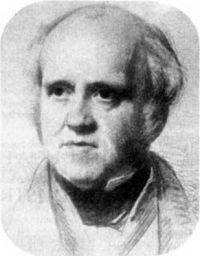
John MacCulloch,  On the Geology of Glen Tilt (1816)

“ These rocks, like common granite and gneiss, frequently contain epidote as a constituent incidental part, and in this also they are distinguished as well from that syenite to which I propose to limit the term, as from the greenstone of the trap family, since epidote is but very rarely found among these latter rocks. They are equally distinguished from them by the frequent presence of another mineral which, as well as the former, is peculiar to the elder rocks, Sphene. ”
Source: Wikisource

Portrait of John Ruskin John Ruskin,  The Crown of Wild Olive

“ Here is nobly born quartz living with a green mineral, called epidote; and they are immense friends. Now, you see, a comparatively large and strong quartz-crystal, and a very weak and slender little one of epidote, have begun to grow, close by each other, and sloping unluckily towards each other, so that they at last meet. They cannot go on growing together; the quartz crystal is five times as thick, and more than twenty times as strong, [151] as the epidote; but he stops at once, just in the very crowning moment of his life, when he is building his own summit! ”
Source: Gutenberg

Meyer D. Rothschild,  A Hand-book of Precious Stones

“ Epidote usually occurs in a peculiar yellowish-green, called pistachio [Pg 102] green, a color that is seldom found in other minerals. Besides this color, olive, brownish-green, greenish-black and black, red, yellow-gray, and grayish-white occur. The hardness of epidote is 6 to 7; specific gravity, 3.32 to 3.50; lustre, vitreous to pearly; refraction, double. The stone is transparent to opaque, is attacked by acids, and is slightly affected by the blow-pipe. It is composed of:
Epidote is found in Norway, Saxony, Siberia, Brazil, on the St.
”
Source: Gutenberg

Get perspective with Kwize: daily news enlightened by great literature