Summary

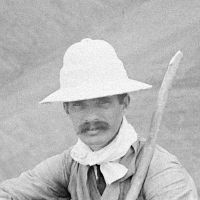
Portrait of John Smith Flett John Smith Flett 1911 Encyclopædia Britannica, Volume 12… (1911)

In the rocks of this group the minerals, as seen in a microscopic slide, occur as small rounded grains forming a mosaic closely fitted together. The individual crystals have never perfect form, and indeed rarely any traces of it. In some granulites they interlock, with irregular borders; in others they have been drawn out and flattened into tapering lenticles by crushing. In most cases they are somewhat rounded with smaller grains between the larger. This is especially true of the quartz and felspar which are the predominant minerals
Source: Wikisource

Portrait of John Smith Flett John Smith Flett 1911 Encyclopædia Britannica, Volume 12… (1911)

These are fine-grained rocks, not usually banded, nearly black in colour with small red spots of garnet. Their essential minerals are pyroxene, plagioclase and garnet: chemically they resemble the gabbros. Green augite and hypersthene form a considerable part of these rocks, they may contain also biotite, hornblende and quartz. Around the garnets there is often a radial grouping of small grains of pyroxene and hornblende in a clear matrix of felspar: these “centric” structures are frequent in granulites.
Source: Wikisource

Get perspective with Kwize: daily news enlightened by great literature