Summary

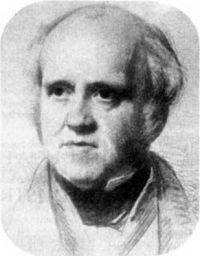
Portrait of Leonard Horner Leonard Horner Transactions of the Geological Society (1811)

But in the present state of geological science, and more especially when the great imperfection of the nomenclature of rocks is considered, it would be well if geologists made a practice of describing the simple minerals of which a rock is composed, wherever they can be distinguished, instead of giving specific names without any explanation of the nature of the compounds to which their terms are applied, and particularly those in which theory is involved.
Source: Wikisource

Portrait of Leonard Horner Leonard Horner Transactions of the Geological Society (1811)

About a quarter of a mile further south, I found a schistose rock composed of hornblende and mica, intermixed with a small quantity of felspar, quartz, and pyrites. It occurs in large masses irregularly heaped together, and the relative position of the schistose structure in the different masses preserves no uniformity. It is traversed by granite veins, varying from one to six inches in thickness, branching in different directions, and diminishing in thickness as they ascend.
Source: Wikisource

Portrait of Leonard Horner Leonard Horner Transactions of the Geological Society (1811)

The road very soon turns to the westward, at a right angle to its former direction, and as it is still cut through the rocks, exhibits a transverse section of them; and in the space of about a quarter of a mile, they display some very remarkable changes in their mode of stratification. The inclination of the compact sandstone diminishes for some way as it recedes from the hill, but it again begins gradually to increase: to this rock succeed thin strata of an argillaceous limestone coated with a slaty clay, the inclination of which becomes more and more considerable.
Source: Wikisource

Get perspective with Kwize: daily news enlightened by great literature