A colloid is a mixture in which microscopic insoluble particles are suspended within a continuous medium, with particle sizes ranging from 1 nanometre to 1 micrometre, as defined by IUPAC. This intermediate and adaptable state exists between true solutions and mechanical suspensions, displaying distinctive characteristics such as the Tyndall effect.
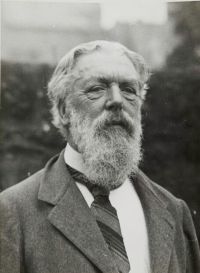
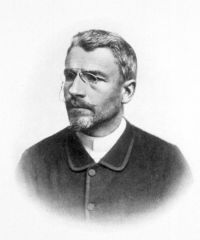
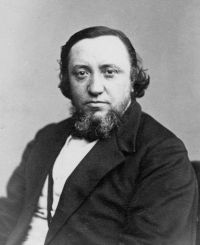
Scientists like William Scott Palmer associated colloids with the vitality of protoplasm, while D’Arcy Wentworth Thompson likened their fluidity to that of living matter. Stéphane Leduc investigated colloidal behavior in the presence of electric currents, and Ernst Haeckel connected colloids to cellular catalytic processes. These viewpoints emphasize colloids as essential in linking chemistry, biology, and physics, with their study uncovering both material intricacy and the fundamental mechanisms of life.