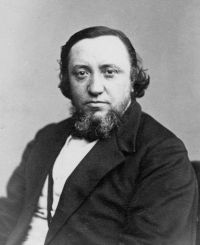
Benjamin Ward Richardson

Benjamin Ward Richardson

Summary

Portrait of Benjamin Ward Richardson Benjamin Ward Richardson Popular Science Monthly (1875)

This purely painless process, this descent by oblivious trance into oblivion, this natural physical death, is the true euthanasia; and it is the duty of those we call physicians to secure for man such good health as shall bear him in activity and happiness onward in his course to this goal. For euthanasia, though it be open to every one born of every race, is not to be had by any save through obedience to those laws which it is the mission of the physician to learn, to teach, and to enforce. Euthanasia is the sequel of health, the happy death engrafted on the perfect life.
Source: Wikisource

Portrait of Benjamin Ward Richardson Benjamin Ward Richardson Popular Science Monthly (1879)

To tell a country yokel that his body is not symmetrical in build, and that his mind has no kind of symmetrical relation to his body, were cruel, from its apparent satire. Yet why should it be? Why should ignorance and labor so deform any one that the hope of a complete reformation, the hope of the constitution of a perfect body and in it a perfect mind, should seem absurd? It is not the labor that is at fault. The labor is wholesome, healthful, splendid; it is a labor compatible with the noblest, nay, the most refined of human acquirements.
Source: Wikisource

Portrait of Benjamin Ward Richardson Benjamin Ward Richardson Popular Science Monthly (1875)

Thus the old Greeks, fathers of true mirth, who looked on prolonged, grief as an offense, and attached the word madness to melancholy, even they were so far imbued with sorrow when the child or youth died, that they bore the lifeless body to the pyre in the break of the morning, lest the sun should behold so sad a sight as the young dead; while we, who court rather than seek to dismiss melancholy, who find poetry and piety in melancholic reverie, and who indulge too often in what, after a time, becomes the luxury of woe, experience a gradation of suffering as we witness the work of death.
Source: Wikisource

Get perspective with Kwize: daily news enlightened by great literature