Summary

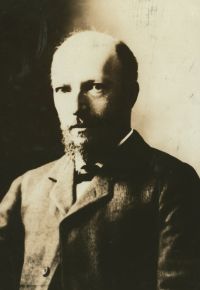
Portrait of Felix Adler Felix Adler The Moral Instruction of Children

We have also seen that we can not teach religion in the public schools. Must we, therefore, abandon altogether the hope of teaching the elements of morals? Is not moral education conceded to be one of the most important, if not the most important, of all branches of education? Must we forego the splendid opportunities afforded by the daily schools for this purpose? Is there not a way of imparting moral instruction without giving just offense to any religious belief or any religious believer, or doing violence to the rights of any sect or of any party whatsoever?
Source: Gutenberg

Portrait of Felix Adler Felix Adler The Moral Instruction of Children

Is it not a little astonishing that this fable should so often be related to children as if it contained a moral which they ought to take to heart? To make it apply at all, it is usually twisted from its proper signification and explained as meaning that one should not be fool-hardy, not attempt to struggle against overwhelming odds. But this is not the true interpretation. The oak is by nature strong and firm, while it is the nature of the reed to bend to every wind. The fable springs out of the experience of a people who have found resistance against oppression useless.
Source: Gutenberg

Portrait of Felix Adler Felix Adler The Moral Instruction of Children

What should be his attitude of mind in that supreme moment. The forces of nature are about to overwhelm him. What motive can there be strong enough to support bravery in that moment? The rule of duty for him would be: Be brave, because as a human being you are superior to the forces of nature, because there is something in you—your moral self—over which the forces of nature have no power, because what happens to you in your private character is not important, but it is important that you assert the dignity of humanity to the last breath.
Source: Gutenberg

Get perspective with Kwize: daily news enlightened by great literature