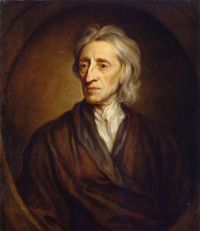
 John Locke,
An Essay Concerning Human Understanding
(1689)
John Locke,
An Essay Concerning Human Understanding
(1689)
“ Words, in their immediate Signification, are the sensible Signs of his Ideas who uses them. ”
Signification, the process by which words or symbols convey meaning, has been examined across philosophy, theology, and literature. John Locke grounded it in ideas, asserting words as "sensible signs" of mental concepts, while John Stuart Mill grappled with the accuracy of terminology in logic.
Raghupathi Venkataratnam Naidu imbued it with spiritual resonance, framing existence as a "current of joy" sourced in divine essence. Theodorus Dwight Weld contrasted personhood with objectification, and Emily Davies linked signification to gendered distinctions between reason and faith. These varied approaches reveal signification as a bridge between language, thought, and existential reality.
John Locke,
An Essay Concerning Human Understanding
(1689)
“ Words, in their immediate Signification, are the sensible Signs of his Ideas who uses them. ”
 John Stuart Mill,
A System of Logic, Ratiocinative and Inductive…
(1881)
John Stuart Mill,
A System of Logic, Ratiocinative and Inductive…
(1881)
“ In adopting a phraseology at variance with that which so high an authority, and one which I am less likely than any other person to undervalue, has deliberately sanctioned, I have been influenced by the urgent necessity for a term exclusively appropriated to express the manner in which a concrete general name serves to mark the attributes which are involved in its signification. ”
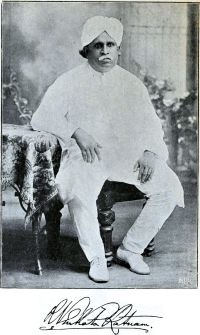 Raghupathi Venkataratnam Naidu,
The Message and Ministrations of Dewan Bahadur R. Venkata Ratnam
(1923)
Raghupathi Venkataratnam Naidu,
The Message and Ministrations of Dewan Bahadur R. Venkata Ratnam
(1923)
“ Thou art the main-spring, the vital secret, the fountain-source, of our existence. What is life but a genial current of joy and grace that wells up incessantly from Thy centred self? Thou art the life, the inner vitality, of our senses. ”
 Theodore Dwight Weld,
The Bible Against Slavery
(1838)
Theodore Dwight Weld,
The Bible Against Slavery
(1838)
“ The eternal distinction between a person and a thing, trampled under foot—the crowning distinction of all others—alike the source, the test, and the measure of their value—the rational, immortal principle, consecrated by God to universal homage, in a baptism of glory and honor by the gift of His Son, His Spirit, His word, His presence, providence, and power ”
 Emily Davies,
The Higher Education of Women
(1866)
Emily Davies,
The Higher Education of Women
(1866)
“ How natural the transition from the theory which assigns 'to the one the supremacy of the head, to the other that of the heart'—to that further division which attributes to the one Reason, to the other Faith. ”
 Laurence Housman,
Ploughshare and Pruning-hook
(1919)
Laurence Housman,
Ploughshare and Pruning-hook
(1919)
“ The Image of God was not seated in the features of your face but in the lineaments of your soul. In the knowledge of your powers, inclinations, and principles, the knowledge of yourself chiefly consisteth. ”
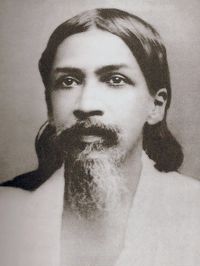 Aurobindo Ghose,
Essays On The Gita
(1922)
Aurobindo Ghose,
Essays On The Gita
(1922)
“ But if we look behind to the spirit and sense and not at the local name and temporal institution, we see that here too the sense is deep and true and the spirit philosophical, spiritual and universal. ”
 Clement of Alexandria,
Ante-Nicene Christian Library/Volume XII
(1869)
Clement of Alexandria,
Ante-Nicene Christian Library/Volume XII
(1869)
“ And sometimes we may know some one or more of those powers or properties,—as, for example, the desires and affections of the soul,—and be ignorant of the essence, and make it the object of investigation. ”
Max Farrand, The Records of the Federal Convention of 1787 (1911)
“ To a mind naturally strong and capacious, enriched by much reading and the experience of many years, he added a manner of communicating his thoughts peculiarly his own—in which simplicity, beauty, and strength were equally conspicuous. ”
Edward Sylvester Ellis, Thomas Jefferson, a Character Sketch
“ The clear conception, outrunning the deductions of logic, the high purpose, the firm resolve, the dauntless spirit, speaking on the tongue, beaming from the eye, informing every feature, and urging the whole man onward, right onward to his object—this, this is eloquence ”
Pen-portraits of literary women (1887)
“ All these details I saw at a glance; but what fixed my attention was the expression of goodness, nobleness, and power, that pervaded the whole—the truly human heart and nature that shone in the eyes. As our eyes met, she said, “C’est vous,” and held out her hand. ”
Raghupathi Venkataratnam Naidu,
The Message and Ministrations of Dewan Bahadur R. Venkata Ratnam
(1923)
“ Thou art the very mould and model of our thoughts and ideas; Thou art the very essence of our feelings and emotions. Thou art the very inspiration and sanction of our aims and ideals. Thou art the parent and the preceptor of our spirits. ”
 Josiah Royce,
The World and the Individual, First Series
(1899)
Josiah Royce,
The World and the Individual, First Series
(1899)
“ Is it not indeed plain that, as we ourselves have often heretofore said, when we talk of Being, we are indeed seeking for what, if present, would satisfy or tend to satisfy our conscious needs and meanings? Let us take this very character as the sole basis of our definition of what it is to be. Let us first say that whenever we talk of Being we mean a definitely Possible Fact of experience, viewed just as something possible for us. ”
Viscount James Bryce Bryce, William Ewart Gladstone
“ We may call it a power of ennobling ordinary things by showing their relation to great things, of pouring high emotions round them, of bringing the worthier motives of human conduct to bear upon them, of touching them with the light of poetry. ”
Samuel Johnson — Appreciations and Testimonia
“ His phraseology rolls ever in solemn and majestic periods, in which every substantive marches ceremoniously accompanied by its epithet; grand pompous words peal like an organ; every proposition is set forth balanced by a proposition of equal length; thought is developed with the compressed regularity and official splendour of a procession. ”
Bernhard Pick, The Apocryphal Acts of Paul, Peter… (1909)
“ But in truth, as concerned in itself and in our mode of expression, it is the marking off of all things and the uplifting and foundation of those things that are fixed and were unsettled, and the harmony of the wisdom—and indeed the wisdom of the harmony. ”
Josiah Royce,
The World and the Individual, First Series
(1899)
“ It is just because all meanings, in the end, will prove to be internal meanings, that this which the internal meaning most loves, namely the presence of concrete fulfilment, of life, of pulsating and originative will, of freedom, and of individuality, will prove, for our view, to be of the very essence of the Absolute Meaning of the world. ”
 G. E. Moore,
Philosophical Studies
G. E. Moore,
Philosophical Studies
“ And other philosophers have suggested that what we mean by "real" is—"connected in some way with a purpose—helping or hindering, or the object of a purpose." But if we look into their meaning, we find they mean—connected with a real purpose. ”
Robert Chambers, Vestiges of the Natural History of Creation
“ The sentence of short, simple, unconnected words, in which an infant amongst us attempts to express some of its wants and its ideas—the equally broken and difficult terms which the deaf and dumb express by signs, as the following passage of the Lord’s Prayer:—“Our Father, heaven in, wish your name respect, wish your soul’s kingdom providence arrive, wish your will do heaven earth equality,” &c.—these are like the discourse of the refined people of the so-called Celestial Empire. ”
 Ralph Barton Perry,
The Moral Economy
Ralph Barton Perry,
The Moral Economy
“ Steadiness of purpose under adverse or confusing circumstances is called persistence, courage, loyalty, or zeal, with {96} differences of meaning that reflect the nature either of the purpose or the circumstances. ”
 Auguste Forel,
The sexual question
Auguste Forel,
The sexual question
“ Good dispositions in the domains of will, sentiment, judgment, imagination, perseverance, duty, accuracy, self-control, the faculty of thinking logically and distinguishing the true from the false, the faculty of combining æsthetic thoughts and sensations, all constitute human values which are much superior to the faculty of rapid assimilation or receptivity, and a good memory for words and phrases. ”
Josiah Royce,
The Sources of Religious Insight
“ But the universal form in which any opinion comes to your consciousness, and gets its definition for your own mind, is this form of an appeal to an insight that is superior in grasp, in unity, in coherence, in reasonableness to your momentary insight. ”
 Ralph Waldo Emerson,
Representative Men: Seven Lectures
Ralph Waldo Emerson,
Representative Men: Seven Lectures
“ To these four sections, the four operations of the soul correspond,—conjecture, faith, understanding, reason. As every pool reflects the image of the sun, so every thought and thing restores us an image and creature of the supreme Good. ”
Richard Hurd, The works of Richard Hurd, volume 6…
“ In short, if we study ourselves, and reflect what our station, character, or nature is, we shall best discern what the virtues are, and in what manner to be expressed, which sit most properly and gracefully upon us. ”
 Ralph Waldo Trine,
What All The World's A-Seeking
Ralph Waldo Trine,
What All The World's A-Seeking
“ Every act is preceded and given birth to by a thought, the act repeated forms the habit, the habit determines the character, and character determines the life, the destiny,—a most significant, a most tremendous truth: thought on the one hand, life, destiny, on the other. ”
I. Edgar Jones, Pieces People Ask For (1909)
“ To illustrate with corkscrew words the Whichness of the Us. Mock not, poor common mortal, when thoughts like these appear, Illumining our labor with the Howness of the Here, And blazing like a comet through the Nowness of the Near. Some day in Realms Eternal such grand mist-haunted souls, Inscribe their words of Whichness on Whereforeantic scrolls, In that great world of Muchness which through the Maybe rolls. Then shall we each acknowledge the Whyness of the Whence; Each understand completely with Sensefulness of Sense, The Thusness of the Therefore, the Thatness of the Thence. ”
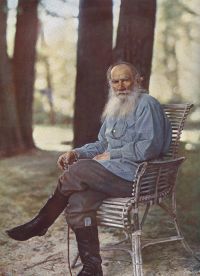 Leo Tolstoy,
The Kingdom of God Is Within You
(1894)
Leo Tolstoy,
The Kingdom of God Is Within You
(1894)
“ These three views of life are as follows: First, embracing the individual, or the animal view of life; second, embracing the society, or the pagan view of life; third, embracing the whole world, or the divine view of life. ”
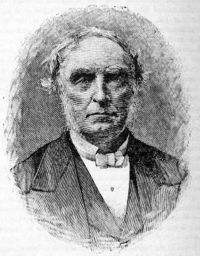 James Legge,
Sacred Books of the East
(1882)
James Legge,
Sacred Books of the East
(1882)
“ We go on to the third Appendix in two sections, being the fifth and sixth 'wings,' and forming what is called 'The Great Treatise.' It will appear singular to the reader, as it has always done to myself, that neither in the Text, nor in the first two Appendixes, does the character called Yî, which gives its name to the classic, once appear. ”
 Charles Wesley Emerson,
Evolution of Expression, Volume 2…
Charles Wesley Emerson,
Evolution of Expression, Volume 2…
“ The valuable parts that the speaker presents are expressed through inflections that suggest breadth and freedom. Each part is felt to have a value of its own, intellectual, moral, esthetic, or spiritual. ”
 David Hume,
Philosophical Essays Concerning Human Understanding
(1748)
David Hume,
Philosophical Essays Concerning Human Understanding
(1748)
“ They select the most striking Observations and Instances from common Life; place opposite Characters in a proper Contrast; and alluring us into the Paths of Virtue, by the Views of Glory and of Happiness, direct our Steps into these Paths, by the soundest Precepts and most illustrious Examples. ”
William James, The Philosophical Review (1892)
“ Now the sort of 'fact of experience' on which in my book I have proposed to compromise, is the so-called 'mental state,' in whose existence not only common men but philosophers have uniformly believed. ”
John Stuart Mill,
A System of Logic, Ratiocinative and Inductive
(1881)
“ As applied to individuals, the word Essence, we found, has no meaning, except in connection with the exploded tenets of the Realists; and what the schoolmen chose to call the essence of an individual, was simply the essence of the class to which that individual was most familiarly referred. ”
Earl of Philip Dormer Stanhope Chesterfield, Letters to His Son, 1749
“ Let us resume our reflections upon men, their characters, their manners, in a word, our reflections upon the world. They may help you to form yourself, and to know others; a knowledge very useful at all ages, very rare at yours. ”
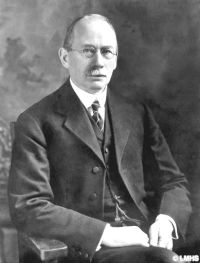 Rufus M. Jones,
Spiritual Reformers in the 16th & 17th Centuries
Rufus M. Jones,
Spiritual Reformers in the 16th & 17th Centuries
“ The seventh, and final, "quality" is body or figure, by which he means the fundamental tendency or energy toward expression in actuality and concrete form. The final goal of intelligent purpose is the realization of wisdom, of idea, in actual Nature-forms and life-forms—the incarnation of the spirit. ”
 Alfred North Whitehead,
An enquiry concerning the principles of natural knowledge
(1925)
Alfred North Whitehead,
An enquiry concerning the principles of natural knowledge
(1925)
“ Life is complex in its expression, involving more than percipience, namely desire, emotion, will, and feeling. ”
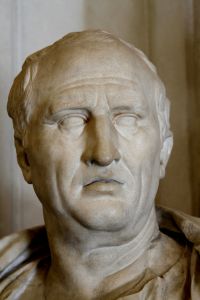 Marcus Tullius Cicero,
The Orations of Marcus Tullius Cicero…
Marcus Tullius Cicero,
The Orations of Marcus Tullius Cicero…
“ But when we speak of a man's habitual condition, we mean his constant and absolute completeness of mind or body, in some particular point—as for instance, his perception of virtue, or of some art, or else some science or other. ”
Matthew Henry, Matthew Henry's Commentary on the Whole Bible… (1700s)
“ If thou canst, answer me. If thou hast so much strength and spirit left thee, and art not quite spent with the distemper and the dispute, set thy words in order, and they shall have their due consideration." Those that can speak reason will hear reason. ”
Alexander Campbell Fraser, Thomas Reid — Chapter XI (1898)
“ In short, this postulate is among the inspired revelations of the Common Sense that are contained in our share of Divine Reason. We may speak of understanding as 'human,' with its often discordant generalisations; but there can be no merely 'human' Reason. ”
 Sarah Grand,
The Heavenly Twins
Sarah Grand,
The Heavenly Twins
“ Mind as creator appealed to her less than mind as recorder, reasoner, and ruler; and for one gem of poetry or other beauty of purely literary value which she quotes, there are fifty records of principles of action. ”
Josiah Royce,
The Sources of Religious Insight
“ These friends and servants of mankind have used, in fact, that source of insight which I mentioned in the closing words of the last lecture, a source by means of which the results and the moving principles of individual experience, of social experience, of reason, and of will are brought into a certain creative unity to which the noblest spiritual attainments of our world are due. ”
Josiah Parsons Cooke Jr., Popular Science Monthly (1874)
“ Nor is it the extent of the knowledge, alone, which ennobles, but much more the spirit and aim with which it is cultivated, and that spirit and aim you may carry into any occupation however engrossing, and into any condition of life however obscure. ”
James Peller Malcolm, Anecdotes of the Manners and Customs of London during the Eighteenth Century…
“ We believe the existence of an Almighty Being, from the consideration of his wonderful works; from a consideration of those innumerable celestial and glorious bodies, and from their wonderful order and harmony. ”
 George Edward Moore,
Principia Ethica — Chapter VI
(1903)
George Edward Moore,
Principia Ethica — Chapter VI
(1903)
“ Connected with the distinction just made between ‘object’ in the sense of the qualities actually before the mind and ‘object’ in the sense of the whole thing which possesses the qualities actually before the mind, is another distinction of the utmost importance for a correct analysis of the constituents necessary to a valuable whole. ”
 Dorothea Beale,
Work and Play in Girls' Schools
Dorothea Beale,
Work and Play in Girls' Schools
“ For this, wisdom and self-denial and sympathy with the noblest and the best are to be sought, and above all with the One, the Infinite Wisdom revealed in Nature, in the world of thinking beings and in the self-conscious mind. ”
 ʻAbdu'l-Bahá,
Tablets of the Divine Plan
ʻAbdu'l-Bahá,
Tablets of the Divine Plan
“ In like manner, when divers shades of thought, temperament and character, are brought together under the power and influence of one central agency, the beauty and glory of human perfection will be revealed and made manifest. ”
ʻAli Muhammad Shirazi Bab, Selections From the Writings of the Báb
“ Men of wisdom, who had but a notion of the revelation of Thy glory, conceived a likeness of Thee according to their own understanding, and men of erudition, who had gained but a glimpse of the manifold evidences of Thy loving-kindness and glory, have contrived peers for Thee in conformity with their own imaginations. ”
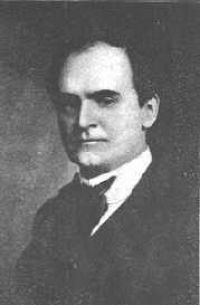 Three Initiates,
The Kybalion
(1908)
Three Initiates,
The Kybalion
(1908)
“ In these lessons we have followed the example of some of the world's greatest thinkers, both ancient and modern—the Hermetic Masters—and have called this Underlying Power —this Substantial Reality—by the Hermetic name of "THE ALL," which term we consider the most comprehensive of the many terms applied by Man to THAT which transcends names and terms. ”
William James, The Varieties of Religious Experience (1902)
“ Such ideas, and others equally abstract, form the background for all our facts, the fountain-head of all the possibilities we conceive of. They give its “nature,” as we call it, to every special thing. ”
 James Frederick Ferrier,
Blackwood's Magazine
(1842)
James Frederick Ferrier,
Blackwood's Magazine
(1842)
“ All the secondary qualities, colours, sounds, tastes, smells, heat, hardness, everything, in short, which is an affection of sense, may be generalized at one sweep into our mere knowledge of things. But the primary qualities, which are usually restricted to extension and figure, and which constitute, it is said, the objective or real essence of things, and which are entirely independent of us, into what shall they be generalized? ”
 Joseph Conrad,
Notes on My Books — Preface
Joseph Conrad,
Notes on My Books — Preface
“ And their words are heard with reverence, for their concern is with weighty matters: with the cultivation of our minds and the proper care of our bodies, with the attainment of our ambitions, with the perfection of the means and the glorification of our precious aims. ”
