Zero, the integer representing an empty quantity and the additive identity in arithmetic, has shaped mathematical thought and philosophical inquiry for centuries. From its role as a placeholder in positional numeral systems to its abstract significance as a symbol of absence and potential, zero bridges concrete calculation and metaphysical reflection.
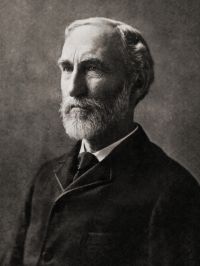
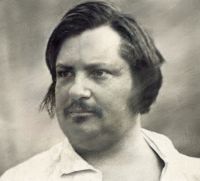
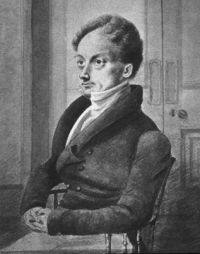
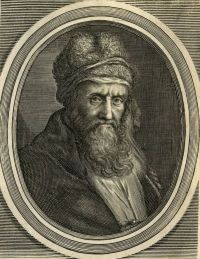
Philosophers like Lorenz Oken framed it as a "primary act" rather than absolute nothingness, while Josiah Royce contrasted its mathematical importance with its philosophical implications as a "goal of finite consciousness." Yevgeny Zamyatin likened it to a "silent, immense rock," marking both cyclical return and existential transformation. These perspectives underscore zero’s dual nature: a foundational element of numerical systems and a provocative metaphor for beginnings, boundaries, and the interplay between presence and void.
 Miguel de Unamuno,
Tragic Sense Of Life
Miguel de Unamuno,
Tragic Sense Of Life