Francis B. Pearson, The Vitalized School
“ When we ask pupils to give the rule for division of fractions, we are testing again for mere memory; but when we ask why we invert the terms of the divisor, we are treating our pupils as rational beings. ”
A divisor, in mathematics, is an integer that completely divides another, forming the basis of divisibility, multiples, and factors. From a practical standpoint, authors like Francis B. Pearson and Maria Edgeworth examined divisors in arithmetic education, emphasizing logical approaches and clear instruction.
Plato, in Laws, metaphorically connected divisors to cosmic order, while Henry Ernest Dudeney explored them through number theory puzzles. Edward Thorndike critiqued their use in arithmetic, pointing out their limited relevance in real-world situations. These varied perspectives—from teaching to philosophy—reveal the divisor’s role as both a fundamental mathematical idea and a flexible tool across different fields.
Francis B. Pearson, The Vitalized School
“ When we ask pupils to give the rule for division of fractions, we are testing again for mere memory; but when we ask why we invert the terms of the divisor, we are treating our pupils as rational beings. ”
 Maria Edgeworth,
Practical Education, Volume II
Maria Edgeworth,
Practical Education, Volume II
“ In division, what is called the Italian method of arranging the divisor and quotient, appears to be preferable to the common one, as it places them in such a manner as to be easily multiplied by each other, and as it agrees with algebraic notation. ”
“ Every divisor is a gift of God, and corresponds to the months of the year and to the revolution of the universe. All cities have a number, but none is more fortunate than our own, which can be divided by all numbers up to 12, with the exception of 11, and even by 11, if two families are deducted. And now let us divide the state, assigning to each division some God or demigod, who shall have altars raised to them, and sacrifices offered twice a month; and assemblies shall be held in their honour, twelve for the tribes, and twelve for the city, corresponding to their divisions. ”
 Hrotsvitha,
The Plays of Roswitha — Sapientia
(1923)
Hrotsvitha,
The Plays of Roswitha — Sapientia
(1923)
“ SAPIENTIA. When numbers of any magnitude are set down in order. the first set down is called the "minor term" and the last the "major." When, in making a division, we say by how many the number is to be divided, we give the "divisor," but when we enumerate how many there are in each of the parts we set forth the"quotient." ”
E. O. Vaile, Popular Science Monthly (1880)
“ The method which we call short division was largely used in the middle ages, as was also the method of dividing by using the factors of the divisor. The process by long division was known, but was not so commonly used as others. ”
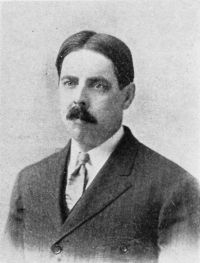 Edward L. Thorndike,
The Psychology of Arithmetic
Edward L. Thorndike,
The Psychology of Arithmetic
“ The process of finding the least common multiple is of such exceedingly rare application in science or business or life generally that the textbooks have to resort to purely fantastic problems to give drill in its use. (5) Greatest common divisor.—The whole set of bonds involved in learning 'greatest common divisor' should also be left out. In reducing fractions to lowest terms the pupil should divide by anything that he sees that he can divide by, favoring large divisors, and continue doing so until he gets the fraction in terms suitable for the purpose in hand. ”
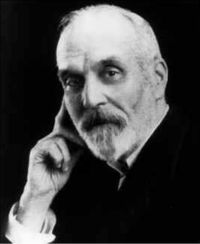 Henry Ernest Dudeney,
The Canterbury Puzzles, and Other Curious Problems
Henry Ernest Dudeney,
The Canterbury Puzzles, and Other Curious Problems
“ To find how many different numbers will divide a given number, N, let N = ap bq cr ..., where a, b, c ... are prime numbers. Then the number of divisors will be (p + 1) (q + 1) (r + 1) ..., which includes as divisors 1 and N itself. Thus in the case of my puzzle—To find the smallest number that has a given number of divisors we must proceed by trial. ”
St. George William Joseph Stock, Deductive Logic
“ What we call a division on a single basis is in reality the compressed result of a scheme of division and subdivision by dichotomy, in which a fresh principle has been introduced at every step. Thus when we divide men, on the basis of colour, into white, black, brown, red and yellow, we may be held to have first divided men into white and not-white, and then to have subdivided the men that are not-white into black and not-black, and so on. ”
St. George William Joseph Stock, Deductive Logic
“ Formal correctness requires that the last term in such a series should be negative. We have here to keep the term 'not-red' open, to cover any blue or green men that might turn up. It is only experience that enables us to substitute the positive term 'yellow' for 'not-red,' since we know as a matter of fact that there are no men but those of the five colours given in the original division.§ 415. Any correct logical division always admits of being arrived at by the longer process of division and subdivision by dichotomy. ”
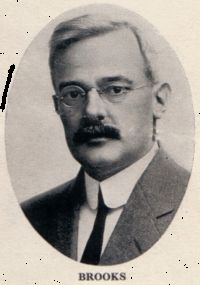 Stratton D. Brooks,
Composition-Rhetoric
Stratton D. Brooks,
Composition-Rhetoric
“ Such a complete and exact division is called classification.Nearly every term may be divided according to more than one principle. We may divide the term books into ancient and modern, or into religious and secular, or in any one of a dozen other ways. Which principle of division we shall choose will depend upon our purpose. If we wish to discuss sponges with reference to their shapes, our division will be different from what it would be if we were to discuss them with reference to their uses. When a principle of division has once been chosen it is essential that it be followed throughout. ”
F. Marion Crawford, Marzio's Crucifix, and Zoroaster
“ The great law of division became clear to him—the separation for a time of the universal agent into two parts, by the separation and reuniting of which comes light and heat and the hidden force of life, and the prime rules of attractive action; all things that are accounted material. ”
Percival Leigh, Comic Arithmetic
“ Division teaches how to divide a number into two or more equal parts, as in the division of prize-money. [39] Division is of great importance, whether political, ecclesiastical, commercial, civil, or social. Nothing is more likely to destroy your opponents than a split. Divide et impera is the true Machiavelian policy of all governments.Numbers, that is the multitude, are to be divided, in a variety of ways,—by mob orators, or by mob-sneaks, or by parliamentary flounderers, or by mystifying pulpit demagogues. ”
 Philip Schaff,
Nicene and Post-Nicene Fathers…
(1885)
Philip Schaff,
Nicene and Post-Nicene Fathers…
(1885)
“ Again, human is more specific than animal, and man than human, and than man the individual Peter, Paul, or John. [3] Do they then mean by sub-numeration the division of the common into its subordinate parts? But I should hesitate to believe they have reached such a pitch of infatuation as to assert that the God of the universe, like some common quality conceivable only by reason and without actual existence in any hypostasis, is divided into subordinate divisions, and that then this subdivision is called sub-numeration. ”
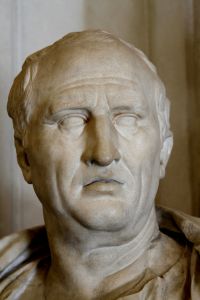 Marcus Tullius Cicero,
Cicero's Tusculan Disputations
(1888)
Marcus Tullius Cicero,
Cicero's Tusculan Disputations
(1888)
“ XXI. Yet this division does not proceed from ignorance; for the soul admits of a twofold division, one of which partakes of reason, the other is without it. When, therefore, we are ordered to give a law to ourselves, the meaning is, that reason should restrain our rashness. ”
John Gower, The complete works of John Gower…
“ In that part of the Mirour which treats of vices, each deadly sin is dealt with regularly under five principal heads, or, as the author expresses it, has five daughters. Now this fivefold [Pg xxxvii] division is not, so far as I can discover, borrowed from any former writer. It is of course quite usual in moral treatises to deal with the deadly sins by way of subdivision, but usually the number of subdivisions is irregular, and I have not found any authority for the systematic division of each into five. ”
Marcus Tullius Cicero,
On Invention — Book 1
“ If deliberation and demonstration are kinds of causes, then the divisions of any one kind cannot rightly be considered causes; for the same matter may appear to be a class to one person, and a division to another; but it cannot appear both a class and a division to the same person. But deliberation and demonstration are kinds of argument; for either there is no kind of argument at all, or there is the judicial kind alone, or there are all three kinds, the judicial and the demonstrative and the deliberative. ”
 Aristotle,
Organon
(1853)
Aristotle,
Organon
(1853)
“ And this is not at all absurd, since neither perhaps does he who makes an induction demonstrate, though at the same time he renders something manifest, but he who selects definition from division does not state a syllogism. For as in conclusions without media, if a man state that from such things being granted, this particular thing necessarily exists, it is possible to inquire why, thus also is it definitions by division. What is man? A mortal animal, pedestrian, biped, without wings. ”
Marcus Tullius Cicero,
The Orations of Marcus Tullius Cicero…
“ And the judicial kind is itself also distributed under two divisions,—one absolute, and one which takes in something besides as an addition, and which may be called assumptive. The absolute division is that which of itself contains in itself an inquiry into right and wrong. The assumptive one is that which of itself supplies no firm ground for objection, but which takes to itself some topics for defence derived from extraneous circumstances. And its divisions are four,—concession, removal of the accusation from oneself, a retorting of the accusation, and comparison. ”
Gordon Hall Gerould, The Grateful Dead; the history of a folk story (1908)
“ If the division for the sake of purification were then regarded as more primitive and older than the division for the sake of sharing the gains or of testing the hero, it would naturally follow that all the combined types must proceed from The Grateful Dead + The Poison Maiden. ”
 Paul Vinogradoff,
Villainage in England: Essays in English Mediaeval History
Paul Vinogradoff,
Villainage in England: Essays in English Mediaeval History
“ It is hardly necessary to insist on the great resemblance between all these features and the corresponding facts in the arrangement of the arable. The principle of division is supplied by the tendency to assign an equal share to every holding, and the system of scattered strips follows as a necessary consequence of the principle. ”
Various, Punch, or the London Charivari…
“ No, darling, I do not. The Division has been taken; it is all over. At the last moment I rose in my place in the House, and made purposely one of the most injudicious orations ever heard within those respected walls. I disgusted friends, alienated adherents, and in every possible manner strengthened the hands of the Opposition; and, darling we are beaten—yes, beaten—by a thumping majority. ”
 Gilbert Keith Chesterton,
Eugenics and other Evils — Part 1…
(1922)
Gilbert Keith Chesterton,
Eugenics and other Evils — Part 1…
(1922)
“ Whether they vivisect painfully or painlessly, they are trying to find out whether the truth is there or not. The old inquisitors tortured to put their own opinions into somebody. But the new Inquisitors torture to get their own opinions out of him. They do not know what their own opinions are, until the victim of vivisection tells them. The division of thought is a complete chasm for anyone who cares about thinking. ”
 Laurence Sterne,
The Life and Opinions of Tristram Shandy…
Laurence Sterne,
The Life and Opinions of Tristram Shandy…
“ For in this long digression which I was accidentally led into, as in all my digressions (one only excepted) there is a masterstroke of digressive skill, the merit of which has all along, I fear, been overlooked by my reader,—not for want of penetration in him,—but because ’tis an excellence seldom looked for, or expected indeed, in a digression;—and it is this: That tho’ my digressions are all fair, as you observe,—and that I fly off from what I am about, as far, and as often too, as any writer in Great Britain ”
 James Glaisher,
Art-Studies from Nature, as Applied to Design
James Glaisher,
Art-Studies from Nature, as Applied to Design
“ We commence our present division—and shall follow the like course with the others—with its higher forms, and, proceeding in descending order, shall in each conclude with those humble rudimentary forms in which the rigid divisions of classification are obliterated, and the only differences which can be assigned are, at best, but little more than arbitrary. ”
The Book of Enoch (Charles) — Chapter 82
“ Their four leaders who divide the four parts of the year enter first; and after them the twelve leaders of the orders who divide the months; and for the three hundred and sixty (days) there are heads over thousands who divide the days; and for the four intercalary days there are the leaders which sunder the four parts of the year. 12. And these heads over thousands are intercalated between leader and leader, each behind a station, but their leaders make the division. ”
William James, The Principles of Psychology, Volume 1…
“ This is an excellent example of the so-called 'fallacy of division,' or predicating what is true only of a collection, of each member of the collection distributively. It no more follows that if a thousand things together cause sensation, one thing alone must cause it, than it follows that if one pound weight moves a balance, then one ounce weight must move it too, in less degree. ”
George Hastings McNair, A Class Room Logic
“ On the other hand, if both subdivisions are made positive then there is danger of making the opposing terms contrary rather than contradictory. This, of course, would be a serious logical fallacy, as contrary terms admit of middle ground while contradictory terms give no choice, it is either the one or the other. The use of dichotomy becomes evident in situations where new and unexpected discoveries may be made. Without disturbing the classification the new species may be appended to the negative side of the division. The following illustrates: 6. ”
E. H. Davis, Ancient Monuments of the Mississippi Valley
“ To facilitate description, and to bring something like system out of the disordered materials before us, the enclosures are, to as great a degree as practicable, divided into classes; that is to say, such as are esteemed to be works of defence are placed together, while those which are regarded as sacred, or of a doubtful character, come under another division. ”
Roy B. Kester, Accounting theory and practice… (1922)
“ To determine divisibility by 9, the easiest way is to “cast out” the 9’s. (a) If the difference between the trial balance totals is divisible by 9 and consists of less than three figures, i.e., 9, 18, 27, 36, a one-column transposition may be the cause of the error. Divide this difference by 9. If the quotient is 1, the difference between the two transposed figures is 1. If the quotient is 2 or 3 or 4, the difference between the transposed figures is 2 or 3 or 4, etc. For instance:Thus the figures in the last column indicate the difference between the figures of the original item. ”
Augusta J. Evans, Vashti; Or, Until Death Us Do Part
“ No wall of division, no sea of separation, would have proved so effectual, so insurmountable, as his own firm resolve that his earthly path should never cross that of one whom God’s statutes had set apart until death annulled the decree. ”
Philip Schaff,
Nicene and Post-Nicene Fathers…
(1885)
“ There is “distinction” or “distribution” without division. This word “distribution” is used by Tertullian and others to express the effect of the “persons” (ἰδιότητες, ὑποστάσεις, πρόσωπα) upon the Godhead which forms the definition of the substance (ὁ τῆς οὐσίας λόγος) . ”
Aristotle,
Posterior Analytics (Bouchier)…
(1901)
“ Knowledge of the Essence cannot be attained by Division Nor can demonstration be attained by means of Division, which never proves necessary connection, and can never give the cause. Thus definitions founded on division are invalid as lacking the element of necessity. ”
 John Kendrick Bangs,
In Camp With A Tin Soldier
John Kendrick Bangs,
In Camp With A Tin Soldier
“ I've always hated division—particularly division of apples and peaches. There is no meaner sum in any arithmetic in the world [98] than that I used to have to do every time I got an apple when I was your age.""What was the sum?" asked Jimmieboy. ”
 Grenville Kleiser,
The Training of a Public Speaker
Grenville Kleiser,
The Training of a Public Speaker
“ Every division, therefore, when it may be employed to advantage, ought to be first clear and intelligible, for what is worse than being obscure in a thing, the use of which is to guard against obscurity in other things? ”
 Epictetus,
 the Discourses as reported by Arrian…
Epictetus,
Epictetus, the Discourses as reported by Arrian…
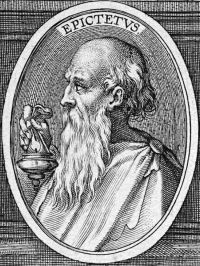
“ Therefore, the third division is necessary because of the second, and the second because of the first; while the most necessary of all, and the one in which we ought to rest, is the first. But we do the opposite; for we spend our time in the third division, and all our zeal is devoted to it, while we utterly neglect the first. ”
St. George William Joseph Stock, Deductive Logic
“ They are intellectual people.§ 853. As the possibility of this sort of ambiguity is not confined to the middle term, it seems desirable to add that when either the major or minor term is used distributively in the premiss and collectively in the conclusion, we have the fallacy of composition, and in the converse case the fallacy of division. ”
William Minto, Logic, Inductive and Deductive
“ Signification was thus the basis of division. But [page 114] according to what differences? The Categories themselves are so abstract that this question might be discussed on their bare titles interminably. But often when abstract terms are doubtful, an author's intention may be gathered from his examples. And when Aristotle's examples are ranged in a table, certain principles of subdivision leap to the eyes. Thus:— [page 115] In looking at the examples, our first impression is that Aristotle has fallen into a confusion. ”
 Hippolyte Taine,
The French Revolution - Volume 2
Hippolyte Taine,
The French Revolution - Volume 2
“ Consequently, a division arises amongst those who had assumed this load, and two groups are formed, one huge, inert and disintegrating, and the other small, compact and energetic, each taking one of two ways which diverge from each other, and which keep on diverging more and more. ”

