Number theory

Definition and stakes

Levi L. Conant,  The Number Concept: Its Origin and Development

“ Any other origin is difficult to reconcile with observed facts, and still more difficult to reconcile with any rational theory of number system development. Dismissing from consideration the quinary scale, let us briefly examine once more the natural process of evolution through which the decimal and the vigesimal scales come into being. After the completion of one count of the fingers the savage announces his result in some form which definitely states to his mind the fact that the end of a well-marked series has been reached. ”
Source: Gutenberg

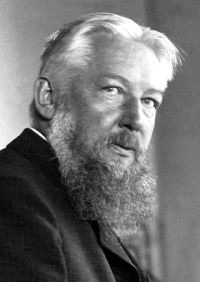
Portrait of Oswald Spengler Oswald Spengler,  The Decline of the West (1926)

“ In number, then, as the sign of completed demarcation, lies the essence of everything actual, which is cognized, is delimited, and has become all at once—as Pythagoras and certain others have been able to see with complete inward certitude by a mighty and truly religious intuition. Nevertheless, mathematics—meaning thereby the capacity to think practically in figures—must not be confused with the far narrower scientific mathematics, that is, the theory of numbers as developed in lecture and treatise. ”
Source: Gutenberg

Portrait of Bertrand Russell Bertrand Russell,  Our Knowledge of the External World… (1914)

“ The logical definition of numbers, though it seems an essential support to the theory of infinite numbers, was in fact discovered independently and by a different man. The theory of infinite numbers—that is to say, the arithmetical as opposed to the logical part of the theory—was discovered by Georg Cantor, and published by him in 1882-3. [3] The definition of number was discovered about the same time by a man whose great genius has not received the recognition it deserves—I mean Gottlob Frege of Jena. ”
Source: Wikisource

Get perspective with Kwize: daily news enlightened by great literature