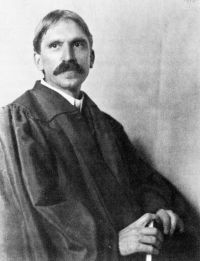
Sun Tzu, The Art of War (2000)
“ Measurement owes its existence to Earth; Estimation of quantity to Measurement; Calculation to Estimation of quantity; Balancing of chances to Calculation; and Victory to Balancing of chances. ”
Estimation, the process of evaluating value, quantity, or probability through reasoned judgment, has long been a subject of inquiry across disciplines. From Sun Tzu’s connection of estimation to strategic success in The Art of War to Pierre-Simon Laplace’s probabilistic examinations in A Philosophical Essay on Probabilities, the theme reveals a range of approaches.
David Hume explored estimation’s role in societal valuation, while Hans Gross critiqued its inaccuracy in criminal psychology. Samuel Johnson and James Fernald highlighted its relationship with calculation and respect, respectively. These diverse perspectives underscore estimation’s dual nature: a tool for empirical analysis and a reflection of human subjectivity.
Sun Tzu, The Art of War (2000)
“ Measurement owes its existence to Earth; Estimation of quantity to Measurement; Calculation to Estimation of quantity; Balancing of chances to Calculation; and Victory to Balancing of chances. ”
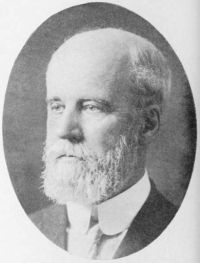 James Champlin Fernald,
English Synonyms and Antonyms
James Champlin Fernald,
English Synonyms and Antonyms
“ Estimate has more of calculation; as, my estimate of the man, or of his abilities, is very high. Estimation involves the idea of calculation or appraisal with that of esteem or regard, and is especially used of the feeling entertained by numbers of people ”
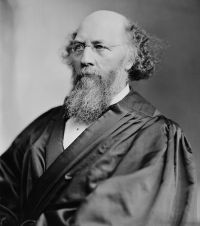 Stephen Johnson Field,
Gordon v. Butler — Opinion of the Court
Stephen Johnson Field,
Gordon v. Butler — Opinion of the Court
“ For opinions upon matters capable of accurate estimation by application of mathematical rules or scientific principles, such, for example, as the capacity of boilers, or the strength of materials, the case may be different. ”
Hans Gross, Criminal Psychology: A Manual for Judges…
“ If I permit anybody to count up accidentally concurrent things and he announces that their number is one hundred, I shall probably have him count over again. I shall be surprised to hear that somebody’s collection contains exactly 1000 pieces, and when any one cites a distance of 300 steps I will suppose that he had made an approximate estimation but had not counted the steps. ”
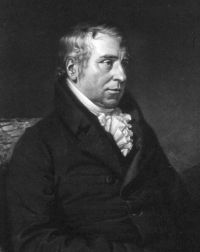
 David Hume,
The History of England in Three Volumes…
David Hume,
The History of England in Three Volumes…
“ To preserve, however, some rule in the estimation, it seems to have been the practice to keep an eye to former assessments, and to rate every man according as his ancestors, or men of such an estimated property, were accustomed to pay. ”
 Pierre-Simon Laplace,
A Philosophical Essay on Probabilities
(1902)
Pierre-Simon Laplace,
A Philosophical Essay on Probabilities
(1902)
“ There exists in the estimation of probabilities a kind of illusions, which depending especially upon the laws of the intellectual organization demands, in order to secure oneself against them, a profound examination of these laws. ”
marquis de Pierre Simon Laplace, A Philosophical Essay on Probabilities
“ Each weight depends in truth upon the law of the probability of error of each system, and almost always this law is unknown; but happily I have been able to eliminate the factor which contains it by means of the sum of the squares of the variations of the observations in this system from their mean result. It would then be desirable in order to complete our knowledge of the results obtained by the totality of a great number of observations that we write by the side of each result the weight which corresponds to it; analysis furnishes for this object both general and simple methods. ”
1911 Encyclopædia Britannica (1911)
“ This sphere of subjective probability is widened by the latest developments of the science [47] so far as they add to the number of constants for which it is important to determine the probable—and improbable—error. For instance, a measure of the deviation of observations from an average or mean value was required by the older writers only as subordinate to the determination of the mean, but now this “standard deviation” (below, par. 98) is often treated as an entity for which it is important to discover the limits of error. ”
“ Thus, by way of illustration, the estimate for a building implies the number of the different materials, with their cost, which is the number of pounds, shillings, and pence; also the number of requisite workmen to be employed for such time, or number of weeks, days, &c. at a certain stipend: admeasurement also consists of numbers, whether it be employed on solids, fluids, or designate the succession of our perceptions, called time [17] : and ratio or propor [Pg 141] tion is equally the creature of numbers. ”
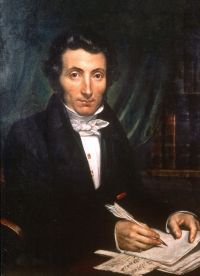 René Caillié,
Travels through Central Africa to Timbuctoo and across the Great Desert to Morocco performed in the year 1824-1828…
(1830)
René Caillié,
Travels through Central Africa to Timbuctoo and across the Great Desert to Morocco performed in the year 1824-1828…
(1830)
“ I will add one consideration which will not have escaped those geographers who have studied the calculation of probabilities. In a series of observations made under the same circumstances, and especially by the same observers, the greater the number, the more probable is it that their amount will approach to the total quantity required. When there is no reason that the errors committed should be on one side rather than another, they mutually destroy each other, and the more so, the more the observations are multiplied. ”
 Samuel Johnson,
A Journey to the Western Islands of Scotland
Samuel Johnson,
A Journey to the Western Islands of Scotland
“ Of the proportion, which the product of any region bears to the people, an estimate is commonly made according to the pecuniary price of the necessaries of life; a principle of judgment which is never certain, because it supposes what is far from truth, that the value of money is always the same, and so measures an unknown quantity by an uncertain standard. ”
1911 Encyclopædia Britannica (1911)
“ By simple induction we know that the median of a large sample of observations is a probable value for the true median; how probable is determined as follows from a selection of our data. First suppose that all the observations are of the same weight. If x′ were the true median, the probability that as many as 1⁄2n + r of the observations should fall on either side of that point is given by the normal law for which the exponent is -2r2/n. ”
 John Stuart Mill,
Principles of Political Economy
(1871)
John Stuart Mill,
Principles of Political Economy
(1871)
“ A mere average, therefore, might lead to conclusions only the more misleading, for their deceptive semblance of accuracy. There would be less danger of error in taking the average of only a small number of years, and correcting it by a conjectural allowance for the character of the seasons, than in trusting to a longer average without any such correction. ”
Various, International Library of Technology… (1909)
“ With a little practice, any one can learn to take off the quantities of materials, but when it comes to determining the rates, only persons having extensive and varied knowledge of building and costs of various details can accurately estimate the time and labor required to complete the work. In order, then, that the duties and requirements of a practical estimator may be thoroughly understood, a number of detailed estimates will be given in this Section as guides. ”
Roland Allen, Missionary Survey As An Aid To Intelligent Co-Operation In Foreign Missions
“ It may also cause surprise that we ask for estimates in some cases where exact information is not immediately accessible. It may be said that statistics are misleading, but estimates are hopelessly misleading: let us have correct figures or none. That attitude is easily understood, but under the circumstances it is vain. "Correct figures," that is, meticulously exact figures, are unattainable. An estimate is in nearly all matters of daily life and business the basis, and rightly the basis, of our action. ”
“ If I doubt whether a certain handful gives a fair sample, or representative, for purposes of judging value, of a whole carload of grain, I take a number of handfuls from various parts of the car and compare them. If they agree in quality, well and good; if they disagree, we try to get enough samples so that when they are thoroughly mixed the result will be a fair basis for an evaluation. This illustration represents roughly the value of that aspect of scientific control in induction which insists upon multiplying observations instead of basing the conclusion upon one or a few cases. ”
William Minto, Logic, Inductive and Deductive
“ When we build expectations of single events on statistics of observed proportions of events of that kind, it is ultimately on the same principle that rational expectation rests. That the proportion will obtain on the average we regard as certain: the ratio of favourable cases to the whole number of possible alternatives is the measure of rational expectation or probability in regard to a particular occurrence. ”
 William Stanley Jevons,
The principles of science
William Stanley Jevons,
The principles of science
“ It may be asked, as Mill asks, Why spend so much trouble in calculating from imperfect data, when a little trouble would enable us to render a conclusion certain by actual trial? Why calculate the probability of a measurement being correct, when we can try whether it is correct? But I shall fully point out in later parts of this work that in measurement we never can attain perfect coincidence. Two measurements of the same base line in a survey may show a difference of some inches, and there may be no means of knowing which is the better result. ”
William Fleetwood Sheppard, 1911 Encyclopedia Britannica (1911)
“ An average is found by adding together several measurements of the same kind and dividing by the number of measurements. In calculating an average it should be observed that the addition of any numerical quantity (positive or negative) to each of the measurements produces the addition of the same quantity to the average, so that the calculation may often be simplified by taking some particular measurement as a new zero from which to measure. ”
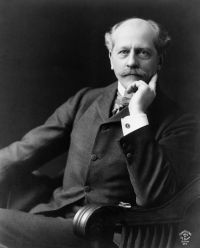 Percival Lowell,
The Evolution of Worlds
(1910)
Percival Lowell,
The Evolution of Worlds
(1910)
“ Yet no less Herculean a task confronts us. To find out about their motions, we are therefore driven to what is called the statistical method of inquiry—which is simply a branch of the doctrine of probabilities. ”
Martin A. Baumhoff, California Athabascan Groups
“ In situations where the uncertainty of the observation is due to measurement error or to a multiplicity of factors, the distribution obtained often assumes a normal form or a form sufficiently normal so that the normal distribution can be used as an approximation. ”
Elgin Gould, Charles Richmond Henderson, Albion Woodbury Small, and William Isaac Thomas, The American Journal of Sociology (1896)
“ The statistician is primarily the man of facts, not merely a recorder of facts, but one upon whom is laid the duty of their orderly arrangement, their exposition and scientific coordination. Our author inferentially recognizes these functions by mapping out a general work to bear the title of the science of the statistics. Herein will be arranged the principal contents of statistical knowledge, in two separate volumes, the one having particular reference to the needs of sociology, the other of economics. ”
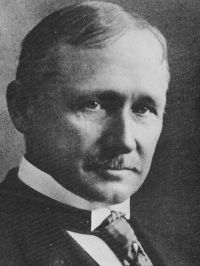 Frederick Winslow Taylor,
Shop Management
Frederick Winslow Taylor,
Shop Management
“ It must be remembered that the example given is simply for illustration. To obtain accurate average times, for any item of work under specified conditions, it is necessary to take observations upon a number of men, each of whom is at work under conditions which are comparable. The total number of observations which should be taken of any one elementary unit depends upon its variableness, and also upon its frequency of occurrence in a day's work. ”
Roland Allen, Missionary Survey As An Aid To Intelligent Co-Operation In Foreign Missions
“ Men will be tempted to mistake an estimate for a guess. An estimate is a statement for which reasons can be given, a guess is—a mere guess. The great safeguard against guesses, as against all slipshod statistical entries, is the assurance that the statements made will be used. At present missionary statistics are untrustworthy mainly because so few people use them, and consequently those who supply them do not feel the need of revising them carefully. ”
Hans Gross, Criminal Psychology: A Manual for Judges…
“ It is of this form of probability that Mill advises to know, before applying a calculation of probability, the necessary facts, i.e., the relative frequency with which the various events occur, and to understand clearly the causes of these events. If statistical tables show that five of every hundred men reach, on an average, seventy years, the inference is valid because it expresses the existent relation between the causes which prolong or shorten life. ”
 Thorstein Veblen,
The instinct of workmanship, and the state of industrial arts
(1914)
Thorstein Veblen,
The instinct of workmanship, and the state of industrial arts
(1914)
“ Through the early modern scientific period there runs an increasingly free and frequent recourse to statistical argument,—in the material sciences a recourse to punctilious measurement, enumeration and instruments of precision ”
 Théophile Gautier,
Mademoiselle de Maupin, Volume 1…
Théophile Gautier,
Mademoiselle de Maupin, Volume 1…
“ Their formula for estimating a work is the most convenient, the most elastic, the most malleable, the most peremptory, the most superlative, and the most successful that a critic ever could have conceived. ”
David M. Lane, David Scott, Mikki Hebl, Rudy Guerra, Dan Osherson, and Heidi Zimmer, Introduction to Statistics (2022)
“ Why are we so interested in the type of scale that measures a dependent variable? The crux of the matter is the relationship between the variable's level of measurement and the statistics that can be meaningfully computed with that variable. ”
Harvard Psychological Studies, Volume 1
“ In some cases twice this number of judgments were taken, and on a few occasions less. [147] The number of judgments is attached to each series of figures in the tables. In that which follows the individual values and their general averages are given as minutes of arc for (a) the constant error or position of the subjective horizon, (b) the average deviation from the objective horizon, and (c) the mean variation of the series of judgments.TABLE I.The average subjective horizon shows a negative displacement, the exceptional minority being large. ”
James Harold Romain, Gambling; or, Fortuna, her temple and shrine
“ Statistics, likewise, are daily making it evident that the same fixed calculable laws exist in the departments of life and mind as in physics. “In individual cases, or in a limited circle, apparent uncertainty may exist. ”
marquis de Pierre Simon Laplace, A Philosophical Essay on Probabilities
“ The formation of a final equation by means of the equation of condition amounts to multiplying each one of these by an indeterminate factor and by uniting the products; it is necessary to choose the system of factors which gives the smallest opportunity for error. But it is apparent {75} that if we multiply the possible errors of an element by their respective probabilities, the most advantageous system will be that in which the sum of these products all, taken, positively is a minimum; for a positive or a negative error ought to be considered as a loss. ”
John Venn, The Logic of Chance, 3rd edition
“ Now when we are referring to averages it must be remembered that the minimum number of different occurrences necessary in order to justify the average is that which enables each of them to present itself once. ”
J. A. Bensel, Transactions of the American Society of Civil Engineers…
“ Now, in these days, when the statement that two and two make four is accepted from its latest originator as a newly discovered truth, a little extension of our mathematics, to take into our estimate people as well as things, is what we principally need, and it would be a good thing, regarded either from the point of view of what the world needs or the more selfish view of our own particular gains. ”
Roy B. Kester, Accounting theory and practice… (1922)
“ A standard basis for the estimate is not possible because in some businesses credit is extended much more carefully than in other businesses and in some collections are followed up more vigorously than in others. In making the estimate two methods are used, one being a certain percentage of the outstanding accounts, the other being a certain percentage of the sales made during the period. ”
Baron Henry Hawkins Brampton, The Reminiscences of Sir Henry Hawkins…
“ Even the mean sum between highest and lowest was a monstrously unfair guide, for one old expert used to instruct his pupils that the only true principle in estimating value was to ask at least twice as much as the business or other property was worth, because, he said, the other side will be sure to try and cut you down one-half, and then probably offer to split the difference. ”
 Josiah Royce,
The World and the Individual, Second Series
(1901)
Josiah Royce,
The World and the Individual, Second Series
(1901)
“ Therefore, one has much to say for the thesis that the whole logical value of the quantitative conceptions in science is due, not to any peculiar advantage of the concept of quantity, as such, but to the exactness of the forms of serial order which are discoverable in case of any quantitative realm of facts. ”
 Frederick Marryat,
Diary in America, Series One
Frederick Marryat,
Diary in America, Series One
“ I was very fond of frequenting their alleys, not only for the exercise, but because, among the various ways of estimating character, I had made up my mind that there was none more likely to be correct, than the estimate formed by the manner in which people roll the balls, especially the ladies. ”
Herbert Hoover, Principles of Mining: Valuation…
“ It cannot therefore be too forcibly repeated that an estimate is inherently but an approximation, take what care one may in its founding. While it is possible to refine mathematical calculation of averages to almost any nicety, beyond certain essentials it adds nothing to accuracy and is often misleading. ”
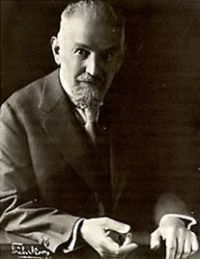 William Stern,
The American Journal of Psychology
(1910)
William Stern,
The American Journal of Psychology
(1910)
“ The comparison of the facts and the report can be made only when the latter has been analyzed into its single statements (Einzelangaben) and the percentage of right, wrong and indeterminate statements has been calculated; and, because of the varied character of the statements, it is necessary to calculate separately the proportions for particular categories (e. g., with reference to matters of color or of space relations) as well as to make a general calculation. ”
Roy B. Kester, Accounting theory and practice… (1922)
“ The statistical method and accounting are, without question, most potent agencies for the advancement of human knowledge and for the control of human relationships. They provide the basis in fact on which judgments must largely rest. This book, therefore, may begin by sketching the relation of accounting to some of the larger fields of human endeavor—the economic organization of society and the law—to point out its place in the business unit and briefly state the basic function it performs therein. ”