Summary

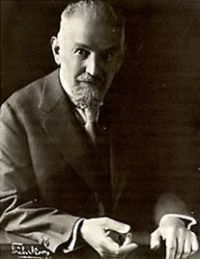
Portrait of William Stern William Stern The American Journal of Psychology (1910)

It is clear also that a report demonstrably false is not necessarily to be regarded as a lie and punished accordingly. The unconscious factors of falsification play a far greater role than is commonly supposed; and if one condemns in the case of little children every mistake and every harmless tale of fancy as a lie, he usually succeeds in giving to the child in this way a conception of which the child would otherwise perhaps have remained in ignorance.
Source: Wikisource

Portrait of William Stern William Stern The American Journal of Psychology (1910)

The Psychology of Testimony
5. The Psychology of the Errors in Interrogatory Reports. Beside the errors which have their sources within the reporting subject, there are others which have an outside source, in particular in the interrogation ( Verhor) . In one way questioning is an excellent means of filling the gaps in a spontaneous report, but in another it is, as experiments prove, a possible occasion of falsification. The more dependent and easily influenced a man is, the more a question put to him operates as an imperative: You have to know something about this.
Source: Wikisource

Portrait of William Stern William Stern The American Journal of Psychology (1910)

The first and obvious consequence of the psychology of testimony is a negative one, a diminution of the reliance which is to be placed in the reports of witnesses. The notion, still tolerably prevalent, that the faithfully sworn testimony of a mentally competent witness is in general to be regarded as an exact presentation of reality, is without justification. In Germany the new view has already caused the testimony of children especially to be less highly valued than formerly. It would be a mistake, however, to ascribe to the psychology of testimony destructive consequences only
Source: Wikisource

Get perspective with Kwize: daily news enlightened by great literature