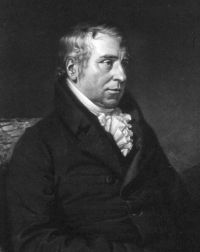
“ Allow a human being to be gifted with his five senses, exquisitely attuned for the conveyance of those perceptions, which the separate organs and common sensory are destined to receive: let him during fifty, or as many thousand years, scent the most delicious perfumes,—convey to his palate the flavour of the choicest viands,—to his eyes, present the fairest prospects in nature,—impart to his ear the sweetest music, and regale his touch with smoothness and warmth ”
Summary
"Sound Mind," a philosophical treatise by John Haslam, explores the complex relationship between human sensory perception, cognitive ability, and the capacities of memory and reasoning. Written in the 18th century, it examines how the five senses, language, and the mind’s ability to store and convey knowledge set humans apart from other creatures.
Through detailed analysis of perception, recollection, and the boundaries of focus, Haslam highlights the mind’s role as an "elaboratory" for psychological exploration, emphasizing the unique human gift of intellect and the orderly development of mental growth. The work combines empirical observation with metaphysical contemplation, situating itself within the broader discussion on the nature of thought and the soul.
Quotes from Sound Mind (John Haslam)
“ Man possesses language, the instrument of thought, the vehicle of intelligible communication;—and he is gifted with the hand, to record the subjects of his experience, to fabricate his contrivances, and to rear the durable monuments of his piety and splendour. ”
“ This incessant occupation and restless inquiry furnishes the memory with an abundant vocabulary: they recollect each object they have seen, and can retrace every path they have trodden; the ear greedily imbibes the conversations to which they are anxiously disposed to listen; that which they read, they verbally retain; they excel in quickness of perception and promptitude of memory, and appear to have every thing by heart ”
“ The endurance of attention in minds of the highest order, by a wise law of our constitution, is limited; and if it be attempted to continue the exertion beyond the natural power, the effort is infructuous. As straining the muscles produces fatigue, stiffness, and tremor;—as ocula spectra intrude on the forced and protracted attention of the visual organs,—so confusion ensues, when thought is racked and goaded to exhaustion.As the staple of the human intellect is vastly superior to that of animals, so we find among our own species a considerable range of capacity ”
“ The wonderful capacity which man exclusively enjoys, both for the communication of his thoughts, and for the improvement of his memory, in being enabled to acquire and transmit knowledge by impregnating sound with intelligence, and more especially in exhibiting its character embodied to the eye, leaves the rest of animated creation at a prodigious distance. ”
“ Consciousness, therefore, accompanies human action through all its [Pg 14] tenses: it is equivalent to the knowledge we possess of our own personal identity, the evidence of mind, and therefore must accompany every act of intelligence. Thus we are equally conscious that we perceive, remember, think or reflect, and reason. As consciousness must accompany every act of perception, it follows that we cannot be impressed with more than one at the same instant; for it can never be contended that we are able to experience two acts of consciousness at the same moment. ”
“ In acquiring a knowledge of numbers, as far as the senses are concerned, the eye and the touch are especially exercised; but it appears that the touch is the corrector of the sight: if fifty pieces of money be laid on a table, they will sooner and more accurately be numbered by the touch, than the eye; and we know in other instances, that the motion of the hand is quicker than the discernment of the sight. There are many circumstances, although they do not amount to a proof, which might induce us to consider, that the human hand has much contributed to our knowledge of numbers. ”
“ We are not unaccustomed to describe the higher and more felicitous productions of intellect, as a vigorous grasp of the mental powers, or as a noble stretch of thought: but to infer that the mind itself was capable of being extended, would be to invest it directly with the properties of substance, and at once plunge us into the grossest materialism. ”
“ Yet this manner of record does not directly apply to the other senses: we can exhibit no pictures of odours, tastes, the lowing of a cow, the roaring of a lion, or the warbling of birds; much less do hardness and softness admit of any picturesque representations as their record. The memory of animals seems to be in the simple state: they have, through their organs, different perceptions; and in many instances these organs are more susceptible than those of the human subject. The ear of some timid species is enabled to collect the feeblest vibrations of sound, and which are inaudible to us. ”
“ The mind of every rational person may be considered as an elaboratory, wherein he may conduct psychological experiments:—he is enabled to analyze his own acquirement,—and if he be sufficiently attentive, he may note its formation and progress in his children:—and thus trace the accumulation of knowledge, from the dawn of infancy to the meridian of manhood. The prosecution of these means, according to my own views, will qualify the diligent observer, to become the Natural Historian and Physiologist of the Human Mind. ”
“ Time, or the admeasurement of the successive order of our perceptions, embraces a wide area of definition; and it is perhaps impossible, in a few words, to circumscribe the range of its meaning. The sagacity of the human intellect, although by very slow gradations, has accumulated the wonderful mass of knowledge we now possess on this subject: and the investigations which have been made into the faculties of animals, justify the conclusion that its comprehension is limited to man. ”
“ This gay attirer of thought, that decks passion and sentiment, is also the prolific parent of fiction;—and justly banished from the retreats of sober demonstration.—To the science of numbers,—to mathematical precision, and to the whole range of experimental philosophy,—Imagination does not lend her glowing and gaudy tints. ”
“ Thus, he is rapidly progressive, his mind becomes opulent from the intellectual treasures of his ancestors, and, in his turn, he bequeaths to posterity the legacy of wisdom. His comprehension of numbers, on which the nature of time is founded, enable him to revert to the transactions of distant ages, and to invest faded events with the freshness of immediate perception. ”
“ The ear transmits sounds to animals possessing this sense; and in some species it is so exquisitely susceptible, as to surpass, by many degrees, the acuteness of the same organ in the human subject. It is also recorded, that in some of the wilder tribes of man, the hearing possesses a delicacy of percipience unknown to the inhabitants of a polished community. Superadded to the conveyance of ordinary sound, the ear of man is the great inlet of communication, and the vehicle of articulate intelligence. Through the medium of this sense his knowledge becomes extended, and his memory improved ”
“ Man alone is fitted to covenant, although he may occasionally waver in the performance. His exalted capacities, his comprehension of the law, constitute his responsibility: for where the conditions of the compact are not understood, there can be no disobedience or delinquency.The helpless condition of the human infant, and the paucity of its instincts, apparently render it less favoured than animals;—but it was necessary, in order to constitute man a moral agent and a responsible being, that he should be the architect of his own mind. When born, he has every thing to learn ”
“ Thus we [Pg 191] find that moral responsibility has its basis in the comprehension of Time. In proportion to our love and estimation of justice, we must be satisfied that, under the purest forms of human government, it is but imperfectly administered: the rewards and punishments in this life will ever be blended with the hopes and fears, the interests and passions, of our species; and there is much of evil, which human sagacity cannot detect. ”
“ Had the upper extremities of the human body terminated at the wrist, such a man as Phidias might have existed, but his occupation would have been unknown. Thus truncated, how would the fleet have been constructed which reaped the laurel at the Nile, at Copenhagen, and Trafalgar? The eternal city could not have existed, nor would our own metropolis have had a being. If we reflect for an instant, we shall perceive that all the conveniences we enjoy, [Pg 55] all the arts we practise, and the sciences which elevate and dignify our nature, could never have been realised in a handless community. ”
“ In the contemplation of mind, from the highest order to the lowest rank,—from man, to the maggot that consumes him; we are imprest with the evidence of appropriate contrivance and infinite wisdom. Although we are unable to penetrate the dense veil, that conceals the arcana of vitality and intellect; yet [Pg 185] sufficient is exhibited to us, in the ample volume of nature, to satisfy our curiosity, and stimulate the exercise of reason. ”
“ The consciousness of having experienced a perception by any of the senses would be an act of memory: consciousness, therefore, applies to the past; and it also accompanies our prediction of the future. When a person is writing a letter, he is at the time, conscious that his own hand is forming the characters; if this letter be afterwards submitted to his inspection, he is conscious that he wrote it; and if he be desired to write it over again, he is conscious that it will bear, both to himself and others, the character of his hand-writing. ”
“ Without reverting to the formation of words by letters, or proceeding to the structure of sentences by words, which is the province of the grammarian, it will be seen that these significant sounds, enable human beings to convey to each other the perceptions they have experienced, or are impressed with, at the moment of communication. This endowment of speech to man would, alone, have constituted him vastly superior to the other animals. ”
“ This constant occupation of thought produces the philosophical historian, profound critic, physiologist, mathematician, general grammarian, etymologist, and metaphysician. After long exertion they become disposed to melancholic disquietude, and often turn in disgust from a world, the beauties of which they want an incentive to examine, and taste to admire. Both of these intellectual orders [Pg 130] of our species contribute, but in different manners, to the stores of knowledge. The sound, efficient, and useful mind consists in a due balance and regular exercise of its different faculties. ”
“ There are writers in all the departments of human knowledge, who are deservedly held in the highest estimation, and who have reasoned on the subjects they have treated, with the utmost correctness and ability:—let the best specimens of that, which, in these authors, is allowed to be reasoning, be selected and analysed, which will readily demonstrate the means they have pursued to arrive at their conclusion. ”
“ When we consider the attributes of the Deity and the nature of man, we can never be induced to conclude that the tribunals of this world are the courts of final retribution. Man bears in his intellectual construction the badge of moral responsibility, and, consequently, the germ of future existence: [Pg 192] and the only incentive that can urge him to the advancement of science, and the practice of virtue, is the reward that Revelation has unfolded. ”
“ Sufficient has been already adduced, to render it obvious, that mind or organ alone would be inadequate for the purposes of intelligence. Perception, without its record or memory, would be a useless endowment; muscles or organs of motion, without a power to direct their actions, could have answered no purpose: to be effective, volition must have an object on which its influence can be exerted. ”
“ Their recollection is not refreshed, as in man, by the substitution of a name for the object of perception; much less have they any contrivance to record such intelligent sound, whereby man can preserve and transmit his perceptions. Thus whatever individual excellence animals may attain, they want the means of communicating, and of transmitting to their successors, and this sufficiently accounts for their stationary condition, and for the progression of man.That animals are incapable of the power which has been termed thought or reflection is most probable. ”
“ The healing art will be abundantly promoted by a knowledge of mind;—for the remedy of its infirmities and perversions ought to be founded on a thorough knowledge of its faculties and operations;—nor should it be forgotten that the prevention of crimes, and the reformation of delinquents, equally involve an intimate acquaintance with the temperaments of human character. ”
“ In proportion as we have been duly educated, we become enabled to direct and fix the organs of sense to the objects of perception, to be able at will to revive our memoranda, or to call on the memory to exhibit the deposits which have been confided to its custody, and to dwell pertinaciously on the materials of reflection. It is, however, certain, that in ordinary minds, the attention is little capable of being fixed to objects, and still less to the subjects of reflection ”
“ As far as we possess any direct evidence, none of the animals are capable of numerating; and this constitutes an essential difference between them and man in their intellectual capacities. In states of weakness of mind, this defect in the power of numerating, is very observable, and forms a just and admitted criterion of idiotcy; and it is well known that such persons exercise the organ of touch in a very limited degree, compared with those of vigorous capacity: their fingers are likewise more taper, and their sentient extremities less pulpy and expanded. ”
“ The instinct which is allotted to them is mental possession which they could not have acquired, from the limited nature of their faculties. All their instincts are processes of the purest reasoning, but they do not originate from themselves; [Pg 180] they are not, as in man, the elaboration of thought, the contrivance founded on the estimate of knowledge; but a boon,—an endowment, by which experience is anticipated, and wisdom matured without its progress and accumulation. Animals form an estimate of that which they can accomplish: a horse will not voluntarily attempt a leap he cannot clear ”
“ That we should exert our utmost endeavours to become acquainted with the nature of this influence, which we term the will, is most natural; but hitherto our researches have been wholly unavailing; and it should be recollected that the appearances of life cannot be accounted for by that which is inanimate, nor can the phenomena of intelligence be solved by material analogies. As we are possessed of the implements of motion, it is evident that they were constructed to accomplish their destined purpose ”
“ As our thoughts or reflections are conducted by language, great caution is required that the terms we employ should possess a fixed and determinate meaning; and this is more especially important, when we employ words which are not the representatives of the objects of our perceptions, but of a complex nature, or, as they have been denominated, general terms; such as those which are used to designate the faculties and operations of the mind, and such as convey our moral attributes. ”
“ As far as we are able to discover, by the most attentive and deliberate examination of our own minds, we do not appear conscious of any intermediate perception, between the motive and the performance of the action, or the execution of the will. If it were allowable to indulge in analogical reasoning, which usually diverts us from the consideration of the subject, we might endeavour to illustrate this process by the firing of a pistol. ”
“ As we advance in our enquiries into the nature of perception, it will be evident that we cannot long continue to treat of it as a simple act, or as a distinct faculty. The organs by which we obtain our different perceptions are not insulated parts, but communicate with a substance, termed the brain, and which is continued through the vertebral column. ”
“ When we consider the importance of numbers to man, as an intellectual being, and compare the advancement he has made by this knowledge, beyond the [Pg 52] animals who have wanted the means of acquiring such information, the importance of investigating this curious subject will be fully acknowledged. Without numbers, by which the divisions of time, space, and value are characterised, man could have possessed no knowledge of the order and succession of events ”
Common terms
Similar works
Aristotle's Psychology (On the Soul…The Senses and the Mind (Anonymous…Your Mind and How to Use It: A Manual of Practical Psychology…On the Vital Principle (Aristotle…On the Nature of Thought (John Haslam…Thought-Culture; Or, Practical Mental Training…On the Fourfold Root of the Principle of Sufficient Reason…Myth and Science (Tito Vignoli…Theophrastus and the Greek Physiological Psychology before Aristotle…A Strange Story — Volume 07 (Baron Edward Bulwer Lytton Lytton…
