Summary

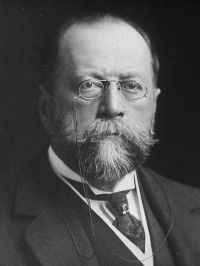
Portrait of Paul Vinogradoff Paul Vinogradoff Villainage in England: Essays in English Mediaeval History

When I speak of pre-feudal condition I do not mean to say, of course, that feudalism had not been in the course of formation before the Norman Conquest. I merely wish to oppose a social order grounded on feudalism to a social order which was only preparing for it and developing on a different basis. The Conquest brought together the free and unfree. Our survivals of the state of things before the Conquest group themselves naturally in one direction, they are manifestations of the free element which went into the constitution of villainage.
Source: Gutenberg

Portrait of Paul Vinogradoff Paul Vinogradoff Villainage in England: Essays in English Mediaeval History

If we remove those strata of the law of villainage which owe their origin to the action of the feudal system and to the action of the State, which rises on the ruins of the feudal system, we come upon remnants of the pre-feudal condition. They are by no means few or unimportant, and it is rather a wonder that so much should be preserved notwithstanding the systematic work of conquest, feudalism, and State.
Source: Gutenberg

Portrait of Paul Vinogradoff Paul Vinogradoff Villainage in England: Essays in English Mediaeval History

It is a stepping-stone from villainage to socage, or rather to socman's tenure. There can be no question of differences of feoffment. The manorial power is fully recognised, and on the other hand the character of ancient demesne is also conspicuous with its protection of the peasantry. And still the whole fabric is giving way—the holdings get dispersed and the service loses its uniformity. All these traits are a fair warning to those who argue from the irregularity of free tenements and the inequality of their rents against the possibility of their development out of communal ownership.
Source: Gutenberg

Get perspective with Kwize: daily news enlightened by great literature