Summary

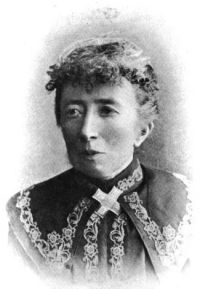
Portrait of Agnes Mary Clerke Agnes Mary Clerke 1911 Encyclopædia Britannica, Volume 16… (1911)

Laplace nowhere displayed the massiveness of his genius more conspicuously than in the theory of probabilities. The science which B. Pascal and P. de Fermat had initiated he brought very nearly to perfection; but the demonstrations are so involved, and the omissions in the chain of reasoning so frequent, that the Théorie analytique (1812) is to the best mathematicians a work requiring most arduous study. The theory of probabilities, which Laplace described as common sense expressed in mathematical language, engaged his attention from its importance in physics and astronomy
Source: Wikisource

Portrait of Agnes Mary Clerke Agnes Mary Clerke 1911 Encyclopædia Britannica, Volume 16… (1911)

To this lofty quality of intellect he added a rare sagacity in perceiving analogies, and in detecting the new truths that lay concealed in his formulae, and a tenacity of mental grip, by which problems, once seized, were held fast, year after year, until they yielded up their solutions. In every branch of physical astronomy, accordingly, deep traces of his work are visible.
Source: Wikisource

Portrait of Agnes Mary Clerke Agnes Mary Clerke 1911 Encyclopædia Britannica, Volume 16… (1911)

Of these the most conspicuous was offered by the opposite inequalities of Jupiter and Saturn, which the emulous efforts of L. Euler and J. L. Lagrange had failed to bring within the bounds of theory. The discordance of their results incited Laplace to a searching examination of the whole subject of planetary perturbations, and his maiden effort was rewarded with a discovery which constituted, when developed and completely demonstrated by his own further labours and those of his illustrious rival Lagrange, the most important advance made in physical astronomy since the time of Newton.
Source: Wikisource

Get perspective with Kwize: daily news enlightened by great literature