Physical astronomy

Definition and stakes

Pierre Jules César Janssen,  Popular Science Monthly (1883)

“ These discoveries belong pre-eminently to physical astronomy, and form its first courses. If we except the sun and moon, which have a very sensible diameter, and admit of some observations without the aid of the telescope, all the stars appear to the eye only as brilliant points, and admit of no studies except of their motions. Therefore, an astronomy without the telescope would never have permitted us otherwise than as a matter of probability to consider the planets as like the earth in form, constitution, and office. ”
Source: Wikisource

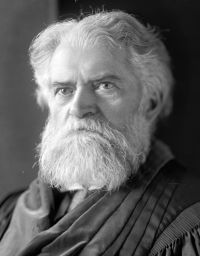
Portrait of William Whewell William Whewell,  Novum organon renovatum (1858)

“ It is to be observed also that in our classification, each Science may involve, not only the Ideas or Conceptions which are placed opposite to it in the list, but also all which precede it. Thus Formal Astronomy involves not only the Conception of Motion, but also those which are the foundation of Arithmetic and Geometry. In like manner. Physical Astronomy employs the Sciences of Statics and Dynamics, and thus, rests on their foundations; and they, in turn, depend upon the Ideas of Space and of Time, as well as of Cause. ”
Source: Gutenberg

Simon Newcomb and Agnes Mary Clerke,  1911 Encyclopædia Britannica, Volume 2… (1911)

“ At the base of every system of astronomical observation is the law that, in the voids of space, a ray of light moves in a right line. The fundamental problem of practical astronomy is that of determining by measurement the co-ordinates of the heavenly bodies as already defined. Of the three co-ordinates, the radius vector does not admit of direct measurement, and must be inferred by a combination of indirect measurements and physical theories. ”
Source: Wikisource

Get perspective with Kwize: daily news enlightened by great literature