Astrophysics

Definition and stakes

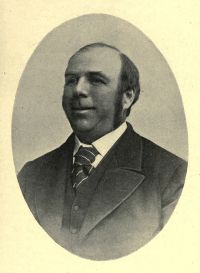
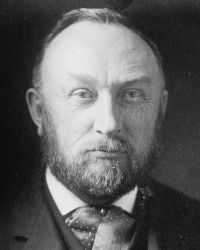
Portrait of Edward Charles Pickering Edward Charles Pickering,  Popular Science Monthly (1909)

“ Every astronomer wanted a larger telescope than his neighbors, with which to measure double stars. If he could not get such an instrument, he measured the positions of the stars with a transit circle. Then came astrophysics, including photography, spectroscopy and photometry. The study of the motion of the stars along the line of sight, by means of photographs of their spectra, is now the favorite investigation at nearly all the great observatories of the world. ”
Source: Wikisource

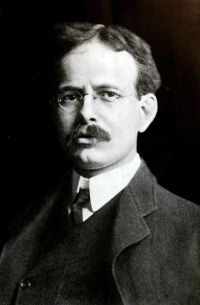
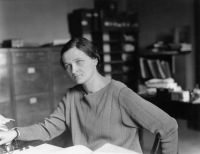
Portrait of Cecilia Payne-Gaposchkin Cecilia Payne-Gaposchkin,  Stellar atmospheres (1925)

“ THE LABORATORY BASIS OF ASTROPHYSICS THE application of physics in the domain of astronomy constitutes a line of investigation that seems to possess almost unbounded possibilities. In the stars we examine matter in quantities and under conditions unattainable in the laboratory. The increase in scope is counterbalanced, however, by a serious limitation—the stars are not accessible to experiment, only to observation, and there is no very direct way to establish the validity of laws, deduced in the laboratory, when they are extrapolated to stellar conditions. ”
Source: Gutenberg

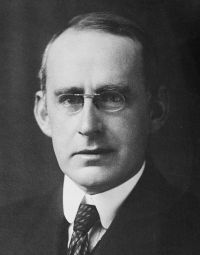
Portrait of Cecilia Payne-Gaposchkin Cecilia Payne-Gaposchkin,  Stellar atmospheres (1925)

“ Ultimately it may be that the consistency of the findings in different branches of astrophysics will form a basis for a more general verification of physical laws than can be attained in the laboratory; but at present, terrestrial physics must be the groundwork of the study of stellar conditions. Hence it is necessary for the astrophysicist to have ready for application the latest data in every relevant branch of physical science, realizing which parts of modern physical theory are still in a tentative stage, and exercising due caution in applying these to cosmical problems. ”
Source: Gutenberg

Get perspective with Kwize: daily news enlightened by great literature