
“ For tell me, he said, what result is there of computation or geometry, in the same sense as a house is the result of building, or a garment of weaving, or any other work of any other art? Can you show me any such result of them? You cannot. That is true, I said; but still each of these sciences has a subject which is different from the science. I can show you that the art of computation has to do with odd and even numbers in their numerical relations to themselves and to each other. Is not that true? ”
Computation
Definition and stakes
Computation, the methodical process of carrying out calculations or handling information, has long served as a fundamental element of mathematical and scientific investigation. From Plato’s philosophical examination of numbers in Charmides to Charles Babbage’s mechanical concepts of error-checking in his Calculating Engine, the theme illustrates a range of approaches.
Authors such as Richard Taylor analyzed computational sequences within scientific frameworks, while Babbage and others faced the difficulties of accuracy and automation. These viewpoints highlight computation’s dual nature—as both an abstract intellectual endeavor and a practical instrument—connecting theoretical depth with applied creativity.
Quotes about “computation”
Various, Popular Science Monthly (1909)
“ Oftener than may be thought, schemes of observation are used which leave an arbitrary element to the computer, and in consequence a different result is forthcoming, according to who makes the computation. Had we time apt illustrations could readily be given from published works. The point made, that the observer must also bear in mind the computation side, and work up his results as soon as possible, is of fundamental importance in research work. ”
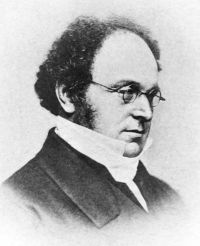 Augustus De Morgan,
A Budget of Paradoxes — 1864
(1872)
Augustus De Morgan,
A Budget of Paradoxes — 1864
(1872)
“ I must not forget the "moderate computation" paradox. This is the way by which large figures are usually obtained. Anything surprisingly great is got by the "lowest computation," anything as surprisingly small by the "utmost computation" ”
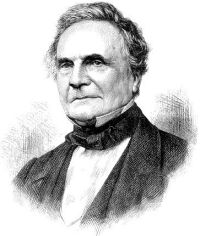 Charles Babbage,
The calculating engine
(1834)
Charles Babbage,
The calculating engine
(1834)
“ The most certain and effectual check upon errors which arise in the process of computation, is to cause the same computations to be made by separate and independent computers; and this check is rendered still more decisive if they make their computations by different methods. It is, nevertheless, a remarkable fact, that several computers, working separately and independently, do frequently commit precisely the same error ”
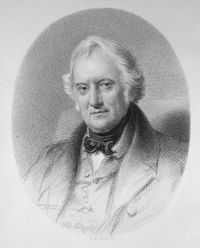 Richard Taylor,
Scientific Memoirs
(1837)
Richard Taylor,
Scientific Memoirs
(1837)
“ It is true that if we consider our computation of as a perfectly isolated calculation, we may conclude , , to have been arbitrarily placed on the columns; and it would then perhaps be more consistent to put them on , , as data and not results. But we are not taking this view. On the contrary, we suppose the engine to be in the course of computing the Numbers to an indefinite extent, from the very beginning; and that we merely single out, by way of example, one amongst the successive but distinct series' of computations it is thus performing. ”
Richard Taylor,
Scientific Memoirs
(1837)
“ The order in which the operations shall be performed in every particular case, is a very interesting and curious question, on which our space does not permit us fully to enter. In almost every computation a great variety of arrangements for the succession of the processes is possible, and various considerations must influence the selection amongst them for the purposes of a Calculating Engine. One essential object is to choose that arrangement which shall tend to reduce to a minimum the time necessary for completing the calculation. ”
Charles Babbage,
The calculating engine
(1834)
“ In none are computations more operose than those which astronomy in particular requires;—in none are preparatory facilities more needful;—in none is error more detrimental. The practical astronomer is interrupted in his pursuit, and diverted from his task of observation by the irksome labours of computation, or his diligence in observing becomes ineffectual for want of yet greater industry of calculation. ”
 William Stanley Jevons,
The principles of science
William Stanley Jevons,
The principles of science
“ It may even be desirable that those who perform the purely routine work of measurement and computation should be unacquainted with the principles of the subject. The great table of logarithms of the French Revolutionary Government was worked out by a staff of sixty or eighty computers, most of whom were acquainted only with the rules of arithmetic, and worked under the direction of skilled mathematicians ”
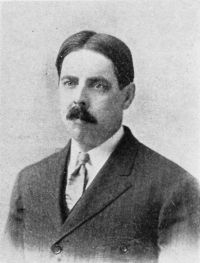 Edward L. Thorndike,
The Psychology of Arithmetic
Edward L. Thorndike,
The Psychology of Arithmetic
“ The author is ready to cut computation with numbers above 10 out of the curriculum of grades 1-6 as soon as more valuable educational instruments are offered in its place, but he is convinced that nothing in child-nature makes a large variety of inaccurate computing more interesting or educative or germane to felt needs, than a smaller variety of accurate computing! ”
| override_editor, Advanced Automation for Space Missions… (1980)
“ Even though ordinary computing machines do not, for example, reproduce themselves, they can be programmed to simulate the behavior of machines that do in fact reproduce. From this point of view, the concept of machines which posses the power to construct other machines and to replicate themselves can be represented to any degree of detail in the computation of an ordinary general-purpose computing machine which cannot itself reproduce. ”
Edmund Callis Berkeley, Giant brains; or, Machines that think (1949)
“ Aiken, Howard H., and Staff of the Computation Laboratory, A Manual of Operation for the Automatic Sequence-Controlled Calculator, Cambridge, Mass.: Harvard University Press, 1946, 561 pp.The machine has changed rather a good deal since Sept. 1, 1945. Some circuits have been removed. Other circuits have been added. The capacity of the machine to do problems has been greatly increased. The Computation Laboratory at Harvard University is cordial towards scientific inquiries, and some unpublished, mimeographed information is available at the laboratory regarding the details of these changes. ”
Henry Earle Riggs, The Valuation of Public Service Corporation Property
“ Computation.—After the completion of the field inspection, all notes were placed in the hands of the computing force. This organization consisted of two classes of men, engineers brought in from field inspection, and younger engineers. All computations were made independently by two men, and all work was checked carefully.Every man in the computing room was furnished a large bound blank-book, in which he was required to make all his notes and computations, no figures of any sort being made on loose paper. ”
| override_editor, Advanced Automation for Space Missions… (1980)
“ In one sense, such devices are computationally universal. That is, certain mathematical technicalities aside, they can carry out any arbitrary Turing machine computation and, accepting the Church-Turing Thesis, can also carry out any algorithmic process. Thus, if any machine can be intelligent one need look no further than to a general-purpose computer, for there is some program which will cause the machine to display the desired intelligent behavior. This is so even if one insists that brains, for example, are machines, but are not at all like digital computers. ”
 Leslie Stephen,
Dictionary of National Biography…
(1894)
Leslie Stephen,
Dictionary of National Biography…
(1894)
“ The advantages of a table of logarithms are that by its employment multiplication and division can be performed by simple addition and subtraction, the extraction of the roots of numbers by division, and the raising of them to any power by multiplication. By these simple processes the most complicated problems in astronomy, navigation, and cognate sciences can be solved by an easy and certain method. The invention necessarily gave a great impulse to all the sciences which depend for their progress on exact computation. ”
 Richard Feynman,
The Character of Physical Law
(1965)
Richard Feynman,
The Character of Physical Law
(1965)
“ In general we look for a new law by the following process. First we guess it. Then we compute the consequences of the guess to see what would be implied if this law that we guessed is right. Then we compare the result of the computation to nature, with experiment or experience, compare it directly with observation, to see if it works. If it disagrees with experiment it is wrong. In that simple statement is the key to science. It does not make any difference how beautiful your guess is. It does not make any difference how smart you are, who made the guess, or what his name is – ”
Charles Babbage,
Passages from the Life of a Philosopher
(1864)
“ An engine of fifty digits, when used as one of a hundred digits, can only contain half the number of variables. An engine containing columns, each holding digits, if used for computations requiring digits, can only hold constants or variables. (b) . The next step is therefore to prove (b) , viz.: to show that a finite engine can be used as if it contained an unlimited number of constants. The method of punching cards for tabular numbers has already been alluded to. ”
Daniel S. Halacy, Computers—the machines we think with (1962)
“ Faced with problems involving many variables and requiring statistical and probabilistic approaches, these people could make the best use of machines designed for repetitive computations. The refiner with a new plant in mind could simulate it in the computer and get an idea of how, or if, it would work before building his pilot plant. Today the notion of dispensing with even the pilot plant is getting serious consideration.188One program used by a gasoline producer analyzed thirty-seven variables and thirty-seven restrictions, a matrix that could never be evaluated by ordinary methods. ”
Anne Humeau-Heurtier; Edite Figueiras; Joao Cardoso, Signal and Image Processing of Physiological Data…
“ New algorithms overcoming the existing ones by their better computational cost or by providing additional or more accurate information are still proposed. Moreover, new applications for the new and existing algorithms emerge. ”
the Tennessee Valley Authority, Procedure for Making, Indexing and Filing Computations (1950)
“ All computations that are expected to be used for final design purposes are to be checked by another man. In general the checker should make a completely separate set of computations. As the original figures are the ones to be incorporated in the design or to be used as the basis of further computations, it is unnecessary to go to great refinement in making check computations. ”
Dwarikanath Mahapatra; Krishna Agarwal; Reza Khosrowabadi; Dilip K. Prasad, Recent Advances in Statistical Data and Signal Analysis…
“ Computational approaches that have been hugely popular and found important applications include computational modeling, Bayesian and graphical models, machine learning, deep-learning, pattern recognition, optimization, spectral and pseudospectral analysis, stochastic modelling, iterative system model adaptation, and multiscale multiphysics analysis to name a few. ”
Charles A. McMurry, The Elements of General Method…
“ All such careful arithmetical computations add clearness and definiteness to historical and geographical ideas. The natural sciences have been so little systematically taught in our common schools, that we are scarcely able to realize what connection may be made between them and arithmetic. ”
Various, The Atlantic Monthly, Volume 13…
“ Let me now briefly sketch the history of type-setting machinery. This must necessarily be done somewhat in the manner of Mr. Gradgrind. I am sorry thus to tax the reader's patience; but facts, which enjoy quite a reputation for stubbornness, cannot easily be wrought into fancies. Color the map as you will, it is but a prosy picture after all.Charles Babbage, of London, the inventor of the Calculating-Engine, first essayed the application of machinery to composition. His calculator was so contrived that it would record in type the results of its own computations. ”
Daniel S. Halacy, Computers—the machines we think with (1962)
“ But much of our thinking, perhaps some 125of the “natural” processes of our brains, doesn’t seem to fit into computational patterns. That part of our thinking, the part that includes looking at pretty girls, for example, will probably remain peculiar to the human brain. ”
Richard Taylor,
Scientific Memoirs
(1837)
“ The bounds of arithmetic were however outstepped the moment the idea of applying the cards had occurred; and the Analytical Engine does not occupy common ground with mere "calculating machines." It holds a position wholly its own; and the considerations it suggests are most interesting in their nature. In enabling mechanism to combine together general symbols, in successions of unlimited variety and extent, a uniting link is established between the operations of matter and the abstract mental processes of the most abstract branch of mathematical science. ”
Steven Levy, Hackers, Heroes of the Computer Revolution…
“ Sometimes program bumming became competitive, a macho contest to prove oneself so much in command of the system that one could recognize elegant shortcuts to shave off an instruction or two, or, better yet, rethink the whole problem and devise a new algorithm which would save a whole block of instructions. (An algorithm is a specific procedure which one can apply to solve a complex computer problem; it is sort of a mathematical skeleton key.) ”
Richard Taylor,
Scientific Memoirs
(1837)
“ In this, and in all other instances, as was explained above, the particular numerical data and the numerical results are determined by means and by portions of the mechanism which act quite independently of those that regulate the operations. In studying the action of the Analytical Engine, we find that the peculiar and independent nature of the considerations which in all mathematical analysis belong to operations, as distinguished from the objects operated upon and from the results of the operations performed upon those objects, is very strikingly defined and separated. ”
Charles Babbage,
Passages from the Life of a Philosopher
(1864)
“ Since every calculating machine must be constructed for the calculation of a definite number of figures, the first datum must be to fix upon that number. In order to be somewhat in advance of the greatest number that may ever be required, I chose fifty places of figures as the standard for the Analytical Engine. The intention being that in such a machine two numbers, each of fifty places of figures, might be multiplied together and the resultant product of one hundred places might then be divided by another number of fifty places. ”
Daniel S. Halacy, Computers—the machines we think with (1962)
“ If we look to natural reasons for the development of number systems, we might decide that the binary, or two-valued system, did not attain much prominence in naïve civilizations because 98there are so few one-legged, two-toed animals! Only when man built himself a machine uniquely suited to two-valued mathematics did the binary system come into its own.Numbers are merely conventions, rigorous conventions to be sure with no semantic vagueness. God did not ordain that we use the decimal system, as evidenced in the large number of other systems that work just fine. ”
Richard Taylor,
Scientific Memoirs
(1837)
“ Therefore, since from the moment that the nature of the calculation to be executed or of the problem to be resolved have been indicated to it, the machine is, by its own intrinsic power, of itself to go through all the intermediate operations which lead to the proposed result, it must exclude all methods of trial and guess-work, and can only admit the direct processes of calculation [4] . It is necessarily thus; for the machine is not a thinking being, but simply an automaton which acts according to the laws imposed upon it. ”
Daniel S. Halacy, Computers—the machines we think with (1962)
“ The Logical Algebra We come now to another most important reason for the effectiveness of the digital computer; the reason that makes it the “logical” choice for not only mathematics but thinking as well. For the digital computer and logic go hand in hand. ”
Richard Taylor,
Scientific Memoirs
(1837)
“ They merely determine the operations [1] to be effected, which operations may of course be performed on an infinite variety of particular numerical values, and do not bring out any definite numerical results unless the numerical data of the problem have been impressed on the requisite portions of the train of mechanism. In the above example, the first essential step towards an arithmetical result, would be the substitution of specific numbers for , and for the other primitive quantities which enter into the function. ”
J. A. V. Turck, Origin of modern calculating machines (1921)
“ A superficial examination of one of the instruction books of the “Comptometer” will convince most any one that it is not only the mechanism of the machine that made the modern calculator so valuable to the business world, but also the schemes laid down for its use. The instructions for figuring Multiplication, Subtraction, Division, Square Root, Cube Root, Interest, Exchange, Discount, English Currency, etc., involved hard study to devise such simple methods and rules. ”
Charles Babbage,
The calculating engine
(1834)
“ Not confined to constant differences, it is available in every case of differences that follow a definite law, reducible therefore to an equation. An engine adjusted to the purpose being set to work, will produce any distant term, or succession of terms, required—thus presenting the numerical solution of a problem, even though the analytical solution be yet undetermined.' That the future path of some important branches of mathematical enquiry must now in some measure be directed by the dictates of mechanism, is sufficiently evident ”
