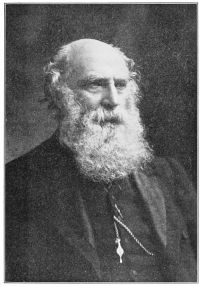
Heinrich Schellen

Biographical details

Heinrich Schellen,  Popular Science Monthly (1872)

“ Out of the original spherical nebula, quite unconnected with our solar system, a comet has been formed, which in its altered condition will either pass through our system to wander again in space, or else remain as a permanent member of our planetary system. The form of the orbit in which it moves depends on the original speed of the cloud, its distance from the sun, and the direction of its motion, and thus its path may be elliptical, hyperbolical, or parabolical; in the last two cases, the comet appears only once in our system, and then returns to wander in the realms of space ”
Source: Wikisource

Heinrich Schellen,  Popular Science Monthly (1872)

“ The heat of a body consists in the vibratory motion of its smallest particles; an increase of this molecular motion is synonymous with a higher temperature; a lessening of this vibration is termed decreasing heat, or the process of cooling. Now, if a body in motion, as for instance a cannon-ball, strike against an iron plate, or a meteorite against the earth's atmosphere, in proportion as the motion of the body diminishes and the external action of the moving mass becomes annihilated by the pressure of the opposing medium upon the foremost molecules, the vibration of these particles increases ”
Source: Wikisource

Heinrich Schellen,  Popular Science Monthly (1872)

“ The earth in its revolution round the sun occupies every day a different place in the universe; if, therefore, a meteoric shower pass through our atmosphere at regular intervals, there must be at the place where the earth is at that time an accumulation of these small cosmical bodies, which, attracted by the earth, penetrate its atmosphere, are ignited by the resistance of the air, and become visible as falling stars. A cosmical cloud, however, cannot remain at a fixed spot in our solar system, but must circulate round the sun as planets and comets do ”
Source: Wikisource

Get perspective with Kwize: daily news enlightened by great literature