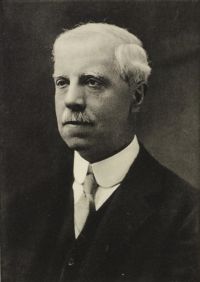
Sir Thomas Little Heath

Sir Thomas Little Heath

Summary

Portrait of Sir Thomas Little Heath Sir Thomas Little Heath Archimedes

Now you are aware that ‘universe’ is the name given by most astronomers to the sphere the centre of which is the centre of the earth, while the radius is equal to the straight line between the centre of the sun and the centre of the earth. This is the common account, as you have heard from astronomers. But Aristarchus of Samos brought out a book consisting of some hypotheses, in which the premises lead to the conclusion that the universe is many times greater than that now so called.
Source: Gutenberg

Portrait of Sir Thomas Little Heath Sir Thomas Little Heath Archimedes

In the Aristotelian Mechanica we find a remark on the marvel of a great weight being moved by a small force, and the problems discussed bring in the lever in various forms as a means of doing this. We are told also that practically all movements in mechanics reduce to the lever and the principle of the lever (that the weight and the force are in inverse proportion to the distances from the point of suspension or fulcrum of the points at which they act, it being assumed that they act in directions perpendicular to the lever) .
Source: Gutenberg

Portrait of Sir Thomas Little Heath Sir Thomas Little Heath Archimedes

But it is of course easier, when we have previously acquired by the method some knowledge of the questions, to supply the proof than it is to find the proof without any previous knowledge. This is a reason why, in the case of the theorems the proof of which Eudoxus was the first to discover, namely, that the cone is a third part of the cylinder, and the pyramid a third part of the prism, having the same base and equal height, we should give no small share of the credit to Democritus, who was the first to assert this truth with regard to the said figures, though he did not prove it.
Source: Gutenberg

Get perspective with Kwize: daily news enlightened by great literature