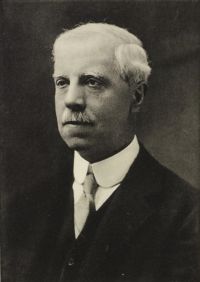
Thomas Little Heath

Thomas Little Heath

Summary

Portrait of Thomas Little Heath Thomas Little Heath 1911 Encyclopedia Britannica (1911)

For Books i.-iv. he claims only that the generation of the curves and their fundamental properties in Book i. are worked out more fully and generally than they were in earlier treatises, and that a number of theorems in Book iii. and the greater part of Book iv. are new. That he made the fullest use of his predecessors’ works, such as Euclid’s four Books on Conics, is clear from his allusions to Euclid, Conon and Nicoteles. The generality of treatment is indeed remarkable
Source: Wikisource

Portrait of Thomas Little Heath Thomas Little Heath 1911 Encyclopedia Britannica (1911)

His treatise on Conics gained him the title of The Great Geometer, and is that by which his fame has been transmitted to modern times. All his numerous other treatises have perished, save one, and we have only their titles handed down, with general indications of their contents, by later writers, especially Pappus. After the Conics in eight Books had been written in a first edition, Apollonius brought out a second edition, considerably revised as regards Books i.-ii., at the instance of one Eudemus of Pergamum
Source: Wikisource

Portrait of Thomas Little Heath Thomas Little Heath 1911 Encyclopedia Britannica (1911)

ARCHIMEDES (c. 287–212 B.C.) , Greek mathematician and inventor, was born at Syracuse, in Sicily. He was the son of Pheidias, an astronomer, and was on intimate terms with, if not related to, Hiero, king of Syracuse, and Gelo his son. He studied at Alexandria and doubtless met there Conon of Samos, whom he admired as a mathematician and cherished as a friend, and to whom he was in the habit of communicating his discoveries before publication. On his return to his native city he devoted himself to mathematical research.
Source: Wikisource

Get perspective with Kwize: daily news enlightened by great literature