Summary

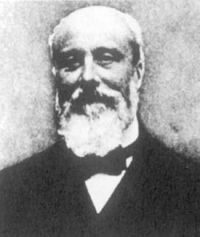
Portrait of Pierre Duhem Pierre Duhem The Origins of Statics — CHAPTER I: ARISTOTLE AND ARCHIMEDES…

Modern Dynamics reputes it as grave error. But, to reject this error it has been needful for the science two thousand years of meditations conducted by the greatest spirits who have succeeded each other from Aristotle to Galileo. We will try someday to retrace the principal phases of this gigantic intellectual effort. But today we will exert ourselves to forget what modern Mechanics has taught us and to impress upon ourselves the laws accepted by the peripatetian Mechanicist.
Source: Wikisource

Portrait of Pierre Duhem Pierre Duhem The Origins of Statics — CHAPTER I: ARISTOTLE AND ARCHIMEDES…

On the contrary, the daily use of very simple instruments, of the balance for example, reveals to us, on the subject of the equilibrium of heavy objects, some rules of which the truth and the generality would not be able to be made into the object of any doubt. Following the method of which his master Euclid has made usage in the Elements, Archimedes will require of whomever wants to follow his teaching from him to agree with the certitude of these few propositions, from which he will deduce all of his theory.
Source: Wikisource

Portrait of Pierre Duhem Pierre Duhem The Origins of Statics — CHAPTER I: ARISTOTLE AND ARCHIMEDES…

When, therefore, we want to compare the forces of these two weights we must, for each of them, take the product of the weights and the length of the arms of the lever; that one will transport it which corresponds to the greater product; and if the two products are equal, the two weights will stay in equilibrium.
The weight which is moved, says Aristotle (2) , is to the weight which moves in inverse ratio to the lengths of the lever arms; always, in effect, a weight will move as much more easily as it is more distant from the fulcrum point.
Source: Wikisource

Get perspective with Kwize: daily news enlightened by great literature