Summary

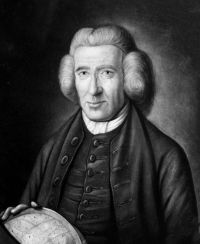
Portrait of James Ferguson James Ferguson Philosophical Transactions of the Royal Society (1765)

Whilst the weight is drawing up, the racch-teeth of a wheel slip round below a catch or click that falls successively into them; and so hinders the crane from turning backward, and detains the weight in any part of it's ascent, if the worker should happen accidentally to quit his hold of the winch; or choose to rest himself before the weight is quite drawn up.
Source: Wikisource

Portrait of James Ferguson James Ferguson Philosophical Transactions of the Royal Society (1765)

THE common crane consists only of a large wheel and axle; and the rope, by which goods are drawn up from ships, winds or coils round the axle, as it is turned by men walking in the wheel. But, as these engines have nothing to stop the weight from running down, if any of the men happen to trip or fall in the wheel, the weight descends, and turns the wheel rapidly backward, and tosses the men violently about within it
Source: Wikisource

Portrait of James Ferguson James Ferguson Philosophical Transactions of the Royal Society (1765)

If the largest trundle be turned by the winch, it will make four revolutions for one revolution of the great axle on which the rope coils in drawing up the weight: and as the length of the winch is double the semidiameter of the axle, the power gained will be as eight to one: that is, a man will be able to raise eight times as much weight by means of the engine, as he could do by his natural strength without it
Source: Wikisource

Get perspective with Kwize: daily news enlightened by great literature