Summary

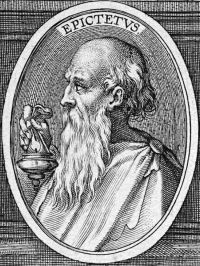
Portrait of Epictetus Epictetus Epictetus, the Discourses as reported by Arrian…

For what greater penalty can befall the man who is uninstructed and disobedient to the divine injunctions than to grieve, to sorrow, to envy, in a word to have no good fortune but only misfortune? Do you not wish to free yourself from all this?
And how shall I free myself?—Have you not heard over and over again that you ought to eradicate desire utterly, direct your aversion towards the things that lie within the sphere of the moral purpose, and these things only, that you ought to give up everything, your body, your property, your reputation, your books, turmoil, office, freedom from office?
Source: Wikisource

Portrait of Epictetus Epictetus Epictetus, the Discourses as reported by Arrian…

In the same fashion you say, "I don't like leisure, it is a solitude." "I don't like a crowd, it is turmoil." Say not so, but if circumstances bring you to spend your life alone or in the company of a few, call it peace, and utilize the condition for its proper end; converse with yourself, exercise your sense-impressions, develop your preconceptions. If, however, you fall in with a crowd, call it games, a festival, a holiday, try to keep holiday with the people. For what is pleasanter to a man who loves his fellow-men than the sight of large numbers of them?
Source: Wikisource

Portrait of Epictetus Epictetus Epictetus, the Discourses as reported by Arrian…

Remember that it is not merely desire for office and wealth which makes men abject and subservient to others, but desire also for peace, and leisure, and travel, and scholarship. For it makes no difference what the external object be, the value you set upon it makes you subservient to another. What difference, then, does it make for you to set your heart on the senate, or on not becoming a senator? What difference does it make to desire office or to desire not to hold office?
Source: Wikisource

Get perspective with Kwize: daily news enlightened by great literature