
“ But how utterly foolish, when we are asking what is knowledge, that the reply should only be, right opinion with knowledge of difference or of anything! And so, Theaetetus, knowledge is neither sensation nor true opinion, nor yet definition and explanation accompanying and added to true opinion? ”
Theaetetus
Definition and stakes
Theaetetus, a 5th-century BCE Greek mathematician and key figure in Plato’s eponymous dialogue, is celebrated for his research on irrational numbers and the categorization of regular polyhedra, insights recorded in Euclid’s Elements. As a pupil of Theodorus of Cyrene and a companion of Socrates, he became an emblem of scholarly endeavor in Plato’s work, where the conversation delves into the essence of knowledge through Socratic questioning.
Plato depicts Theaetetus as a thinker whose "wonder" fuels exploration, connecting mathematical accuracy with metaphysical contemplation. Theaetetus’s influence combines mathematical exactness with philosophical investigation, illustrated in Plato’s examination of knowledge as something beyond mere true belief. His life and thoughts, despite historical uncertainty, continue to serve as a vital link between ancient mathematics and dialectical reasoning.
Quotes about “Theaetetus”
“ I see, my dear Theaetetus, that Theodorus had a true insight into your nature when he said that you were a philosopher, for wonder is the feeling of a philosopher, and philosophy begins in wonder. ”
“ The want of the Greek mind in the fourth century before Christ was not another theory of rest or motion, or Being or atoms, but rather a philosophy which could free the mind from the power of abstractions and alternatives, and show how far rest and how far motion, how far the universal principle of Being and the multitudinous principle of atoms, entered into the composition of the world; which could distinguish between the true and false analogy, and allow the negative as well as the positive a place in human thought. To such a philosophy Plato, in the Theaetetus, offers many contributions. ”
1911 Encyclopædia Britannica, Volume 21… (1911)
“ That nature and the world proceed “according to God and not according to chance” is the belief of the Eleatic stranger, to which he perceives that Theaetetus will be irresistibly drawn as he grows older (Soph. 265 D) . In the midst of dialectical abstractions, the processes of actual production (γενέσεις) have been increasingly borne in mind. And the myth in the Politicus turns on cosmological conceptions which, although differing from those in the Timaeus, and more accordant with Plato's bitterest mood, yet throw a new light on the deeper current of his thoughts. ”
Joseph Cullen Ayer, A Source Book for Ancient Church History
“ Many fragments are to be found in the Dialogues which Theodoret wrote against Eutychianism, which he traced to the teaching of Apollinaris. The first condemnation of Apollinaris was at Rome, 377, see Hefele, § 91; Theodoret, Hist. Ec., V, 10, gives the letter of Damasus issued in the name of the synod. [pg 495] P. 224 [81] . If God had been joined with a man, one complete being with another complete being, there would be two sons of God, one Son of God by nature, another through adoption. ”
S. Baring-Gould, The Lives of the Saints, Volume 02…
“ But Theodosius, patriarch of Antioch, ordered him to leave this den, and the hermit, at his advice, chose one more commodious. He spent most of his time in prayer, with his hands raised to heaven. His clothing was of leather, which covered him so completely that only his nose and mouth were visible. Theodoret says that his knowledge of heavenly things and doctrinal perspicuity were very remarkable. His answer to the Emperor Leo is found appended to the Acts of the Council of Chalcedon. ”
 Plutarch,
Plutarch's Lives
(1864)
Plutarch,
Plutarch's Lives
(1864)
“ But in succeeding ages, beside several other circumstances that moved the Athenians to honor Theseus as a demigod, in the battle which was fought at Marathon against the Medes, many of the soldiers believed they saw an apparition of Theseus in arms, rushing on at the head of them against the barbarians. And after the Median war, Phædo being archon of Athens, the Athenians, consulting the oracle at Delphi, were commanded to gather together the bones of Theseus, and, laying them in some honorable place, keep them as sacred in the city. ”
comte de Georges Louis Leclerc Buffon, Buffon's Natural History. Volume 05…
“ By considering, in the same manner, that the number of teats is not equal to those of the young, admitting only that the most prolific animals have the greatest number of teats, we may conceive that this numerous production depends on the conformation of the interior parts of generation, and the teats being also the external dependencies of the same parts, there is between the number and arrangement of those parts and that of the paps a physical relation, which we should endeavour to investigate. ”
Jean Lang, A Book of Myths (1915)
“ A giant race, a race of Titans, in time populated this newly-made earth, and of these one of the mightiest was Prometheus. To him, and to his brother Epimethus, was entrusted by Eros the distribution of the gifts of faculties and of instincts to all the living creatures in the world, and the task of making a creature lower than the gods, something less great than the Titans, yet in knowledge and in understanding infinitely higher than the beasts and birds and fishes. At the hands of the Titan brothers, birds, beasts, and fishes had fared handsomely. ”
Various, Encyclopaedia Britannica, 11th Edition…
“ He warmly espoused the cause of Arius in his quarrel with his bishop Alexander, and wrote a letter in his defence to Paulinus, bishop of Tyre, which is preserved in the Church History of Theodoret. Trained in the school of Lucian of Antioch, his views appear to have been identical with those of Eusebius of Caesarea in placing Christ above all created beings, the only begotten of the Father, but in refusing to recognize him to be “of the same substance” with the Father, who is alone in essence and absolute being. ”
Half a Hundred Hero Tales of Ulysses and The Men of Old
“ Downward sinks the pit, twice as deep as the heavens are high. In it groan the Titans, hurled down with thunderbolts, and the giants, Otus and Ephialtes, who strove to overturn the throne of Jupiter himself. There lies Tityus, o'er nine roods outstretched, and eternally does a vulture tear his liver with her beak. Over some hangs a rock threatening ever to fall; before others a bounteous banquet is continually spread, but the hands that they stretch to take the food are evermore struck back by the Furies. Some roll a huge stone, others are bound to the revolving wheel. ”
Tatian, Ante-Nicene Fathers Vol. IX, The Diatessaron of Tatian… (1885)
“ This would seem to militate against our theory of the original form of this much-debated passage in the Introductory Notes, as indicated by the use of small type for the later inserted phrases; and the difficulty appears at first to be increased by the following words in Ibn-at-Tayyib’s comments on Mark i. (Brit. Mus. ms., fol. 190a) , and some say that the Greek citation and in the Diatessaron, which Tatianus the pupil of Justianus the philosopher wrote, the quotation is not written, “Isaiah,” but, “as it is written in the prophet.” This is a remarkable statement about the Diatessaron. ”
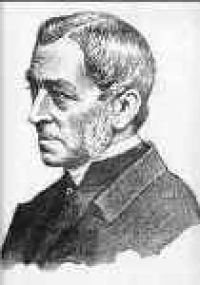 John William Burgon,
The Traditional Text of the Holy Gospels
John William Burgon,
The Traditional Text of the Holy Gospels
“ What was the origin of the mass of floating readings, of which some were transferred into the text of these two Codexes, will be considered in the next section. Students should be cautioned against inferring that the Diatessaron was read in service throughout Syria. There is no evidence to warrant such a conclusion. The mention of Edessa and Cyrrhus point to the country near the upper Euphrates; and the expression of Theodoret, relating to the Diatessaron being used “in churches of our parts,” seems to hint at a circumscribed region. ”
Alban Butler, The Lives of the Fathers, Martyrs…
“ Theodorus, which he had built in the year 828, the fourteenth of his banishment, being about seventy years old. By the order of the empress Theodora, his body was brought to Constantinople with great pomp, in 848, on the 13th of March, on which day he is commemorated in the Roman Martyrology. [3] * * * * *It is by a wonderful effect of his most gracious mercy and singular love, that God is pleased to visit all his faithful servants with severe trials, and to purify their virtue in the crucible, that by being exercised it may be made heroic and perfect. ”
 Percy Bysshe Shelley,
The Complete Poetical Works of Percy Bysshe Shelley…
Percy Bysshe Shelley,
The Complete Poetical Works of Percy Bysshe Shelley…
“ Jupiter punished the temerity of the Titan by chaining him to a rock of Caucasus, and causing a vulture to devour his still-renewed heart. There was a prophecy afloat in heaven portending the fall of Jove, the secret of averting which was known only to Prometheus; and the god offered freedom from torture on condition of its being communicated to him. According to the mythological story, this referred to the offspring of Thetis, who was destined to be greater than his father. ”
S. Baring-Gould, The Lives of the Saints, Volume 01…
“ SS. THEOGNIS, PRIMUS, AND CYRINUS, MM. (about a.d. 320.) [The Martyrologies of S. Jerome, Bede, Usuardus, &c. Commemorated in the Roman Martyrology on this day; in the Greek Menæa on the 2nd Jan. Theognis, especially, is famous throughout East and West. The account in the Menæa and Menology is probably trustworthy. The Acts published by the Bollandists are of doubtful authority.] Theognis was the son of the Bishop of Cyzicus, in Hellespont. In the persecution of Licinius, he and his companions suffered at Cyzicus, being first scourged, and then cast into the sea. ”
Albert H. Buck, The growth of medicine from the earliest times to about 1800 (1917)
“ The most prominent of the disciples of Athenaeus were Theodorus, Agathinus, Herodotus, Magnus and Archigenes.Haller speaks of Theodorus as the inventor of a remedy which, as he claimed, cures all cases of poisoning.The Eclectics.—Agathinus, a native of Sparta, was the teacher of Herodotus and Archigenes. His chief distinction is to be found in the fact that he gave to the offshoot from the school of the Pneumatists the name of “Eclectics,” [35] his object being, as we are assured by Neuburger, to bring the three sects (Pneumatists, Empirics and Methodists) into closer union. ”
Karl Friedrich Becker, Ulysses of Ithaca
“ Tityus, that gigantic son of earth, who had once dared to dishonor the divine Leto, mother of Apollo and Artemis, lay fast bound upon the ground in punishment, two vultures on either side tearing at his entrails which ever grew again and were anew destroyed. ”
Achilles Tatius, The Greek Romances of Heliodorus…
“ In the remainder of the painting, were seen the two sisters showing Tereus the relics of his supper, the head and hands of his own child; fear and bitter laughter are depicted on their faces; Tereus is leaping up from his couch and drawing his sword against them, and he has struck out his foot against the table [6] which neither stands nor falls, but seems in the very act of falling. "In my opinion," said Menelaus, "we should give up the excursion to Pharos, for we have encountered two unfavourable omens, the hawk's wing and the threatening picture ”
Plutarch,
The Boys' and Girls' Plutarch
“ About this time Menetheus, the son of Peteus, grandson of Orneus, and great-grandson to Erechtheus, the first man that is recorded to have affected popularity and ingratiated himself with the multitude, stirred up and exasperated the most eminent men of the city, who had long borne a secret grudge to Theseus, conceiving that he had robbed them of their several little kingdoms and lordships, and, having pent them all up in one city, was using them as his subjects and slaves. ”
 Herbert Spencer,
Popular Science Monthly
(1879)
Herbert Spencer,
Popular Science Monthly
(1879)
“ After their first answers, "Tamagastad and Çipattoval," "our great gods whom we call teotes," cross-examination brought out the further answers—"Our fathers are these teotes;" "all men and women descend from them;" "they are of flesh and are man and woman;" "they walked over the earth dressed, and ate what the Indians ate." ”
Plutarch,
Plutarch's Moralia
(1911)
“ Theodorus, that infamous philosopher who for his profane opinion was surnamed Atheos, that is to say, the atheist, was wont to say: That he delivered his speeches with the right hand to his auditors and scholars, but they took the same with their left; even so ignorant and untaught persons many times when fortune presenteth herself unto them on the right hand, receive her awkly, turning to the left side undecently, and by that means commit many untoward and lewd parts. ”
Adolf von Harnack and Arthur Cushman McGiffert, 1911 Encyclopædia Britannica (1911)
“ Theodoret's chief importance is as a dogmatic theologian, it having fallen to his lot to take part in the Nestorian controversy and to be the most considerable opponent of the views of Cyril and Dioscurus of Alexandria. For more than twenty years he maintained the struggle against the Alexandrian dogmatic and its formulae (Θεοτόκος, ένωσις καθ' ὑπόστασιν, μια ὑπόστασις, ένωσις φυσική, and the like) , and taught that in the person of Christ we must strictly distinguish two natures (hypostases) , which are united indeed in one person (prosopon) , but are not amalgamated in essence. ”
Ethiopian Orthodox Tewahedo Church, The Book of the Saints of the Ethiopian church… (1928)
“ And when Saint Theodore arrived at the city (camp?) of the Barbarians, he said unto them, “Will ye fight, or will ye depart in peace?” And they said unto him, “Who are we to fight? We do not see any men to fight except thyself.” And Theodore said unto them, “I want no one, for I by myself in the might of my God will destroy you all.” And the Barbarians said unto him, “Peradventure thou hast come out to fight a dog? If thou wilt select the least among us, he shall come to thee, and fight thee.” ”
J. H. Kurtz, Church History (Volumes 1-3)
“ An old archimandrite in Constantinople called Eutyches taught not only that after His incarnation Christ had only one nature, but also that the body of Christ as the body of God is not of like substance with our own. The patriarch Domnus of Antioch accused him without success to Theodosius II., and Theodoret wrote against him a controversial treatise under the title Ἐρανιστὴς ἤτοι Πολύμορφος, in which he opposed the doctrine of Eutyches as a conglomeration of many heresies. ”
S. Baring-Gould, The Lives of the Saints, Volume 02…
“ Theodoret, bishop of Cyrus, the famous ecclesiastical historian, was anathematized by the haughty patriarch, Dioscorus, in his cathedral at Alexandria; and Theodoret wrote to Flavian of Constantinople, complaining of the outrage. Domnus of Antioch took part with Theodoret, and sent envoys to Constantinople in his favour, whom Theodoret charged with letters, in which he protested his orthodoxy, declaring that he believed in one Christ, truly God, and truly man. "I give Him one worship," he wrote, "yet I know that the Godhead and the flesh are distinct, for the union is without confusion." ”
“ There, on a dizzy height, his body thrust against the sun-baked rock, Prometheus had to endure the torment of having a foul-beaked vulture tear out his liver, as though he were a piece of carrion lying on the mountain side. All day, while the sun mercilessly smote him and the blue sky turned from red to black before his pain-racked eyes, the torture went on. Each night, when the filthy bird of prey that worked the will of the gods spread its dark wings and flew back to its eyrie, the Titan endured the cruel mercy of having his body grow whole once more. ”
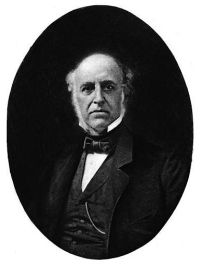 Thomas Bulfinch,
The Age of Fable: — XXII. The Rural Deities…
(1855)
Thomas Bulfinch,
The Age of Fable: — XXII. The Rural Deities…
(1855)
“ THETIS Thetis, the daughter of Nereus and Doris, was so beautiful that Jupiter himself sought her in marriage; but having learned from Prometheus the Titan that Thetis should bear a son who should grow greater than his father, Jupiter desisted from his suit and decreed that Thetis should be the wife of a mortal. By the aid of Chiron the Centaur, Peleus succeeded in winning the goddess for his bride and their son was the renowned Achilles. ”
Carl Gustav Adolf von Harnack, Encyclopædia Britannica, Ninth Edition (1888)
“ Among the apologetico-dogmatic works of Theodoret must be reckoned his ten discourses Περἱ προνοίας. Theodoret gives a valuable exposition of his own dogmatic in the fifth book of his Αίρετικἦς κακομνθίας έπιτομή, already referred to. [1] This, the latest of his works in the domain of church history (it was written after 451) , is a source of great though not of primary importance for the history of the old heresies. ”
Richard Garnett, The Twilight of the Gods, and Other Tales
“ Just at the nick of time the right sort of fellow pops up nobody knows whence, a lanista with hair like curling helichryse, as Theocritus has it, and a small army of gladiators, whom, out of devotion to the Emperor, he offers to exhibit for nothing. Who so pleased as Theocles now? He takes the chair as archon with Leaena by his side, and off goes every soul in the place, except Pannychis, who cannot bear the sight of blood, and Porphyry, who is an outrageous humanitarian, and us poor devils left in charge of this old dreamer. ”
Augustus Taber Murray, The Iliad — Book XVIII (1924)
“ And Thetis made answer to him, shedding tears the while: "Hephaestus, is there now any goddess, of all those that are in Olympus, that hath endured so many grievous woes in her heart as are the sorrows that Zeus, son of Cronos, hath given me beyond all others? Of all the daughters of the sea he subdued me alone to a mortal, even to Peleus, son of Aeacus, and I endured the bed of a mortal albeit sore against my will. ”
