Civet

Definition and stakes

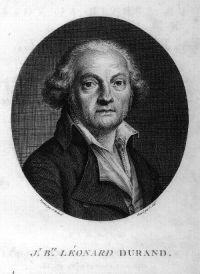
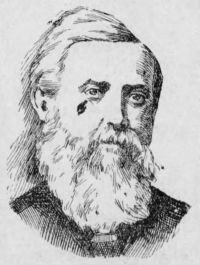
Portrait of Jean Baptiste Léonard Durand Jean Baptiste Léonard Durand,  A voyage to Senegal (1806)

“ The civet is an animal as large and thick as a tolerably great dog; it has a pointed muzzle; the eyes and ears are small; the whiskers like those of a cat; the skip spotted with white, black, and yellow; while its tail is as thick and long as that of a fox. It is a wild, cruel, and carnivorous animal, whose bite is dangerous. The Negroes take them by snares; and those who buy them keep them in iron cages, and feed them on raw flesh. ”
Source: Gutenberg

Edward Turner Bennett,  The Tower Menagerie

“ In his natural habits the Civet closely resembles the fox and the less powerful species of cats, subsisting by rapine, and attacking the birds and smaller quadrupeds, which form his principal food, rather by night and by surprise than by open force and in the face of day: reduced to a state of captivity, he becomes moderately tame, but not sufficiently so to allow himself to be handled with impunity. ”
Source: Gutenberg

1911 Encyclopædia Britannica, Volume 6… (1911)

“ In a state of captivity the civet is never completely tamed, and only kept for the sake of its perfume, which is obtained in largest quantity from the male, especially when in good condition and subjected to irritation, being scraped from the pouch with a small spoon usually twice a week. ”
Source: Wikisource

Get perspective with Kwize: daily news enlightened by great literature