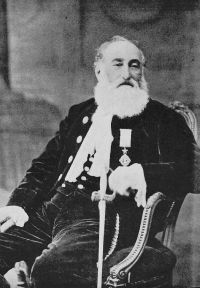
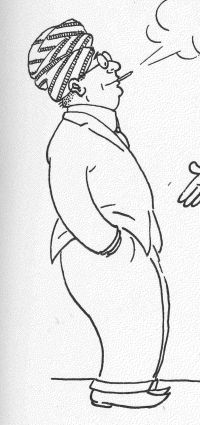
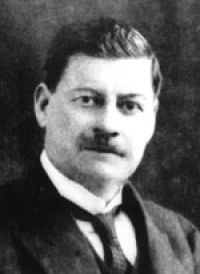
“ This man—what is his name? Ramsden? Pouff! Ganesha, here, is far better! Ganesha is from America. Those fools who went to prepare the American mind for what is coming, because they were altogether too foolish to be anything but in the way in India, have been found out, and Ganesha has come like a big bull-buffalo to save the world by thrusting his clumsy horns into things he does not understand! I tell you, Athelstan, that however much is known there is much more that is not known. ”
Ganesha
Definition and stakes
Ganesha, the elephant-headed deity in Hinduism, embodies wisdom, prosperity, and the removal of obstacles, often depicted as the son of Shiva and Parvati. Authors such as Talbot Mundy and Rudyard Kipling invoked Ganesha as a symbol of chaotic yet purposeful transformation, while Sir Richard Francis Burton framed him as a patron of narrative insight in his tales.
Eliza Ruhamah Scidmore highlighted his cultural presence in Indonesian temples, and Meadows Taylor wove him into narratives of intrigue, reflecting his multifaceted role. These varied portrayals underscore Ganesha’s adaptability as both a spiritual icon and a narrative tool across literary traditions.
Quotes about “Ganesha”
“ She looked into King's eyes with challenging familiarity that made him smile, and then eyed me wonderingly. She glanced from me to a picture on the wall in blue of the Elephant-god—enormous, opulent, urbane, and then back again at me, and smiled very sweetly."So you have brought Ganesha with you? The god of good luck! How wonderful! How does one behave toward a real god?" ”
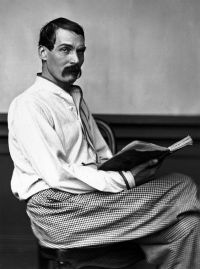
Sir Richard Francis Burton,
Vikram and the Vampire; or, Tales of Hindu Devilry
“ VIKRAM AND THE VAMPIRE. INTRODUCTION. The sage Bhavabhuti—Eastern teller of these tales—after making his initiatory and propitiatory congé to Ganesha, Lord of Incepts, informs the reader that this book is a string of fine pearls to be hung round the neck of human intelligence; a fragrant flower to be borne on the turban of mental wisdom; a jewel of pure gold, which becomes the brow of all supreme minds; and a handful of powdered rubies, whose tonic effects will appear palpably upon the mental digestion of every patient. ”
Eliza Ruhamah Scidmore,
Java
(1897)
“ The main or central temple now remaining still enshrines in its west or farther chamber an image of Ganesha, the hideous elephant-headed son of Siva and Parvati. Broken images of Siva and Parvati were found in the south and north chambers, and Brahma is supposed to have been enshrined in the great east chapel. An adjoining temple holds an exquisite statue of Loro Jonggran, “the maiden with the beautiful hips,” who stands, graceful and serene, in a roofless chamber, smiling down like a true goddess upon those who toil up the long carved staircase of approach. ”
Meadows Taylor,
Confessions of a Thug
“ Ganesha came to me. "I have been looking at the ground," said he, "and there is a hole near the Moonshee's tent, which has been dug for some purpose or other, apparently the commencement of a well; it will save us the trouble of digging; the earth, too, lies close to it, and will only have to be filled in.""Have the Lughaees seen it?" said I."Yes," he replied; "I took Bhowanee with me; he says it is the very thing." ”
Achmed Abdullah,
The Adventures of Million Dollar Smith…
(1925)
“ For it appeared, that the Oktamund Rajahs bear a unique relation to India, being the direct descendants of Ganesha, the elephant-headed god, first born of the sons of Shiva the Creator and Doorgha the Destroyer. ”
Meadows Taylor,
Confessions of a Thug
“ I will be a Rajpoot Jemadar, come from Hyderabad, and you shall see I have not forgotten my old trade."Accordingly he painted his forehead and breast after the fashion of the Hindoos, covered his eyes with wood ashes, put on a waistcloth and dress he borrowed from one of the men, and attended by another, went into the village.How anxiously I expected his return! I feared he would fail in his mission, but Ganesha was confident. "He never fails," said he to me; "he is one of Bhowanee's own favourites; nothing he ever did failed. ”
Sagas from the Far East; or, Kalmouk and Mongolian Traditionary Tales
“ Devarâja of Vigajanagara erected the first temple to the Trimurti about this date. Ganesha, the god of wisdom and knowledge, appeared to his minister Laxmana and bid him build a temple on the banks of the Penar to the Hiranjagarbha, called Brahma, Vishnu, and Shiva; this is the first example of any inscription of honour paid to the Trimurti38.Secondly, the worship of the god Crishna, whose name and attributes as well as his substitution for Vishnu, the second god of the Trimurti, present so many analogies with the teaching concerning our Divine Lord39. ”
Ernest Binfield Havell,
A Handbook of Indian Art
(1920)
“ This quaint conception of worldly wisdom is one of the most popular of Hindu household gods, and is often carved over the entrance doorway. The temple sculptors succeeded in investing his grotesque figure with much monumental dignity and sphinx-like mystery, as will be seen in the fine sculpture from Java (Pl. LXX, a) . Hanumān, the monkey-god, doubtless another aboriginal totem raised to a higher plane of thought by Hindu teachers and made one of the heroes of the Rāmāyana, takes the same place among Vaishnavas as Ganēsha does among the devotees of Siva. ”
Walter Crane,
India Impressions, With some notes of Ceylon during a winter tour…
“ The Temple was dedicated to Siva, but the whole Hindu pantheon of the Vedic gods appeared to be sculptured in this marvellous place, as well as the different avators of Siva.The Hindu religion is really a great system of nature worship, all the powers, forces, and influences being personified and symbolised, nothing being accounted “common or unclean”—the elephant-headed Ganesha and the monkey god Hunuman taking their place as “eligible deities”—the whole scheme resting on the acknowledgment of the sexual origin of life. ”
The Book of the Thousand Nights and a Night… (1886)
“ Lib. ii. begins with the Story of Udáyana to whom we must be truly grateful as our only guide: he and his son Naraváhanadatta fill up the rest and end with lib. xviii. Thus the want of the clew or plot compels a division into books, which begin for instance with “We worship the elephantine proboscis of Ganesha” (lib. x. i.) a reverend and awful object to a Hindu but to Englishmen mainly suggesting the “Zoo.” The “Bismillah” of The Nights is much more satisfactory. [FN#299] See pp. 5-6 Avertissement des Éditeurs, Le Cabinet des Fées, vol. xxxviii: Geneva 1788. Galland’s Edit. ”
Fanny Parkes Parlby, Wanderings of a pilgrim in search of the picturesque… (1850)
“ The history of Ganesh, the son of Mahadēo and Pārvatī, having been fully detailed in the Introduction, is here omitted. This god is the guardian to the entrance of the heaven of Shivŭ. Vishnŭ, in the form of Parashu-Rāma, wished to have an interview with Shivŭ, which was denied him by Ganesh; upon which a battle ensued, and Parashu-Rāma tore out one of his tusks. No public festivals are held in honour of Ganesh in Bengal; many persons, however, choose him as their guardian deity. ”
R. V. Russell, The Tribes and Castes of the Central Provinces of India…
“ The Vaishnava Banias no less than the Jains are strongly averse to the destruction of animal life, and will not kill any living thing. Their principal deity is the god Ganesh [124] or Ganpati, the son of Mahādeo and Pārvati, who is the god of good-luck, wealth and prosperity. Ganesh is represented in sculpture with the head of an elephant and riding on a rat, though the rat is now covered by the body of the god and is scarcely visible. ”
Popular Science Monthly (1873)
“ The gods were consulted as to what was to be done, and the result was that a god was sent to bring the head of the first animal he saw and put it on Ganesa's body; and this animal, unfortunately, was an old elephant, with one tooth. They took his head and stuck it on to Ganesa's body, and you see the result. Parvatee did not like this, and in return, to pacify her, Brahma said that Ganesa should be most worshipped of all the gods. Before a Hindoo builds a temple, or a house, or goes a journey, he prays to Ganesa. ”
Thomas Wallace Knox,
The Boy Travellers in the Far East…
“ There is a curious stone here which is said to bear the impression of Vishnu's feet; of course it is highly venerated, and is visited by every pious Hindoo who comes to Benares. There are temples and shrines all around here, and every foot of the ground is holy in the eyes of the natives. One of the temples contains a figure of the god Ganesh; he has three eyes and a trunk like an elephant, and when he goes about he is supposed to ride on a rat. ”
Donald A. Mackenzie, Indian Myth and Legend
“ Gane ́sa [185] , the four-armed, elephant-headed god of wisdom, is the son of Shiva and Parvati. He is the general of Shiva's army, the patron of learning and the giver of good fortune. At the beginning of books he is invoked by poets, his image is placed on the ground when a new house is built, and he is honoured before a journey is begun or any business is undertaken. The elephant's head is an emblem of sagacity. A myth in one of the Puranas relates that the planet Saturn, being under a curse, decapitated Ganesa simply by looking at him. ”
Emily Richings, Through the Malay Archipelago
“ The discarded Hindu gods still haunt the forest depths, and the superstitious native, as he threads the dark recesses of the solemn woods, gazes with apprehensive eyes on the trident of Siva, or [93] the elephant's trunk of Ganesh emerging from the trailing wreaths and matted tapestry of liana and creeper, veiling the blackened stone of each decaying shrine. Nature has proved stronger than Art or Creed, in the eternal growth beneath an equatorial sun, of the kingdom over which she reigns in immortal life. ”
Fanny Parkes Parlby, Grand Moving Diorama of Hindostan
“ The fine building here represented is a dhrum-sala, or place to distribute alms, at Benī Māhadēo Ghāt; it is dedicated to a form of Māhadēo, which stands in the shiwālā, or little temple above. Under the arches in the lower part, by the side of the Ganges, is an enormous 61figure of Ganesh; the worshippers pour oil and Ganges water over the image, with rice and flowers, and hang chaplets of flowers around its neck: the idol is generally dripping with oil. The red flag, at the end of a long bamboo displayed from the pīpul tree, denotes the residence of a Fakīr. ”
active 11th century Somadeva Bhatta, The Kathá Sarit Ságara; or, Ocean of the Streams of Story
“ And one day the goddess was much troubled by the advent of spring, and she was sitting surrounded by the Gaṇas at the foot of a tree, thinking about her beloved, when a noble Gaṇa, named Maṇipushpeśvara, looked lovingly at a young maiden, the daughter of Jayá, called Chandralekhá, who was waving a chowrie over the goddess. He was a match for her in youth and beauty, and she met his glance with a responsive look of love, as he stood by her side. Two other Gaṇas, named Pingeśvara and Guheśvara, when they saw that, interchanged glances, and a smile passed over [509] their faces. ”
Percy Brown, Picturesque Nepal (1912)
“ From this central square narrow alleys radiate in all directions, and these lead to shrines, temples, and pagodas in endless succession. In the narrowest of lanes some of the most remarkable buildings are to be found, one temple standing in a particularly unsavoury gully, attracting attention on account of being plated from pavement to pinnacle with sheets of embossed copper gilt. Near this, and almost blocking up the passage, is a shrine to Ganesh, with the attributes of this popular divinity in the shape of two colossal bronze rats crouching on pedestals in front. ”
Edward Sylvester Ellis, 1000 Mythological Characters Briefly Described
“ Ganesa (Gan′esa) . The Indian Mercury. The god of wisdom and prudence.Ganga. One of the three Indian river goddesses.Ganymede, a beautiful Phrygian youth, son of Tros, King of Troy. He succeeded Hebe in the office of cup-bearer to Jupiter. He is generally represented sitting on the back of a flying eagle.Gardens, see Pomona (goddess of fruit-trees) . [Pg 58] Gates, see Janus.Gautama (Gau′tama) (Buddha) . The chief deity of Burmah.Genii were domestic divinities. Every man was supposed to have two of these genii accompanying him; one brought him happiness, the other misery. ”
Janet Harvey Kelman, Children of India
“ He dreamt that Mariamma wished to rest in his village, so he had a shrine built for her; and there, amidst lamps and garlands, the unused stone received the worship of the people from the country round, and the priest grew wealthy by the gifts that were brought to the goddess in the marble. But the other priest, Ramachandra, died of the plague which he had said would leave the city with the angry goddess.Some Hindu gods look very terrible. One of these that is commonly worshipped is called Ganesa, and he has a man’s body with an elephant’s head. ”
Various, Graham's Magazine, Vol. XLI, No…
“ Typical of the horrid rites, on the walls are carved the statues of a male leading a female to the glowing pyre, modest, and timidly reluctant; while in the blue gloom of the interior, from floor to roof, rises the Cerberus-headed statue of the Trinity, of Brahmah, Vishnu, and Sheva, with three-fold face—on all sides ever watching. Reverent the old man bows his head, and passes ’neath the sacred portal. Once more worthy, since his penance has expired, he mingles with his brethren. The awe-struck Ganga is delivered into the care of the attendant maidens. ”
Reginald Thomas Maitland Scott, The Wheel of Death — Master of Seven Million People… (1933)
“ It was just before dinner on the following evening that Ram Singh finally returned to Wentworth's Park Avenue apartment. His first act was to light some incense and place it before old Ganesh the elephant-headed god of India— the god which he had carefully brought away from the apartment which they had deserted. In his own room he squatted upon the floor while the incense burned and chanted a mantra in a low voice. Ganesh was a god who should be carefully cultivated if good luck were to remain with Ram Singh and with Ram Singh's master. ”
Adeline Georgiana Isabel Kingscote, Tales of the Sun (1890)
“ I shall burn him.” Thus said the elder brother, and, giving the corpse to the god Gaṇêśa, he went to prepare himself for that deity’s ceremonials. Gaṇêśa made over the corpse to his Gaṇas, [16] asking them to watch over it carefully. So a spoiled child receives a fruit from its father, who, when he gives it the fruit asks the child to keep it safe. The child thinks within itself, “My father will forgive me if I eat a portion of it.” ”
Frederick G. Aflalo, Birds in the Calendar
“ It is probable that too much significance need not be attached to such association between the Greek goddess of wisdom and her attendant owls, for Hindu symbolism represented Ganesa, god of wisdom, with the head of an elephant, yet that animal, which the natives of India know better than the men of any other race, has never figured in their folklore as a type noted for its cunning. ”
Joseph Jacobs,
Indian Fairy Tales
(1892)
“ The elder brother, after finishing the puja, demanded his brother's corpse of the god. The god called his Ganas, who came to the front blinking, and fearing the anger of their master. The god was greatly enraged. The elder brother was very angry. When the corpse was not forthcoming he cuttingly remarked, "Is this, after all, the return for my deep belief in you? You are unable even to return my brother's corpse." Ganesa was much ashamed at the remark. So he, by his divine power, gave him a living Gangazara instead of the dead corpse. ”
William Crooke, The Popular Religion and Folk-Lore of Northern India…
“ We now come to consider some divinities special to the Drâvidian races, who touch on the North-Western Provinces [118] to the south, across the Kaimûr and Vindhyan ranges, the physical as well as the ethnical frontier between the valleys of the Ganges and Jumnâ and the mountain country of Central India. The chief Gond deity is Gansâm Deo. Some vague attempt has been made to elevate him into the pantheon of Brâhmanism, and his name has been corrupted into Ghanasyâma, which means in Sanskrit, “black like the heavy rain clouds of the rainy season,” and is an epithet of Râma and of Krishna. ”
Charles Eliot,
Hinduism and Buddhism, An Historical Sketch…
“ And these epithets and functions are to a large extent, the same. All the gods are bright and swift and helpful: all love sacrifices and bestow wealth, sons and cows. A figure like Agni enables us to understand the many-sided, inconsistent presentment of Siva and Vishnu in later times. A richer mythology surrounds them but in the fluidity of their outline, their mutability and their readiness to absorb or become all other deities they follow the old lines. Even a deity like Gaṇeśa who seems at first sight modern and definite illustrates these ancient characteristics. ”
Rudyard Kipling,
From Sea to Sea; Letters of Travel
“ The management of the temple have daubed a large portion of the building with whitewash, for which their revenues should be "cut" for a year or two. The main shrine holds a large brazen image of Garuda, and, in the corners of the courtyard of the main pile, are shrines to Mahadeo, and the jovial, pot-bellied Ganesh. There is no repose in this architecture, and the entire effect is one of repulsion; for the clustered figures of man and brute seem always on the point of bursting into unclean, wriggling life. ”