“ The sun never blinks his eye, or seeks to cover his full strength where they are; straight down he flings himself upon Rhea, and she, the earth, responds with the fervency of a consuming passion, or the love fever of a sea-voyage. There is no place for grey here—it must be white, yellow, red, greens of the richest, russet of the most positive, purples that are not disguised: the fumes of the panting mid-day may be pallid, yet it is not the pallor of ashes, but the gas-haze which quivers above the white intensity of the bloom. ”
Rhea
Definition and stakes
Rhea, a primordial goddess in Greek mythology, embodies the earth's generative power and maternal role, serving as the mother of the Olympian deities. Authors such as E. M. Berens portray her as the nurturing force behind plant and animal life, while H. A. Guerber focuses on her conflict with Cronus, who devoured their children.
Albert Pike connects her to Phoenician cosmogony, emphasizing her link to mystery cults, and Hume Nisbet brings forth her vivid, passionate presence through poetic imagery. These diverse viewpoints highlight Rhea’s lasting symbolism as both a natural force and a figure of mythic endurance, bridging ancient traditions with literary reimagining.
Quotes about “Rhea”
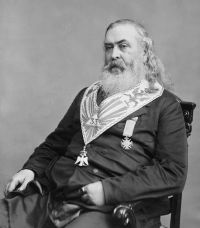 Albert Pike,
Morals and Dogma of the Ancient and Accepted Scottish Rite of Freemasonry
Albert Pike,
Morals and Dogma of the Ancient and Accepted Scottish Rite of Freemasonry
“ The name of Rhea is also found in the ancient cosmogony of the Phœnicians by Sanchoniathon. It was Atys the Lydian, says Lucian, who, having been mutilated, first established the Mysteries of Rhea, and taught the Phrygians, the Lydians, and the people of Samothrace to celebrate them. Rhea, like Cybele, was represented drawn by lions, bearing a drum, and crowned with flowers. According to Varro, Cybele represented the earth. She partook of the characteristics of Minerva, Venus, the Moon, Diana, Nemesis, and the Furies ”
E. M. Berens, Myths and Legends of Ancient Greece and Rome
“ Rhea, the wife of Cronus, and mother of Zeus and the other great gods of Olympus, personified the earth, and was regarded as the Great Mother and unceasing producer of all plant-life. She was also believed to exercise unbounded sway over the animal creation, more especially over the lion, the noble king of beasts. Rhea is generally represented wearing a crown of turrets or towers and seated on a throne, with lions crouching at her feet. She is sometimes depicted sitting in a chariot, drawn by lions. ”