“ The divine effort, the outpouring of one life into another, the work of mother and of lover, was crowned with success. In half an hour the warmth revived Pons; he became himself again, the hues of life returned to his eyes, suspended faculties gradually resumed their play under the influence of artificial heat; Schmucke gave him balm-water with a little wine in it; the spirit of life spread through the body; intelligence lighted up the forehead so short a while ago insensible as a stone; and Pons knew that he had been brought back to life, by what sacred devotion, what might of friendship! ”
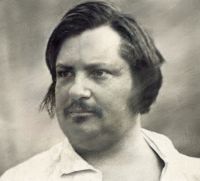
Honoré de Balzac
Summary

"Cousin Pons," a novel by Honoré de Balzac, is part of his expansive Comédie humaine and was published in 1847 in serial form in Le Constitutionnel. Focused on Sylvain Pons, a solitary musician and art collector, the story delves into themes of social disparity, the conflict between artistic idealism and materialistic ambition, and the cutthroat battle over inheritance.
Pons’s bond with the German Schmucke stands in stark contrast to the machinations of characters such as Mme Cibot, the grasping Camusot family, and the deceitful lawyer Fraisier, all of whom seek to gain control of Pons’s prized art collection. Balzac’s depiction of Parisian society highlights the ethical decline of both the bourgeoisie and the proletariat, portraying the collection itself as the true "heroine" of the tale—a symbol of cultural worth consumed by greed.
Quotes from Cousin Pons (Honoré de Balzac)
“ Wherefore Magus laughs at our national collection, raked by the sunlight which destroys the fairest paintings, pouring in through panes of glass that act as lenses. Picture galleries can only be lighted from above; Magus opens and closes his shutters himself; he is as careful of his pictures as of his daughter, his second idol. And well the old picture-fancier knows the laws of the lives of pictures. To hear him talk, a great picture has a life of its own; it is changeable, it takes its beauty from the color of the light. ”
“ The amount of wine, German and French, consumed at that dinner would amaze the contemporary dandy; nobody knows the amount of liquor that a German can imbibe and yet keep calm and quiet; to have even an idea of the quantity, you must dine in Germany and watch bottle succeed to bottle, like wave rippling after wave along the sunny shores of the Mediterranean, and disappear as if the Teuton possessed the absorbing power of sponges or sea sand. Perfect harmony prevails meanwhile; there is none of the racket that there would be over the liquor in France ”
