William Hogarth

Definition and stakes

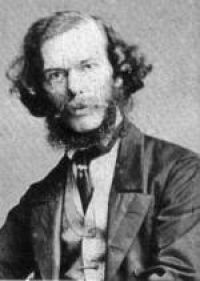
Portrait of Edward Dutton Cook Edward Dutton Cook Once a Week (1861)

WIDOW HOGARTH AND HER LODGER.
On the 26th day of October, 1764, died William Hogarth. Very ailing and feeble in body, but still with his heart up and his mind, as ever, quick and vigorous and full of life, he had moved on the day before from his pleasant snug cottage at Chiswick to his town house in Leicester Fields. He turned now and then in his bed uneasily, as he felt the venomous slanders of Wilkes and Churchill still wounding and stinging him like mosquito bites: else was the good little man at peace. “I have invariably endeavoured to make those about me tolerably happy.”
Source: Wikisource

Various The Cornhill Magazine (Vol. I, No… (1860)

William Hogarth out of his apprenticeship is, I take it, a sturdy, ruddy-complexioned, clear-eyed, rather round-shouldered young fellow, who as yet wears his own hair, but has that sword at home—a silver-hilted or a prince’s metal one—and is not averse to giving his hat a smart cock, ay, and bordering it with a narrow rim of orrice when Fortune smiles on him.
Source: Gutenberg

John Nichols Biographical Anecdotes of William Hogarth…

Hogarth is to shew the faulty and dark side of every object. He never gives us in perfection the fair face of nature, but admirably well holds out her deformities to ridicule. The reason is plain. All objects are painted on his retina in a grotesque manner, and he has never felt the force of what the French call la belle nature. He never caught a single idea of beauty, grace, or elegance; but, on the other hand, he never missed the least flaw in almost any production of nature or of art.
Source: Gutenberg

Get perspective with Kwize: daily news enlightened by great literature