Walter C. Runciman

Biographical details

Walter C. Runciman,  Gas and Oil Engines, Simply Explained

“ We wish to emphasise this at the outset, because a consideration of these facts will keep cropping up throughout all our dealings with the gas engine, and if once a fairly clear conception is obtained of how gas will behave under certain and various conditions, half, or even more than half, our "troubles" will disappear; the cry that the gas engine has "gone wrong" will be heard less often, and users would soon learn that the gas engine is in reality as worthy of their confidence as any other form of power generator in common use. ”
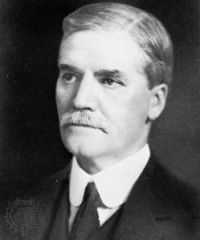
Source: Gutenberg

Walter C. Runciman,  Gas and Oil Engines, Simply Explained

“ The wear on a well-designed gas valve operating mechanism is practically nil; and even if there was wear, the effect would be to cause the valve to open a trifle later and close sooner than it would otherwise, i.e., it would remain open a shorter time during each charging stroke. This in turn (other conditions remaining the same) would give us a weaker mixture; and although too weak a mixture is preferable to a too rich one, we should have to adopt some means of increasing the richness of the mixture; otherwise the maximum power of the engine would soon be seen to diminish. ”
Source: Gutenberg

Walter C. Runciman,  Gas and Oil Engines, Simply Explained

“ All that we require of the cooling water is that it shall keep certain working parts of the engine at a reasonable temperature; for instance, the cylinder must not be so hot as to deprive the lubricating oil of its property to lubricate, neither must the exhaust valve become so hot as to cause it to seize in the bush and stick up; but, beyond such considerations as these, the higher the temperature is at the commencement of each explosion the more efficient will the engine be. ”
Source: Gutenberg

Get perspective with Kwize: daily news enlightened by great literature