Summary

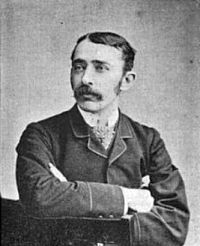
Portrait of John Ambrose Fleming John Ambrose Fleming 1911 Encyclopædia Britannica, Volume 27… (1911)

If the unit of velocity is the unit of length passed over per unit of time, then it is obvious that it varies directly as the unit of length, and inversely as the unit of time. Hence we may say that the dimensions of velocity are L/T or LT−1; similarly the dimensions of acceleration are L/T2 or LT−2, and the dimensions of a force are MLT−2.
Source: Wikisource

Portrait of John Ambrose Fleming John Ambrose Fleming 1911 Encyclopædia Britannica, Volume 27… (1911)

The science of dynamics, as far as that part of it is concerned which deals with the motion and energy of material substances, starts from certain primary definitions concerning the measurable quantities involved. In constructing a system of physical units, the first thing to consider is the manner in which we shall connect the various items. What, for instance, shall be the unit of force, and how shall it be determined by simple reference to the units of mass, length and time?
Source: Wikisource

Portrait of John Ambrose Fleming John Ambrose Fleming 1911 Encyclopædia Britannica, Volume 27… (1911)

Again, the fact that the maintenance of an electric current requires energy, and that when produced its energy can be wholly utilized in heating a mass of water, enables us to make a similar statement about the energy required to maintain a current of one ampere through a resistance of one ohm for one second, and to define it by its equivalent in the energy of a moving mass.
Source: Wikisource

Get perspective with Kwize: daily news enlightened by great literature