Atomic theory

Definition and stakes

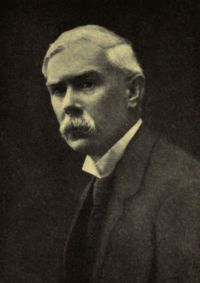
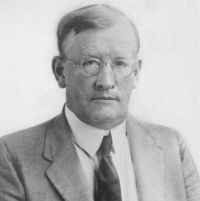
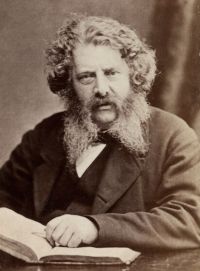
Portrait of Hudson Tuttle Hudson Tuttle,  Studies in the Out-Lying Fields of Psychic Science

“ The atomic theory is one of the most splendid generalizations in the whole circle of sciences. As a working hypothesis its aid is invaluable, and the solution it affords of the most intricate combination of the elements, truly marvelous. Yet it is a conjecture; the existence of the atom a guess. No one ever saw, tasted, or felt the atom. It is absolutely beyond the senses, as it is beyond any instrumental aid thereto. The entire structure of physical science, as expounded to-day, rests on conjecture, the only evidence in support of which is that it explains the phenomena. ”
Source: Gutenberg

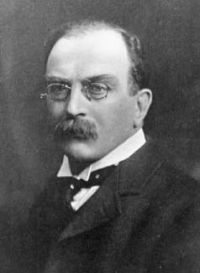
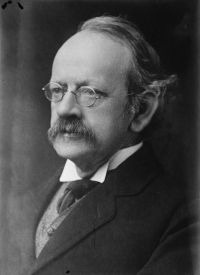
Portrait of J. J. Thomson J. J. Thomson,  Romanes Lecture: The Atomic Theory (1914)

“ For two thousand years the Atomic Theory itself made no progress, because, though in form a physical theory, it had no real connexion with physical phenomena, no facts were known by which it could be tested, and it was too vague to suggest for itself effects which could be put to the test of experiment. It was sterile because it was divorced from experience. It affords a striking proof that a theory can only grow by the co-operation of thought and facts, and that all that is valuable in a physical theory is not only tested, but in most cases suggested, by the study of physical phenomena. ”
Source: Wikisource

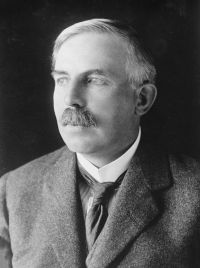
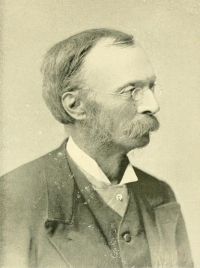
Portrait of Ernest Rutherford Ernest Rutherford,  Radio-Activity

“ The study of the radio-active substances and of the discharge of electricity through gases has supplied very strong experimental evidence in support of the fundamental ideas of the existing atomic theory. It has also indicated that the atom itself is not the smallest unit of matter, but is a complicated structure made up of a number of smaller bodies. ”
Source: Gutenberg

Get perspective with Kwize: daily news enlightened by great literature