“ The irritation caused by misconception, the necessity of justifying even his limitations to a world which was apparently prepared to consider nothing else about him at one time—these were the wine-press of his eloquence. ”
Misconception
Definition and stakes
The theme of “misconception” has been addressed by authors such as T. Martin Wood, Victor Mapes and Joseph Jastrow. It is often associated with terms like truth, error, deception, mind and ignorance.
Quotes about “misconception”
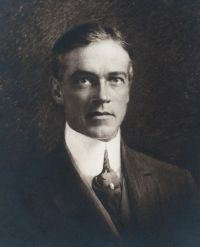 Victor Mapes,
Heart and Soul by Maveric Post
Victor Mapes,
Heart and Soul by Maveric Post
“ You are attempting to pass judgment, by means of the reasoning processes of the intellect, on questions which man's intellect is incapable of understanding. As we found to be the case when considering the affections, the result of such an endeavor is a misconception and distortion. ”
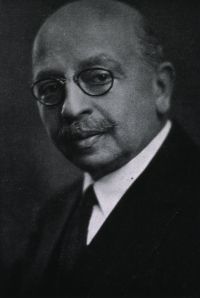 Joseph Jastrow,
Fact and Fable in Psychology
Joseph Jastrow,
Fact and Fable in Psychology
“ They further aim to illustrate that misconceptions in psychology, as in other realms, are as often the result of bad logic as of defective observation, and that both are apt to be called into being by inherent mental prepossessions. Some of the essays are more especially occupied with an analysis of the defective logic which lends plausibility to and induces credence in certain beliefs; others bring forward contributions to an understanding of phenomena about which misconception is likely to arise ”
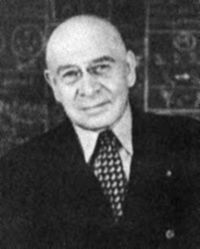 Alfred Korzybski,
Manhood of Humanity
Alfred Korzybski,
Manhood of Humanity
“ The false creeds in question—the fatal misconceptions they involve—are so familiar to us—they have been so long and so deeply imbedded in our thought and speech and ways of life—we have been so thoroughly bred in them by home and school and church and state—that we habitually and unconsciously take them for granted and have to be virtually stung into an awareness of the fact that we do actually hold them and that they do actually reign to-day throughout the world and have so reigned from time immemorial. ”
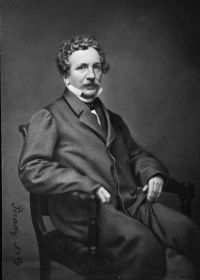 G. P. R. James,
Leonora D'Orco: A Historical Romance
G. P. R. James,
Leonora D'Orco: A Historical Romance
“ How much accident sometimes serves us--nay, how often our own follies and indiscretions lead us to better results than our wisdom and prudence could have attained!"Conduct is fate," "Knowledge is power," are the favourite doctrines of those who believe they have conduct, or presume they have knowledge. Carried to the infinite, both axioms are true, but in every degree below the infinite they are false; and oh, how false with man! Every abstract, indeed, is often found to be a practical falsehood. ”
Joseph Jastrow,
Fact and Fable in Psychology
“ Sense-deceptions, faulty observation, distraction, exaggeration, illusion, fallacy, and error are not idle abstract fancies of the psychologist, but stern realities; and their existence emphasizes the need in the determination of truth and the maintenance of a sound rationality, of a calm, unprejudiced judgment, of an experienced and balanced intelligence, of a discerning sense for nice distinctions, of an appreciation of the circumstances under which it is peculiarly human to err. ”
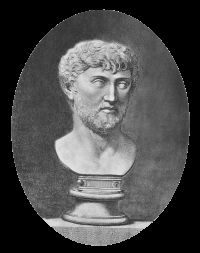 Titus Lucretius Carus,
On the Nature of Things
Titus Lucretius Carus,
On the Nature of Things
“ Thou'lt find That from the senses first hath been create Concept of truth, nor can the senses be Rebutted. For criterion must be found Worthy of greater trust, which shall defeat Through own authority the false by true; What, then, than these our senses must there be Worthy a greater trust? Shall reason, sprung From some false sense, prevail to contradict Those senses, sprung as reason wholly is From out the senses?—For lest these be true, All reason also then is falsified. Or shall the ears have power to blame the eyes, Or yet the touch the ears? ”
Clifton Wilbraham Collins, Plato (1874)
“ Often, too, we put, so to speak, the shoe on the wrong foot, or stamp with the wrong seal; and from these wrong and hasty impressions come false opinions. There can be no mistake when perception and knowledge correspond; but we often have one without the other. ”
 Percy Bysshe Shelley,
The Prose Works of Percy Bysshe Shelley…
(1897)
Percy Bysshe Shelley,
The Prose Works of Percy Bysshe Shelley…
(1897)
“ I say that no person is willing in his own mind to receive or to assert a falsehood, to be ignorant, to be in error, to possess that which is not true. This is truly to be called falsehood, this ignorance and error in the mind itself. What is usually called falsehood, or deceit in words, is but a voluntary imitation of what the mind itself suffers in the involuntary possession of that falsehood, an image of later birth, and scarcely, in a strict and complete sense, deserving the name of falsehood.—Lib. ”
William Hazlitt, The collected works of William Hazlitt… (1902)
“ Will he come to the consideration of the question impartially, indifferently, and without any wrong bias, or give the painful and revolting truth the same cordial welcome as the long-cherished and favourite prejudice? To say that the truth or falsehood of a proposition is the only circumstance that gains it admittance into the mind, independently of the pleasure or pain it affords us, is itself an assertion made in pure caprice or desperation. ”
Sir Thomas Browne, The Works of Sir Thomas Browne…
“ Their understanding is so feeble in the discernment of falsities, and averting the Errors of reason, that it submitteth unto the fallacies of sense, and is unable to rectifie the Error of its sensations. ”
 Samuel Johnson,
The Rambler
(1801)
Samuel Johnson,
The Rambler
(1801)
“ That such a fallacy could be imposed upon any human understanding, or that an author could have advanced a position so remote from truth and reason, any other ways than as a declaimer, to shew to what extent he could stretch his imagination, and with what strength he could press his principle, would scarcely have been credible, had not this lady kindly shewn us how far weakness may be deluded, or indolence amused. ”
 Plato,
The Republic of Plato
(1901)
Plato,
The Republic of Plato
(1901)
“ The reason is, I replied, that you attribute some profound meaning to my words; but I am only saying that deception, or being deceived or uninformed about the highest realities in the highest part of themselves, which is the soul, and in that part of them to have and to hold the lie, is what mankind least like;—that, I say, is what they utterly detest. ”
 G. K. Chesterton,
A Chesterton Calendar
G. K. Chesterton,
A Chesterton Calendar
“ Why should not good logic be as misleading as bad logic? They are both movements in the brain of a bewildered ape?' The young sceptic says, 'I have a right to think for myself.' But the old sceptic, the complete sceptic, says, 'I have no right to think for myself. ”
Latter Day Saints' Messenger and Advocate…
“ If a former opinion of ours is incorrect, if we have, through the influence of those whom we thought possessed understanding, embraced a system which we afterward fear is incorrect, what do we lose, if, after investigation, it proves to be so? ”
 Giacomo Casanova,
The Memoirs of Jacques Casanova de Seingalt…
Giacomo Casanova,
The Memoirs of Jacques Casanova de Seingalt…
“ I saw that I was in a place where, if the false appeared true, the truth might appear false, where understanding was bereaved of half its prerogatives, where the imagination becoming affected would either make the reason a victim to empty hopes or to dark despair. ”
 Mary Baker Eddy,
Science and Health with Key to the Scriptures
(1906)
Mary Baker Eddy,
Science and Health with Key to the Scriptures
(1906)
“ Self-destroying error; a kingdom divided against itself, which cannot stand; material knowledge, The higher false knowledge builds on the basis of evidence obtained from the five corporeal senses, the more confusion ensues, and the more certain is the downfall of its structure. ”
The Forerunner, Volume 1 (1909-1910…
“ If the new knowledge you bring him is evidently a matter of fact, if his brain rationally perceives that he was wrong about this thing, and you are right, he removes his incorrect idea and establishes the correct one, with no more disagreeable sensation than a little sense of shame:—not that, if he was wise enough to admit ignorance gracefully. ”
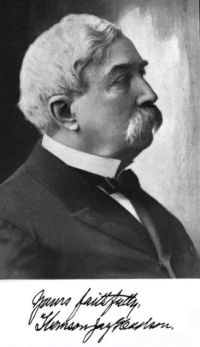 Thomson Jay Hudson,
The Law of Psychic Phenomena
Thomson Jay Hudson,
The Law of Psychic Phenomena
“ It never seems to occur to them that what they state to be a fact can possibly be, in the slightest degree, doubtful. A doubt, expressed or implied, of their perfect integrity, of the correctness of their statements, or of the genuineness of the phenomena which is being exhibited through them, invariably results in confusion and distress of mind. Hence they are incapable of controversial argument,—a fact which constitutes another important distinction between the objective and subjective minds. ”
Emanuel Swedenborg, The Swedenborg Library Vol 1 (1875)
“ But confirmations from experience are preferable, because the deductions of reason are not comprehended by many, and because they who have confirmed themselves in the contrary opinion, turn them into matters of doubt by reasonings drawn from the fallacies of the senses. ”
Plato,
The Republic of Plato
(1901)
“ And, as I was just now remarking, this ignorance in the soul of him who is deceived may be called the true lie; for the lie in words is only a kind of imitation and shadowy image of a previous affection of the soul, not pure unadulterated falsehood. ”
 Evelyn Underhill,
Practical Mysticism — Chapter 2…
Evelyn Underhill,
Practical Mysticism — Chapter 2…
“ Certainly the senses, when taken at face-value, do deceive us: yet the deception resides not so much in them, as in that conceptual world which we insist on building up from their reports, and for which we make them responsible. ”
George Gore, The Scientific Basis of National Progress… (1882)
“ As it is the force and repitition, and not the truthfulness of mental impressions, which largely determines belief, we are capable of believing error as well as truth, and we believe much that is erroneous until the corrections of the intellect are applied to the evidence of the senses and feelings. ”

“ What does it matter how you build, if you have bad bricks to build with; or how you reason, if every idea with which you begin is foul or false? And in general all fatal false reasoning proceeds from people’s having some one false notion in their hearts, with which they are resolved that their reasoning shall comply. ”
 John Locke,
An Essay Concerning Human Understanding
(1689)
John Locke,
An Essay Concerning Human Understanding
(1689)
“ For truth or falsehood lying always in some affirmation or negation, mental or verbal, our ideas are not capable, any of them, of being false, till the mind passes some judgment on them; that is, affirms or denies something of them. ”
William Hazlitt, The collected works of William Hazlitt… (1902)
“ But when we reason in words of general signification, and fall upon a general inference which is false, though it be commonly called error, it is indeed an absurdity or senseless speech. For error is but a deception in presuming that somewhat is past, or to come, of which, though it were not past, or not to come, yet there was no impossibility discoverable. ”

“ There may be confusions, there may be scenes concerning which we may be expected to be told much and are, in truth, told nothing at all, but these confusions and omissions do, in the end, only add to our conviction of the veracity of it. ”
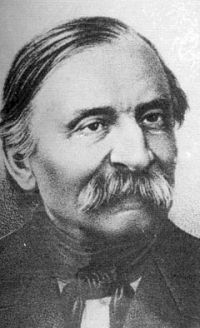 János Kriza,
The Folk-tales of the Magyars
(1889)
János Kriza,
The Folk-tales of the Magyars
(1889)
“ To this they all agreed, and search was made; and soon they found Falsehood, whom they instantly tore to pieces, coiled up her bowels into knots, burnt her, and dispersed her ashes to the winds. But even her dust was so malignant that it was carried all over the world; and that is the reason that wherever men exist there Falsehood must be. ”
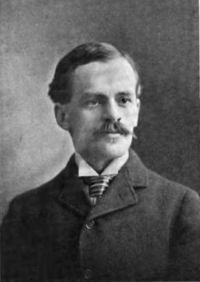 Alfred H. Lloyd,
The will to doubt
Alfred H. Lloyd,
The will to doubt
“ But now that the five things are said, now that the contradictions of experience have been seen to serve experience by giving it movement, unity, poise, practical reality and social character, somebody is sure to remark facetiously that on the evidence contradiction is something we should all cultivate assiduously, and [p.151] that henceforth to face both ways, the butt of so much opprobrium, should be one of man's greatest ideals; in brief, that the inconsistent creatures in politics, morals, and theology are the coming examples for mankind. ”
 James Frederick Ferrier,
Philosophical Works of the Late James Frederick Ferrier
(1875)
James Frederick Ferrier,
Philosophical Works of the Late James Frederick Ferrier
(1875)
“ Our whole natural thinking, as shall be distinctly proved in the body of this work, consists of a series of judgments, each of which involves a mental contradiction,—in other words, controverts a necessary truth or law of reason. ”
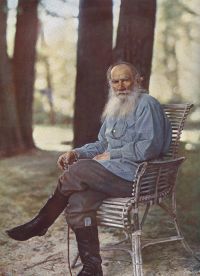 Leo Tolstoy,
Anna Karenina
(1877)
Leo Tolstoy,
Anna Karenina
(1877)
“ What harm has been done by the false interpretation of that passage! Nothing holds men back from belief like that misinterpretation. ‘I have not works, so I cannot believe,’ though all the while that is not said. ”
 Herbert Spencer,
Popular Science Monthly
(1874)
Herbert Spencer,
Popular Science Monthly
(1874)
“ Who, in short, will be led to doubt any of the inferences he has drawn, or be induced to pause before he draws others, by consciousness of these many liabilities to error arising from want of knowledge, want of discipline, and want of duly-balanced sentiments? ”
James Frederick Ferrier,
Blackwood's Magazine
(1851)
“ They tell you tauntingly to believe your senses; yet the senses, from experience, one is inclined to mistrust—indeed, some philosophers have absurdly laid down, that they are only given to deceive us, and are no-wise to be trusted. Without being under such philosophy, I would ask which of our senses has not deceived us? Go to a common conjuror, put them all to the test, and question them. Your eye will be positive that it saw a child rammed into a cannon, and shot into or through a wall—and the said child walks away unhurt. ”
 Hugh Miller,
My Schools and Schoolmasters; Or…
Hugh Miller,
My Schools and Schoolmasters; Or…
“ I still possess notes of the cogitations of these solitary evenings, ample enough to show that they were extraordinary combinations of the false and the true; but I at the same time hold them sufficiently in memory to remember, that I scarce, if at all, distinguished between what was false and true in them at the time. The literature of almost every people has a corresponding early stage, in which fresh thinking is mingled with little conceits, and in which the taste is usually false, but the feeling true. ”
 John Wesley Powell,
Truth and Error — Chapter XIX.
(1898)
John Wesley Powell,
Truth and Error — Chapter XIX.
(1898)
“ Judgments of reflection seem to be especially subject to error and as such to be compounded into false concepts and to be long entertained as such. In the act of making the judgment there must be judgments of bodies impinging on one another, leading to judgments of apprehension. ”
Muhsin Fani, The Dabistán, or School of manners…
“ As for the separation of truth from falsehood, and the resemblance which truth has with falsehood, and for the distinction between what is consistent and what is absurd, on both sides, a balance ought to be formed in which every thing may be weighed. ”
Charles Coppens, Moral Principles and Medical Practice…
“ Their unsoundness arises from the fact that they reason from false premises; and they get their false premises from their diseased imaginations, whose vagaries they take for realities.2. Here a difficulty presents itself, which we must explain at once, namely, how can there be unsoundness of mind at all? Is not the intellect of man a simple power, and his soul a simple being? How can a simple being become deranged? ”
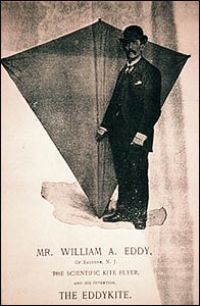 William Abner Eddy,
Popular Science Monthly
(1881)
William Abner Eddy,
Popular Science Monthly
(1881)
“ In addition to the want of effect due to emotional conclusions reached regardless of objective causes, we find further source of error in the very common cynical belief that there is ultimate strength in deception. ”
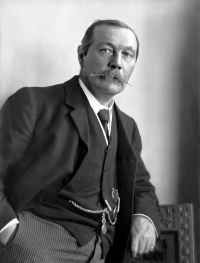 Arthur Conan Doyle,
The Case Book of Sherlock Holmes
(1927)
Arthur Conan Doyle,
The Case Book of Sherlock Holmes
(1927)
“ We must look for consistency. Where there is a want of it we must suspect deception." ”
John Spargo, The Jew and American Ideals
“ I am quite well aware of the capacity of the human mind to believe whatever accords with preconceived prejudices, suspicions, or impressions, even in the face of evidence to the contrary, and, correspondingly, to reject the most conclusive evidence when it runs counter to such prejudices, suspicions, or impressions. ”
Walter Richard Cassels, Supernatural Religion, Vol. 3…
“ The vast question at last dwindles down to the inquiry: Can a few men, can one man, draw erroneous inferences and be honestly deceived by something supposed to have been seen? We presume that there can be no hesitation in giving an affirmative reply. ”
 Friedrich von Schlegel,
The philosophy of life, and philosophy of language…
Friedrich von Schlegel,
The philosophy of life, and philosophy of language…
“ Every one, indeed, of the four fundamental faculties of the human mind contains, in itself, a faulty disposition and pernicious germ of a special and precise form of scientific error, which establishes and fully develops itself in its appropriate domain, and which, when circumstances are favorable, is matured and shaped into a system of falsehood. ”
 Karin Stephen,
The Misuse of Mind
Karin Stephen,
The Misuse of Mind
“ But it is quite possible to make a false judgment as to what experience we are actually having, or, still more commonly, simply to take for granted that our experience must be such and such, without ever looking to see whether it is or not. ”
 James Monroe Buckley,
Faith-healing, Christian Science and Kindred Phenomena
(1892)
James Monroe Buckley,
Faith-healing, Christian Science and Kindred Phenomena
(1892)
“ The peculiar influence of that phase of human nature which loves to startle, to be regarded as extraordinary, either in action, knowledge, or susceptibility, and the strange opinions and morbid conditions which give fascination to the exercise of the ability to deceive, must not be ignored. When pay is received for such performances, the probability of dishonesty is strong. The possible paralleling of the phenomena by confessed jugglers is also an important consideration. ”
Hans Gross, Criminal Psychology: A Manual for Judges…
“ Some of the most striking misunderstandings come from just this reason. It is not alone a matter of varying verbal values, leading to incompatible inferences; actually the whole of a man’s mind is involved. ”
