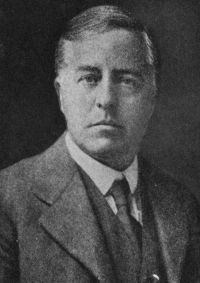
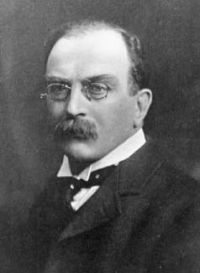
Joseph Frederic Klein (1890–1972) was a physicist and philosopher whose work redefined the conceptual foundations of thermodynamics, particularly through his seminal essay Physical Significance of Entropy or of the Second Law. Focusing on entropy as both a measure of irreversibility and a probabilistic determinant of natural processes, Klein dismantled anthropomorphic interpretations of the Second Law, emphasizing its universal applicability.
His texts explore entropy’s role in bridging microscopic molecular behavior and macroscopic physical laws, while his rigorous analysis of irreversibility as a spontaneous transition toward higher probability states remains pivotal. Klein’s legacy lies in his synthesis of statistical mechanics and thermodynamics, aligning him with contemporaries like Max Planck and James Jeans in advancing 20th-century physical thought.