Thermal equilibrium

Definition and stakes

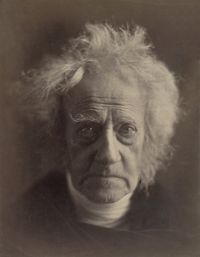
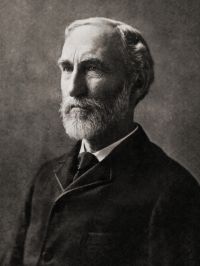
Portrait of Josiah Willard Gibbs Josiah Willard Gibbs,  Scientific Papers of Josiah Willard Gibbs (1906)

“ The thermal equilibrium will generally require less time for its approximate attainment than the chemical; but the processes by which the latter is produced will generally cause certain inequalities of temperature until a state of complete equilibrium is reached.
When a surface of discontinuity has more components than one which do not occur in the contiguous masses, the adjustment of the potentials for these components in accordance with equations (617) may take place very slowly, or not at all, for want of sufficient mobility in the components of the surface.
”
Source: Wikisource

Joseph Frederic Klein,  Physical significance of entropy or of the second law (1910)

“ For thermal equilibrium can only be defined as the final state toward which all irreversible processes strive. In this way the question as to temperature leads necessarily to the nature of irreversibility and this in turn is solely founded on the existence of the entropy function. This magnitude is therefore the primary, general conception which is significant for all kinds of states and changes of state, while temperature emerges from this with the help of the special condition of thermal equilibrium, in which condition the entropy attains its maximum. ”
Source: Gutenberg

Various,  Popular Science Monthly (1910)

“ The most important single fact in connection with the study of the phenomena of heat is that a substance settles to a quiescent state in which there is no tendency to further change of any kind when it is left to itself and shielded from all outside disturbing influences. This quiescent state is called a state of thermal equilibrium. For example, the various objects in a closed room settle to thermal equilibrium; when a piece of red-hot iron is thrown into a pail of water, the mixture, at first turbulent, becomes more and more quiet and finally reaches a state of thermal equilibrium. ”
Source: Wikisource

Get perspective with Kwize: daily news enlightened by great literature