Summary

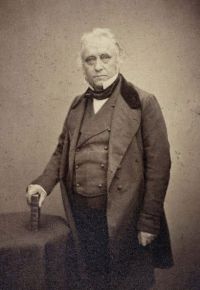
Portrait of Thomas Babington Macaulay Thomas Babington Macaulay The History of England from the Accession of James II…

Every man who heads a rebellion against an established government stakes his life on the event; and rebellion was the smallest part of Monmouth's crime. He had declared against his uncle a war without quarter. In the manifesto put forth at Lyme, James had been held up to execration as an incendiary, as an assassin who had strangled one innocent man and cut the throat of another, and, lastly, as the poisoner of his own brother. To spare an enemy who had not scrupled to resort to such extremities would have been an act of rare, perhaps of blamable generosity.
Source: Wikisource

Portrait of Thomas Babington Macaulay Thomas Babington Macaulay The History of England from the Accession of James II…

Yet Monmouth should have felt that it was not for him to fly, while thousands whom affection for him had hurried to destruction were still fighting manfully in his cause. But vain hopes and the intense love of life prevailed. He saw that if he tarried the royal cavalry would soon intercept his retreat. He mounted and rode from the field.
Yet his foot, though deserted, made a gallant stand. The Life Guards attacked them on the right, the Blues on the left; but the Somersetshire clowns, with their scythes and the butt ends of their muskets, faced the royal horse like old soldiers.
Source: Wikisource

Portrait of Thomas Babington Macaulay Thomas Babington Macaulay The History of England from the Accession of James II…

The answer was a shout of "King Monmouth," mingled with the war cry, which forty years before had been inscribed on the colours of the parliamentary regiments, "God with us." The royal troops instantly fired such a volley of musketry as sent the rebel horse flying in all directions. The world agreed to ascribe this ignominious rout to Grey's pusillanimity. Yet it is by no means clear that Churchill would have succeeded better at the head of men who had never before handled arms on horseback, and whose horses were unused, not only to stand fire, but to obey the rein.
Source: Wikisource

Get perspective with Kwize: daily news enlightened by great literature