AI-generated from sources
A persistent dichotomy: Education for utility versus education for virtue
In Brief
- Educational philosophy is split between utility (job skills, economic stability) and virtue (character development, social consciousness, inner freedom).
- Historically, prioritizing narrow vocational training for the masses has been criticized as a mechanism for maintaining a two-tiered system, reserving comprehensive cultural education for the privileged elite.
- The inherent conflict reflects a deeper tension over whether schooling should serve the immediate needs of the economic regime or strive to form critically-minded, socially-conscious citizens.
- A holistic approach seeks reconciliation, integrating purposeful, hands-on activity with humanistic wisdom to cultivate an individual who is both an efficient worker and a complete, engaged person.
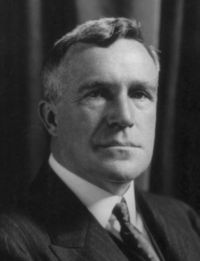
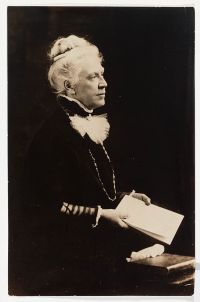
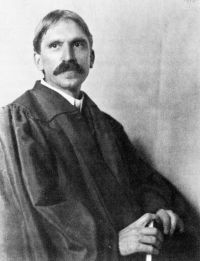
Main authors


A fundamental dichotomy has long defined educational philosophy, pitting two distinct visions of its purpose against one another. One perspective champions utility, viewing education primarily as a means to a practical and economic end, equipping individuals with the skills necessary for employment and financial stability [1]. The opposing view frames education as a process for the cultivation of virtue, character, and social cohesion, serving a purpose that transcends individual economic gain [2]. This enduring tension is not merely academic; it reflects a deeper societal conflict over the purpose of human development and the role of the individual within the broader community [3].
The resolution of this debate carries profound implications for social structure and equity [4, 5]. An educational system heavily skewed towards vocational training, driven by immediate economic necessity, risks entrenching a two-tiered social order. In such a system, a comprehensive, culture-focused education becomes a luxury reserved for the privileged, while purely skills-based training is designated for the working classes and the poor [6]. This dynamic raises critical questions about the fundamental role of schooling: should it primarily serve the needs of the existing economic regime, or should it strive to improve society by fostering well-rounded, critically-minded, and socially-conscious citizens? [7, 8].
The imperative of utility: Education as an economic engine
The primary argument for a utilitarian approach to education is its direct and measurable response to pressing economic and social needs [9, 10]. From a governmental and industrial standpoint, education is a critical tool for cultivating a skilled workforce, mitigating unemployment, and ensuring national stability and development [11, 12]. In this framework, the success of an educational institution is often gauged by its ability to render its graduates employable and to increase their earning potential, thereby meeting the urgent demands of the market [13]. This perspective positions the school as a public servant, fundamentally obligated to address and solve concrete economic problems [14].
This emphasis on utility is not solely a top-down imposition; it resonates with the realities faced by many individuals. Economic pressure often makes early career specialization a necessity rather than a choice [15]. For young people, particularly those from backgrounds of comparative poverty, an education that lacks a direct path to a career can appear to be an impractical and unaffordable indulgence [16]. Proponents of vocational training argue that it is a powerful tool for social mobility, guiding individuals away from overcrowded and poorly compensated fields toward occupations where skilled labor is scarce and therefore highly valued [17]. In doing so, it promises a direct path to improving one's economic condition.
Historically, the call for practical, vocational training has also been championed as an instrument of social progress and empowerment, especially concerning the economic position of women . By providing tangible skills, education could prepare women not just to be good, but to be “good for something,” enabling their full participation in the economy, whether within or outside the domestic sphere [18, 19]. This line of reasoning suggests that a brain, when properly trained, becomes a more valuable asset, capable of generating ideas that warrant higher compensation, regardless of who possesses it [20].
Beyond the marketplace: Education for character and the common good
In direct contrast to the utilitarian model, a powerful school of thought insists that the true purpose of education transcends economic expediency [21, 22]. This perspective posits that the ultimate goal of learning is not the acquisition of a specific skill set but the formation of virtue, character, and a profound sense of inner freedom . Education, in this view, should not be constrained by the narrow demands of the job market but should instead be a spacious and expansive endeavor, encompassing a deep understanding of human and eternal matters to cultivate wisdom [23]. The primary function of the school, therefore, is to form a “true man or woman,” not merely a specialized mechanic or functionary .
This vision of education is inextricably linked to its social function, aiming to mold individuals who contribute to a more just and harmonious society [24, 25]. The objective is to foster within each student an unbreakable connection between their personal happiness and the welfare of the collective . The school curriculum, therefore, is not just a collection of subjects but an initiation into shared social values [26]. Consequently, the ultimate measure of any educational system’s worth is the degree to which it is animated by this social spirit, making the development of personal and social power two sides of the same coin [27].
A significant strand of this tradition places moral, and often religious, instruction at the core of character development [28, 29]. From this viewpoint, knowledge without a moral compass is not only incomplete but potentially dangerous, capable of producing individuals who become a “pest to society” . This argument holds that human nature is prone to impulses that require the guiding influence of moral or religious principles to check them [30]. The essential task of education, then, is not merely to transmit information to the head but to form the heart, a process considered indispensable for the creation of a virtuous citizenry .
A divided system: Utility for the poor, culture for the privileged
The tension between utility and virtue in education is not a purely philosophical debate; it often reflects and reinforces deep-seated social stratifications . Critics argue that an overemphasis on narrow vocational training is frequently a mechanism for maintaining the existing economic hierarchy, preparing a segment of the population to be the “drawers of water and the hewers of wood” . This fosters a bifurcated educational system where practical skills are designated for the masses, while a broad, liberal, and “bookish” education is reserved for a privileged elite who are insulated from the immediate pressures of the labor market .
Economic constraints play a crucial role in perpetuating this division, forcing the vast majority of young people into early specialization regardless of their individual aptitudes or desire for a more comprehensive cultural education . Such a system can be interpreted as serving the needs of the state and industry above those of the individual student, effectively functioning to domesticate citizens into a predetermined social order rather than empowering them with the critical faculties to challenge or transform it [31, 32].
This educational stratification actively undermines the potential of schooling to act as a democratizing force [33]. Instead of creating equal opportunities for all individuals to pursue their life's work according to their diverse talents and interests, it risks cementing existing inequalities . Paradoxically, even the education of the wealthy, if it is divorced from practical duties and responsibilities, can foster vanity and helplessness, thereby corrupting the very foundation of virtue it claims to build [34]. The ideal of a truly unified system, where the practical and the cultural are integrated and equally accessible to all, remains a formidable societal challenge .
Reconciling work and wisdom: The quest for a unified purpose
A more holistic and progressive vision of education seeks to resolve the conflict between utility and virtue by integrating them into a cohesive whole [35, 36]. This approach is grounded in the principle that genuine learning occurs through doing, where purposeful, hands-on activity is combined with the cultivation of social and cooperative habits . In this integrated model, the central and unifying aim becomes the development of the child's social capacity and connection to life, with discipline, culture, and information serving as essential components of this holistic growth . The ultimate test of such an educational system is the kind of individual it produces: one who is not only an efficient worker but also an engaged citizen and a person who understands how to lead a meaningful life [37].
This integrative philosophy reimagines the school as a dynamic laboratory, organically linking academic subjects to the challenges and activities of everyday life [38]. Its goal is to vitalize the learning process by connecting the curriculum to the innate desires and real-world problems that students face, making their own experiences the starting point of their education [39]. By doing so, the school can foster crucial qualities like self-reliance and self-respect, demonstrating that both individual and national freedom are dependent upon a well-rounded and engaged citizenry [40].
Ultimately, the highest social purpose of education is to equip individuals for full participation in their community while simultaneously enabling their own personal growth [41]. This requires structuring the school experience in a way that fosters a lifelong passion for learning, extending far beyond the formal classroom setting [42]. The finest achievement of schooling is not the mastery of a specific skill set, but the cultivation of an enduring desire and ability to learn from life itself. This fosters a dynamic society that is dedicated to its own continuous improvement . This vision reframes the debate, suggesting that true utility is found not in narrow specialization, but in the development of a complete person capable of adapting, contributing, and flourishing in a complex world [43].
The persistent debate between education for utility and education for virtue exposes a core tension in how modern societies define progress and the role of the individual . While the pragmatic demands of a global economy make vocational training essential for employment and stability, an exclusive focus on this objective risks impoverishing both the individual spirit and the collective social fabric . Such a narrow approach can reinforce social inequalities and reduce education to a mere instrument of the existing economic order, neglecting its indispensable role in the formation of character, moral insight, and civic responsibility .
A more enlightened and sustainable vision of education recognizes that these two aims—utility and virtue—are not mutually exclusive but are, in fact, profoundly interdependent . The development of a competent professional, a responsible citizen, and a fulfilled human being are not separate goals but complementary facets of a single, unified educational process . The ultimate social purpose of education, therefore, is to cultivate individuals who are not only capable of earning a livelihood but are also endowed with the moral awareness, social conscience, and intellectual flexibility to contribute meaningfully to the betterment of their communities . The enduring challenge for society is to build an educational system that values both practical competence and humanistic wisdom, ensuring that every student has the opportunity to become not just good for something, but, more importantly, to be good .