Summary

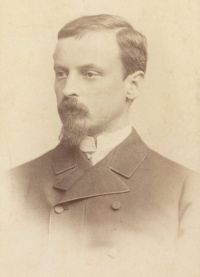
Portrait of Henryk Sienkiewicz Henryk Sienkiewicz The Deluge: An Historical Novel of Poland…

All eyes were turned to Kmita.
“Soldiers!” shouted Pan Andrei, “Prince Boguslav is a traitor to the king and the Commonwealth! You are surrounded, and to-morrow you will be cut to pieces. You are serving a traitor; you are serving against the country! But whoso leaves this service leaves the traitor; to him forgiveness of the king, forgiveness of the hetman! Choose! Death and disgrace, or a reward to-morrow! I will pay wages, and a ducat a man,—two ducats a man! Choose! It is not for you, worthy soldiers, to serve a traitor! Long life to the king! Long life to the grand hetman of Lithuania!”
Source: Gutenberg

Portrait of Henryk Sienkiewicz Henryk Sienkiewicz The Deluge: An Historical Novel of Poland…

In vain did the Swedes take terrible vengeance on the country, in vain did they cut off the hands of prisoners, in vain did they send up villages in smoke, cut settlements to pieces, raise gibbets, bring instruments of torture from Germany to torture insurgents. Whoso had to suffer, suffered; whoso had to die, died; but if he was a noble, he died with a sabre; if a peasant, with a scythe in his hand. And Swedish blood was flowing throughout all Great Poland; the peasants were living in the forests, even women rushed to arms; punishments merely roused vengeance and increased rage.
Source: Gutenberg

Portrait of Henryk Sienkiewicz Henryk Sienkiewicz The Deluge: An Historical Novel of Poland…

True, that was he,—Pan Andrei Kmita, the banneret of Orsha; and he was lying on his back in the wagon. His head was bound in a cloth, but by the ruddy light of the moon his pale and calm face was perfectly visible. His eyes were deeply sunk and closed; life did not discover itself by the least movement.
“With God!” said Billevich, removing his cap.
“Stop!” cried Olenka. And she asked with a low but quick voice, as in a fever: “Is he alive or dead?”
“He is alive, but death is over him.”
Here the sword-bearer, looking at Kmita’s face, said: “You will not take him to Lyubich?”
Source: Gutenberg

Get perspective with Kwize: daily news enlightened by great literature