Summary

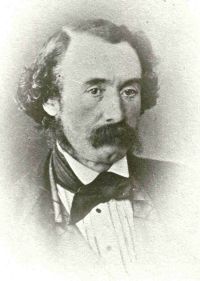
Portrait of Robert Mallet Robert Mallet Great Neapolitan Earthquake of 1857 (1862)

Seen from beneath, in the valley bottom, through the keen bright air, and relieved against the sky, these old towns seem as though we could reach their interior in half an hour's scramble; yet often three hours' painful toil upon our mule will but suffice to bring us—by long traverses over rough and rolling stones, and by an approach road that is often the bed of a torrent in time of rain—to the ancient gateway, or to the narrow and obstructed street entrance by which alone we can penetrate the interior.
Source: Wikisource

Portrait of Robert Mallet Robert Mallet Great Neapolitan Earthquake of 1857 (1862)

Thus finally uniting our knowledge derived from both directions, ultimately to form a clear conception of what is the function of the earthquake in the Cosmos, and to recognize the connection, fitness, order, and beauty, even of the volcano and the earthquake, as parts of the machinery of a wondrous and perfect creation. Like every aspect of nature, that we obtain with the more enlarged and undimmed eye of truth, it will prove to us that even here the great Author of all, is a God of order, not of confusion.
Source: Wikisource

Portrait of Robert Mallet Robert Mallet Great Neapolitan Earthquake of 1857 (1862)

His sensation of the first movement was of a short, jarring, horizontal oscillation, that made all doors and windows rattle, and the floors and furniture creak. This ceased, and after an interval that seemed but a few seconds was renewed with greater violence, and, he thought, with a distinctly undulatory movement, "like that in the cabin of a small vessel in a very short chopping sea." It was sufficient to demand a certain amount of attention and effort, on the part of those standing up, to maintain their equilibrium.
Source: Wikisource

Get perspective with Kwize: daily news enlightened by great literature