Summary

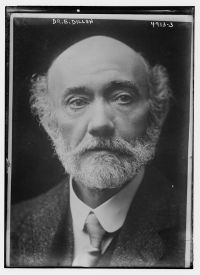
Portrait of Emile Joseph Dillon Emile Joseph Dillon The Sceptics of the Old Testament…

Peace grounded on knowledge, therefore, is the end of Job's doubts and misgivings. But it is not the knowledge of a reward to come, a presentiment of the joys of heaven, of an everlasting feeding-trough where our hunger and thirst for existence shall be satiated for ever and ever. It is that sobering knowledge which is increase of sorrow. Injustice in the world there is none; if all beings living are liable to pain, and everything animate and inanimate is subject to decay and death, the reason is that suffering and dissolution are the conditions of existence, which is therefore an evil.
Source: Gutenberg

Portrait of Emile Joseph Dillon Emile Joseph Dillon The Sceptics of the Old Testament…

The sights and sounds of the universe are the only materials upon which the human intellect can work; and they are all alike empty, shadowy, unreal. They are the creation of the mind itself, the web it weaves from its own gossamer substance; and beyond this are nothing. Space and time, or, as Koheleth expresses it, the universe and eternity, were placed in our consciousness from the very first, and are as deceptive as the mirage of the desert.
Source: Gutenberg

Portrait of Emile Joseph Dillon Emile Joseph Dillon The Sceptics of the Old Testament…

The only reward which life offers to those who crave it, is suffering and death. The desire of life—the Indian tanha or thirst of existence—Agur represents in the form of the beautiful but terrible Ghoul of the desert who has two daughters: birth and death. By means of her fascinating charms she entices the wanderer to her arms, but instead of satiating his soul with the promised joys, she ruthlessly flings him to her two daughters who tear him to pieces and devour him on the spot. Desire is the source of life which in turn is the taproot of all evil and pain
Source: Gutenberg

Get perspective with Kwize: daily news enlightened by great literature