Summary

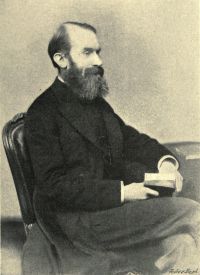
Portrait of T. K. Cheyne T. K. Cheyne Job and Solomon: Or, The Wisdom of the Old Testament

Taking it as equally authoritative with the psalms and prophecies, shall we not rise to a more comprehensive religion than a mere pupil of psalmists or prophets knew—to one that charges us, not to love God less, but our neighbour more? It would no doubt be easy to criticise the Book from a New Testament point of view. But the New Testament itself has absorbed much that is best in it, and quotations from it occur not unfrequently, especially in the Epistles. Nor can any teacher of the people afford to neglect its stores of happily expressed practical wisdom.
Source: Gutenberg

Portrait of T. K. Cheyne T. K. Cheyne Job and Solomon: Or, The Wisdom of the Old Testament

Since the latter is so cool and so critical, let him weigh Job’s calamity as well as his words, and see if the extravagance of the latter is not excusable. Are these arrow wounds the fruit of chastisement? Does the Divine love disguise itself as terror? The good man is never allowed to perish, you say; but how much longer can a body of flesh hold out? Why should I not even desire death? God may be my enemy, but I have given Him no cause. And now, if He would be my friend, the only favour I crave is that He would shorten my agony.
Source: Gutenberg

Portrait of T. K. Cheyne T. K. Cheyne Job and Solomon: Or, The Wisdom of the Old Testament

Why, indeed, should there not be a providence even in the phases of Old Testament criticism, so that where some can see merely the shiftings of arbitrary opinion more enlightened eyes may discern a veritable progress, leading at once to fresh views of history, and to necessary reforms in our theology, making this theology simpler and stronger, deeper and more truly Catholic, by making it more Biblical?
Source: Gutenberg

Get perspective with Kwize: daily news enlightened by great literature