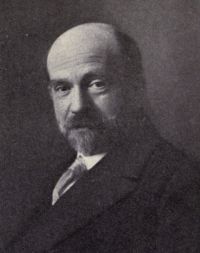
Pío Baroja

Pío Baroja

Summary

Portrait of Pío Baroja Pío Baroja Youth and Egolatry

Even Dicenta did not. His Juan José is not a workingman, but a young gentleman. He has nothing of the workingman about him beyond the label, the clothes, and such externals.
Galdós, for example, can make the common people talk; Azorín can portray the villages of Castile, set on their arid heights, against backgrounds of blue skies; Blasco Ibáñez can paint the life of the Valencians in vivid colours with a prodigality that carries with it the taint of the cheap, but none of them has penetrated into the popular soul. That would require a great poet, and we have none.
Source: Gutenberg

Portrait of Pío Baroja Pío Baroja Youth and Egolatry

My failure to be practical, together, perhaps, with an undue obtuseness of perception, brings me face to face with critics of two sorts: one, esthetic; the other, social.
My esthetic critics say to me:
"You have not perfected your style, you have not developed the technique of your novels. You can scarcely be said to be literate."
I shrug my shoulders and reply: "Are you sure?"
My social critics reproach me for my negative and destructive views. I do not know how to create anything, I am incapable of enthusiasm, I cannot describe life, and so on.
Source: Gutenberg

Portrait of Pío Baroja Pío Baroja Youth and Egolatry

CERVANTES, SHAKESPEARE, MOLIÈRE For a long time, I thought that Shakespeare was a writer who was unique and different from all others. It seemed to me that the difference between him and other writers was one of quality rather than of quantity. I felt that, as a man, Shakespeare was of a different kind of humanity; but I do not think so now. Shakespeare is no more the quintessence of the world's literature than Plato and Kant are the quintessence of universal philosophy.
Source: Gutenberg

Get perspective with Kwize: daily news enlightened by great literature