“ The most perfect form of literature is, no doubt, lyrical poetry which is, one might say, almost pure Idea, art with scarcely an alloy of artifice, expressed in magic words, in the voice of music. In a word, a perfect lyric, such as Keats's "Belle Dame Sans Mercy" is almost pure soul, a spirit with the luminous body of melody. But (in our age, at all events) a prose romance must put on a grosser and more material envelope than this, it must have incident, corporeity, relation to material things, and all these will occupy a considerable part of the whole. ”
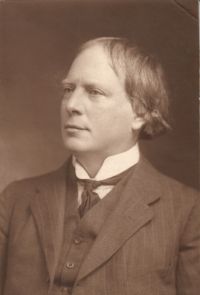
Arthur Machen
Summary
Arthur Machen’s Hieroglyphics is a literary essay that examines the nature of artistic creation, differentiating true literature from simple "reading matter" through the perspectives of ecstasy, symbolism, and aesthetic transcendence. Composed in a reflective and learned tone, it engages with classic works such as Dickens’s Pickwick, Rabelais’s Pantagruel, and Homer’s Odyssey, analyzing how great art harmonizes form and meaning.
Machen contends that literature’s highest expression lies in inspiring wonder and the sublime, whether through lyrical poetry or prose, while underscoring the artist’s function in conveying the ineffable through symbols and storytelling. The essay ultimately suggests that the measure of lasting art lies in its ability to surpass the material, offering a vision of the eternal.
Quotes from Hieroglyphics (Arthur Machen)
“ But if on the other hand style is to mean such a use and choice of words and phrases and cadences that the ear and the soul through the ear receive an impression of subtle but most beautiful music, if the sense and sound and colour of the words affect us with an almost inexplicable delight, then I say that while Idea is the soul, style is the glorified body of the very highest literary art. Style, in short, is the last perfection of the very best in literature, it is the outward sign of the burning grace within. ”
“ The wonder is, not that there are faults in Dickens, but that there is genius of any kind. I am not going to analyze "Pickwick" any more than I analyzed "Vanity Fair," but of course you see that, in its conception, it is essentially one with the "Odyssey." It is a book of wandering; you start from your own doorstep and you stray into the unknown; every turn of the road fills you with surmise, every little village is a discovery, a something new, a creation. You know not what may happen next; you are journeying through another world. ”
