Summary

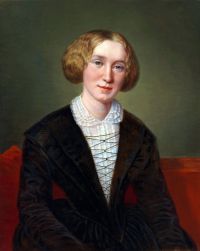
Portrait of George Eliot George Eliot The Essays of "George Eliot"

Young had only a very few things to say or sing—such as that life is vain, that death is imminent, that man is immortal, that virtue is wisdom, that friendship is sweet, and that the source of virtue is the contemplation of death and immortality—and even in his two first Nights he had said almost all he had to say in his finest manner. Through these first outpourings of “complaint” we feel that the poet is really sad, that the bird is singing over a rifled nest; and we bear with his morbid picture of the world and of life, as the Job-like lament of a man whom “the hand of God hath touched.”
Source: Gutenberg

Portrait of George Eliot George Eliot The Essays of "George Eliot"

But whatever else he may be, Heine is one of the most remarkable men of this age: no echo, but a real voice, and therefore, like all genuine things in this world, worth studying; a surpassing lyric poet, who has uttered our feelings for us in delicious song; a humorist, who touches leaden folly with the magic wand of his fancy, and transmutes it into the fine gold of art—who sheds his sunny smile on human tears, and makes them a beauteous rainbow on the cloudy background of life; a wit, who holds in his mighty hand the most scorching lightnings of satire
Source: Gutenberg

Portrait of George Eliot George Eliot The Essays of "George Eliot"

The mass—the English blockheads, God forgive me!—are hateful to me in my inmost soul; and I often regard them not at all as my fellow-men, but as miserable automata—machines, whose motive power is egoism. In these moods, it seems to me as if I heard the whizzing wheelwork by which they think, feel, reckon, digest, and pray: their praying, their mechanical Anglican church-going, with the gilt Prayer-book under their arms, their stupid, tiresome Sunday, their awkward piety, is most of all odious to me.
Source: Gutenberg

Get perspective with Kwize: daily news enlightened by great literature