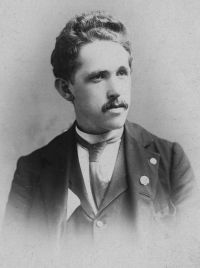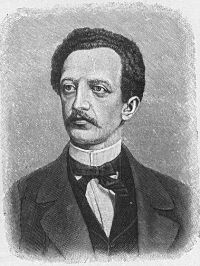
Ferdinand Lassalle

Biographical details

Portrait of Ferdinand Lassalle Ferdinand Lassalle The Working Man's Programme (1884)

Its interest is in truth the interest of the whole of humanity, its freedom is the freedom of humanity itself, and its domination is the domination of all.
Whoever therefore invokes the idea of the working class as the ruling principle of society, in the sense in which I have explained it to you, does not put forth a cry that divides and separates the classes of society. On the contrary, he utters a cry of reconciliation, a cry which embraces the whole of the community, a cry for doing away with all the contradictions in every circle of society
Source: Wikisource

Portrait of Ferdinand Lassalle Ferdinand Lassalle The Working Man's Programme (1884)

In this struggle we should never have made one step forward, nor shall we ever advance one step more by acting on the principle of each one for himself, each one alone.
It is the State whose function it is to carry on this development of freedom, this development of the human race until its freedom is attained.
The State is this unity of individuals into a moral whole, a unity which increases a million-fold the strength of all the individuals who are comprehended in it, and multiplies a million times the power which would be at the disposal of them all as individuals.
Source: Wikisource

Portrait of Ferdinand Lassalle Ferdinand Lassalle The Working Man's Programme (1884)

Very differently, gentlemen, does the fourth estate regard the object of the State, for it apprehends it in its true nature.
History, gentlemen, is a struggle with nature; with the misery, the ignorance, the poverty, the weakness, and consequent slavery in which we were involved when the human race came upon the scene in the beginning of history. The progressive victory over this weakness—this is the development of freedom which history displays to us.
Source: Wikisource

Get perspective with Kwize: daily news enlightened by great literature