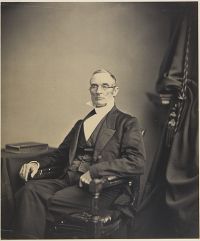
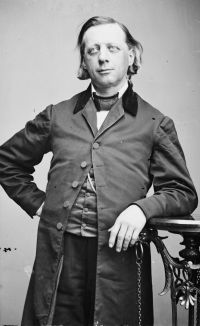
“ Imagine her, with her fatherless, hungry children by her side, plying the needle late into the night, for the pitiful sum of seventy-five cents a week, as I once did. Imagine her, with this discouraging price of her eye-sight and strength, creeping forth with her little child by the hand, peeping cautiously through the glass windows of stores, to decide unobtrusively upon fabrics and labeled prices, or vainly trying to read human feeling enough in their owners’ faces to insure her from contemptuous insult at the smallness and cheapness of her contemplated purchase. ”
Cheapness
Definition and stakes
Cheapness, a concept intertwining economic value with moral and social implications, has been scrutinized by thinkers and writers across disciplines. From Fanny Fern’s poignant depiction of economic hardship driving desperate purchases to John Ruskin’s critique of cheapness as a sign of societal neglect, the theme reveals tensions between affordability and quality.
John Stuart Mill examined its trade-offs in commerce, while Proudhon linked it to necessity, suggesting cheapness might reflect both survival and exploitation. Authors like Benjamin Franklin warned of its deceptive appeal, and Langstroth acknowledged its pervasive influence on American industry. These varied perspectives underscore cheapness as a lens through which to examine labor, consumerism, and the ethics of value.
Quotes about “cheapness”
John Ruskin,
Unto This Last, and Other Essays on Political Economy
“ The present rage for cheapness is either, therefore, simply and literally, a rage for badness of all commodities, or it is an attempt to find persons whose necessities will force them to let you have more than you should for your money. It is quite easy to produce such persons, and in large numbers; for the more distress there is in a nation, the more cheapness of this sort you can obtain, and your boasted cheapness is thus merely a measure of the extent of your national distress. ”
John Stuart Mill,
Essays on some unsettled Questions of Political Economy
“ Thus by sacrificing the cheapness of one commodity, we gain the cheapness of another: but we sacrifice a greater cheapness to gain a less, and we sacrifice cheapness in the article which we most want, and would import by preference, while our compensation is cheapness in an article which we either could produce more advantageously at home, or which we have so little desire for, that it requires a species of bounty on the article to create a demand. ”
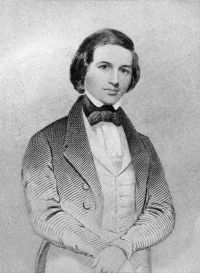
P.-J. Proudhon, System of Economical Contradictions…
“ I have just said that society produces first THE LEAST COSTLY, AND CONSEQUENTLY MOST NECESSARY, THINGS. Now, is it true that cheapness of products is always a correlative of their necessity, and vice versa; so that these two words, NECESSITY and CHEAPNESS, like the following ones, COSTLINESS and SUPERFLUITY, are synonymes?If each product of labor, taken alone, would suffice for the existence of man, the synonymy in question would not be doubtful; all products having the same qualities, those would be most advantageously produced, and therefore the most necessary, which cost the least. ”
L. L. Langstroth,
Langstroth on the Hive and the Honey-Bee…
“ But I ought to beg pardon of the Genius of American cheapness, who so kindly presides over the making of most of our manufactures, and under whose shrewd tuition we are fast beginning to believe that cheapness in the first cost of an article, is the main point to which our attention should be directed! ”
“ According to the political economists of the school of Adam Smith and Leon Say, cheapness is the word in which may be summed up the [42] advantages of unlimited competition. But why persist in considering the effect of cheapness with a view only to the momentary advantage of the consumer? ”
Benjamin Franklin,
Way to wealth, or, Poor Richard's maxims improved
(1828)
“ He means, that perhaps the cheapness is apparent only, and not real; or the bargain, by straitening thee in thy business, may do thee more harm than good. For in another place he says, "Many have been ruined by buying good penny-worths." ”
John Stuart Mill,
Principles of Political Economy
“ To whatever extent it is so, this smaller cost of labor, being not general, but limited to those employments, is just as much a cause of cheapness in the products, both in the home and in the foreign market, as if they had been made by a less quantity of labor. ”
David Ross Locke,
Nasby in Exile
“ But just wait till you get the clothes and the idea of cheapness goes like dew under a July sun. All there is cheap in the transaction is the suit. The material is very cheap, cheap to the point of flimsiness, and the making—heaven help you—it is thrown together. ”
Various, Harper's New Monthly Magazine, Vol…
“ The excessive cheapness is produced by the extension of the demand, enforcing the factory division of labor, and the most exact saving of material. The scientific discovery was the foundation of the cheapness. But connected with this general principle of cheapness, there are one or two remarkable points, which deserve attention. ”
John Stuart Mill,
Principles of Political Economy
“ So far as they are wanted for purposes of luxury or the arts, the demand increases with the cheapness, in the same irregular way as the demand for any other commodity. So far as they are required for money, the demand increases with the cheapness in a perfectly regular way, the quantity needed being always in inverse proportion to the value. ”
Samuel Johnson,
The Idler, No. 7
“ Whatever is found to gratify the publick, will be multiplied by the emulation of venders beyond necessity or use. This plenty indeed produces cheapness, but cheapness always ends in negligence and depravation. ”
Charles Knight,
The Old Printer and the Modern Press
“ In this principle, that the great mass of the people will read as they buy, lies the secret of the enormous success of the weekly sheets of that great epoch of cheapness which began about twenty years ago. ”
Thomas Hill Green,
Lectures on the Principles of Political Obligation
“ It is so employed when the cheapness of buying arises from the presence of labourers who have no alternative but to work for 'starvation wages.' But in itself it merely describes transactions in which commodities are bought where they are of least use and sold where they are of most use. ”
J. Elliot Ross, Consumers and Wage-Earners: The Ethics of Buying Cheap
“ II. That the responsibility for some of the worst evils from which wage-earners suffer, rests with the Consumers, who persist in buying in the cheapest markets, regardless of how cheapness is brought about. ”
Benjamin R. Tucker, Instead of a Book — Miscellaneous (1897)
“ The tendency to cheapness of product being thus balanced by a tendency to dearness of labor, the displacement of monopoly and charity, those parents of pauperism, by competition and equity will give birth to an entirely new economic condition in which industry and comfort will be inseparable.—Liberty, May 28, 1887. ”
John Ruskin,
The Crown of Wild Olive
“ In the second, the cheapness is a local accident, advantageous to the local purchaser, disadvantageous to the local producer. It is one of the first duties of commerce to extend the market, and thus give the local producer his full advantage. ”
Benjamin R. Tucker, Instead of a Book — Miscellaneous (1897)
“ For, while it is true, as Work and Wages claims, that cheapness is achieved at the cost of injury to health and mind and morals and therefore to productive power, it is also true, as the economists claim, that the payment of higher than market prices causes a loss of capital, stifles enterprise, and makes wages even lower than before. ”
William Graham Sumner,
The Forgotten Man, and Other Essays
(1918)
“ They denounce cheapness, and it appears that they do so because they want to sell dear. When they buy, they buy as cheaply as they can. They say that they want to raise wages, but they never pay anything but the lowest market rate. ”
Various, Blackwood's Edinburgh Magazine…
“ He says:—"My suspicions were first awakened by the blind devotion of the Manchester school of political economy to the doctrine of CHEAPNESS; for it struck me as a self-evident proposition, that to buy cheap is to sell cheap, in which case there can be no possible gain, but a positive loss, arising from the necessary aggravation of all fixed charges." ”
Charles Knight,
Knowledge Is Power
“ The great mass of facts which we have brought together in this book must have shown, that the cheaper an article of necessity becomes, the more of it is used; that when the most pressing wants are supplied, and supplied amply by cheapness, the consumer has money to lay out upon new wants; that when these new wants are supplied cheaply, he goes on again and again to other new wants; that there are no limits, in fact, to his wants as long as he has any capital to satisfy them. ”
Henry Ward Beecher,
Pleasant Talk About Fruits, Flowers and Farming
“ As the commoner [Pg 14] kinds multiply, and the common people learn to use them as daily food, the finer kinds will bear proportionally higher prices; and cheapness is one of the steps to profit in all things that are consumed in the community. ”
John Stuart Mill,
Principles of Political Economy
(1871)
“ The degree of cheapness, in this sense of the term, depends on the laws of International Demand, so copiously illustrated in the preceding sections. But in the other sense, that of Cost, a country gets a commodity cheaper when it obtains a greater quantity of the commodity with the same expenditure of labour and capital. ”
J. Elliot Ross, Consumers and Wage-Earners: The Ethics of Buying Cheap
“ The insatiable yearning to buy cheap without any thought as to how cheapness is obtained, this is the incentive which tempts men to buy cheap labor and to underpay workmen. Were people in general not willing accomplices, there would be no sweating system, no unfair competition. ”
“ Each yard of cloth, each needle, each pin, is subjected to all those several steps, and yet the greatness of the demand creates a vast revenue from profits which are so small upon each individual article as to be incapable of being stated in money; the cheapness of production extending the sale, and the extent of sale favoring the cheapness of production. ”
Joseph Francis MacGrail, Selling Things
“ They dilate on cheapness, and the inference is that the goods must be low grade to be marketed at such a low price.No matter how hard pushed you may be, never undertake to sell questionable goods; never taint your reputation, or smirch your character by becoming the representative of a shifty, dishonest concern. ”
John Stuart Mill,
Principles of Political Economy
(1871)
“ The safety and cheapness of communications, which enable a deficiency in one place to be supplied from the surplus of another, at a moderate or even a small advance on the ordinary price, render the fluctuations of prices much less extreme than formerly. ”
Susannah Watts, A Walk through Leicester
“ When they find that an ox was formerly sold for a few shillings, and the price of a quarter of corn calculated in pence, they are led to envy the supposed cheapness of those ages, and to bewail the distressing dearness of the present. Nothing however can be more absurd than the whining complaints founded upon such facts; for since the cheapness of living depends not so much upon the price given for every article of prime necessity, as upon the means by which, to use a common expression, the purchase p. ”
T. Baron Russell, A Hundred Years Hence: The Expectations of an Optimist
“ But the standard of comfort will be higher still a hundred years hence. Workmen will earn a greater share of the commodities of life, and whether their pay be higher, computed as money, or lower, makes no difference to the question of cheapness. If wages are low commodities will be low-priced: that is all. ”
Frédéric Bastiat,
Essays on Political Economy
“ Louis Blanc tell us again, that competition leads to monopoly, and that, for the same reason, cheapness leads to exorbitant prices? That competition tends to drain the sources of consumption, and urges production to a destructive activity? That competition forces production to increase, and consumption to decrease;--whence it follows that free people produce for the sake of not consuming; ”
T. S. Arthur,
Trials and Confessions of a Housekeeper
“ Mier. If I consider the price of a thing too high, I don't buy it." "You paid too high for your strawberries today." "Perhaps I did; although I am by no means certain." "You can judge for yourself. Mine cost but eight cents, and you own that they are superior to yours at ten cents." "Still, yours may have been too cheap, instead of mine too dear." "Too cheap! That is funny! I never saw any thing too cheap in my life. The great trouble is, that every thing is too dear. What do you mean by too cheap?" ”
Charles Warren Adams, Once a Week (1862)
“ Why should a poor, half-starved, half-stupefied, barking seal command exactly the same price, for instance, as the incalculable treasures of the World’s Fancy Fair? On what mercantile principles does an enterprise, whose cost is reckoned by hundreds of thousands, rely for its success upon the identical sum as that which is calculated to pay for the weekly hire of a small back room? Why, in short, should neither the quality nor the cost of the entertainment offered affect in the slightest degree the price demanded or the readiness with which it is paid! ”
Thomas V. Cooper, American politics (non-partisan… (1892)
“ Few men before me but have found in the course of their lives more than once that that which was cheapest when measured by mere price was the dearest when they were without money and employment, or when their products could find no market, and, finding it, commanded no price at all commensurate with the labor required to produce them. ”
Earl of Philip Dormer Stanhope Chesterfield, Letters to His Son, Complete
“ Never, from a mistaken economy, buy a thing you do not want, because it is cheap; or from a silly pride, because it is dear. Keep an account in a book of all that you receive, and of all that you pay; for no man who knows what he receives and what he pays ever runs out. ”
Jerome K. Jerome,
The Second Thoughts of an Idle Fellow
“ But Nature, looking graver, lays her hand upon his arm.“Put by your purse, boy,” she says, “my price is not a price in reason, nor is gold the metal that I deal in. There are many shops in various streets where your bank-notes will be accepted. But if you will take an old woman’s advice, you will not go to them. The thing they will sell you will bring sorrow and do evil to you. It is cheap enough, but, like all things cheap, it is not worth the buying. No man purchases it, only the fool.”“And what is the cost of the thing you sell then?” asks the lad. ”
Annie S. Swan,
Courtship and Marriage, and the Gentle Art of Home-Making
“ To recur to the question of buying in cheap markets, the principle that what is good and costs something to begin with will inevitably prove the cheapest in the end is even more clearly demonstrated in the matter of clothing than of food. ”
George E. Ellis,
The Red Man and the White Man in North America
(1882)
“ But in civilization he finds food, clothing, fuel, dwelling, even air and water, all claimed as owned by somebody, and all under cost. The rows of shops amaze him. There is so much to be sold, so many sellers and so many buyers, and there is so much mysterious virtue in the current coin, and the way of getting it, and the embarrassment of being without it. ”
Thomas Adolphus Trollope,
What I Remember, Volume 1
“ I am told that everything is a great deal cheaper than it used to be, and truly find that such is the case. But I am not at all persuaded that I get better value for my money. To tell the truth, it seems to my old-fashioned notions and habits that in commercial matters we have arrived at the cheap and nasty stage of development. I am a poor man—far too poor a man to drink Lafitte Bordeaux. ”
Frederick Arthur Ambrose Talbot, Millions from Waste (1920)
“ WASTE: ITS RELATION TO COMMERCE AND NATIONAL ECONOMY Extravagance is the inevitable corollary to cheap living. The expression “living” is used in its very broadest sense, and is by no means confined to the mere consumption of foodstuffs. If living be cheap the thousand and one attributes complementary thereto, from wearing apparel to creature comforts for the home and from raw materials to finished goods, must necessarily rule low in price. ”
Various, Blackwood's Edinburgh Magazine…
“ It is the staple commodity of your newspaper-mongers, and the catchpenny song of the streets. Agitators feed upon it, politicians play upon it, our needy brethren of the quill pay outstanding debts with it. It is one of the few things that pay at all in an age of fearful competition, and one that always will pay whilst poor human nature holds the purse-strings. ”
Oliver Bell Bunce,
Popular Science Monthly
(1877)
“ Price, is one, and one only—"over-spending, over-consuming, destroying more wealth than is produced. This," he says, "is the real fons mali, the root of all the disorder and the suffering, the creator of the inevitable sequence of cause and effect. ”
Oliver Prescott Hiller, God Manifest (1858)
“ Let every just-minded person resolve to avoid and discountenance "bargain" shops and "cheap" shops, and shops that profess to sell "below cost,"—regarding them as the "mansions of cruelty,"—as the places where souls and bodies are used up, and where blood and sinews are disposed of by weight and measure. ”
William Crosbie Hunter, Dollars and Sense
“ It is false economy to spend five dollars' worth of time to save fifty cents. When you are buying single articles that are not fixed charges you have a little more leeway in the matter of price than when you are buying things that come under the head of fixed charges. ”
Harry Leon Wilson,
Ewing's Lady
“ All else of the world may cheat us in their price, but not experience. Our fee shall vary as we are quick to learn, but the good God teaches us what we must know at flat cost, as says the merchant, with never the penny of profit. ”