“ Of the other three one was silent—a small rare migratory finch resembling the bearded-tit in its reed-loving habits, its long tail and slender shape, and partly too in its colouring. I listened in vain for this bird's singing notes. Of the remaining two one is a finch, the other a troupial; the first a pretty bird, in appearance a small hawfinch with its whole plumage a lovely glaucous blue; a poor singer with a low rambling song: the second a bird of the size of a starling, coloured like a golden oriole, but more brilliant ”
Finch
Definition and stakes
The finch, a heraldic bird often linked with delicate plumage and melodic song, has been a recurring subject in literature, symbolizing both natural grace and narrative presence. Authors such as W.H. Hudson carefully detail its preference for reeds and vivid colors, while John Burroughs emphasizes its musical song, contrasting it with the restricted happiness of caged birds.
Douglas Dewar focuses on the finch’s practical anatomy, comparing its beak to a “seed-husking machine,” and Mazo de la Roche uses the name “Finch” for a character representing youthful curiosity. Meanwhile, Wilkie Collins employs the surname “Finch” to create dramatic tension in Poor Miss Finch. These diverse viewpoints—from scientific observation to symbolic storytelling—show the finch as both a biological wonder and a narrative tool, connecting the empirical with the imaginative.
Quotes about “finch”
F.L.S. John Watson, Poachers and Poaching
“ The gaudily-coloured yellow-hammer shows well against the snow, and bathes its orange plumage in the feathered rain. How our British finches seem to enjoy the frost and snow! Certain it is that now their stores of food become scant; but then they throw in their lot with the sparrows of barn-door and rick-yard. The bright bachelor finch stands out from his pure setting, and the daws look black against the snow. "Tweet," "tweet," comes through the cold thin air, and is startling in its stillness; and now we may hear as well as see the flight of a flock of linnets and goldfinches. ”
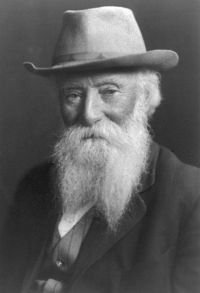 John Burroughs,
Ways of Nature
John Burroughs,
Ways of Nature
“ The air-song of these birds does not differ essentially from the song delivered from the perch, except that it betrays more excitement, and hence is a more complete lyrical rapture.The purple finch is our finest songster among the finches. Its strain is so soft and melodious, and touched with such a childlike gayety and plaintiveness, that I think it might sound well even in a cage inside a room, if the bird would only sing with the same joyous abandonment, which, of course, it would not do. ”

Related terms
Authors who wrote about “finch”
Latta Griswold Wilkie Collins
 Mazo de la Roche
 Alfred Edmund BrehmDouglas DewarVarious
 Mary HowittLeander S. Keyser
 John James Audubon
 William Henry Hudson
 W. H. HudsonJohn Albert LeachF.L.S. John Watson
 Richard Jefferies
 Charles Darwin
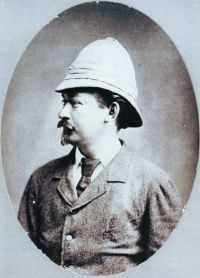 Emil HolubMarshall SaundersJohn BurroughsW. Warde Fowler
 Eleanor Stackhouse Atkinson
Wilkie CollinsMazo de la RocheAlfred Edmund BrehmDouglas DewarVariousMary HowittLeander S. KeyserJohn James AudubonWilliam Henry HudsonW. H. HudsonJohn Albert LeachF.L.S. John WatsonRichard JefferiesCharles DarwinEmil HolubMarshall SaundersJohn BurroughsW. Warde FowlerEleanor Stackhouse Atkinson