“ Happy the nature-lover who, in spite of fame, is allowed to rest, as White rests, pressed upon by no ponderous stone; the sweet influences of sun and rain are not kept from him; even the sound of the wild bird's cry may penetrate to his narrow apartment to gladden his dust!Perhaps there is some truth in the notion that when a man dies he does not wholly die; that is to say, the earthly yet intelligent part of him, which, being of the earth, cannot ascend; that a residuum of life remains, like a perfume left by some long-vanished, fragrant object ”
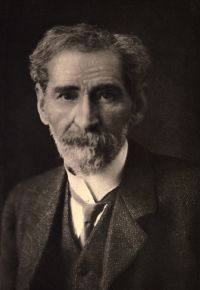
W. H. Hudson
Summary
W. H. Hudson’s Birds and Man is a natural history essay that examines the complex relationship between humans and avian life, combining vivid observations of birds such as the willow wren, raven, and owl with reflections on the vulnerability of nature. Through poetic depictions of birdsong, habitats, and the interaction of sound with landscape, Hudson highlights the spiritual and sensory links between humanity and the natural world.
His writing criticizes the actions of collectors while promoting respect for wildlife, portraying birds as essential elements in the fabric of ecological and cultural heritage. The work ultimately argues that the harmony of nature’s sounds and sights is a shared legacy, threatened by indifference.
Quotes from Birds and Man (W. H. Hudson)
“ They can no longer listen to those over-sea notes and songs as they can, mentally, to the cuckoo's call in spring, the wood-owl's hoot, to the song of the skylark and of the tree-pipit, the reeling of the night-jar and the startling scream of the woodland jay, the deep human-like tones of the raven, the inflected wild cry of the curlew, and the beautiful wild whistle of the widgeon, heard in the silence of the night on some lonely mere. ”
“ The yellow of the hair is like that of metals, of clay, of stone, and of various earthy substances, and like the fur of some mammals, and like xanthophyll in leaf and stalk, and the yellow sometimes seen in clouds. When Ossian, in his famous address to the sun, speaks of his yellow hair floating on the eastern clouds, we instantly feel the truth as well as beauty of the simile. We admire the yellow flower for the purity and brilliance of its colour, just as we admire some bird notes solely for the purity and brightness of the sound, however unlike the human voice they may be. ”
