“ Robin is one of the most native and democratic of our birds; He is one of the family, and seems much nearer to us than those rare, exotic visitants, as the orchard starling or rose-breasted grosbeak, with their distant, high-bred ways. Hardy, noisy, frolicsome, neighborly, and domestic in his habits, strong of wing and bold in spirit, he is the pioneer of the thrush family, and well worthy of the finer artists whose coming he heralds and in a measure prepares us for. I could wish Robin less native and plebeian in one respect,—the building of his nest. ”
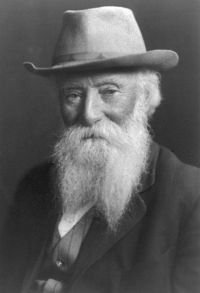
John Burroughs
Summary
John Burroughs’ Wake-Robin is a naturalist essay that delves into the lively world of birds and their complex connections to the natural environment. Written with sharp observational detail, the work focuses on the robin and other bird species, such as thrushes, warblers, and wrens, emphasizing their songs, nesting habits, and seasonal patterns.
Set against the backdrop of Rock Creek and the surrounding woods, Burroughs contemplates the interdependence of wildlife and human experience, merging scientific interest with poetic admiration for nature. Through rich depictions of birdlife and the serenity of the forest, the text highlights the lasting allure of the natural world, presenting it as a domain of both scholarly exploration and deep, quiet beauty.
Quotes from Wake-Robin (John Burroughs)
“ Take the first step in ornithology, procure one new specimen, and you are ticketed for the whole voyage. There is a fascination about it quite overpowering. It fits so well with other things—with fishing, hunting, farming, walking, camping-out—with all that takes one to the fields and woods. One may go a blackberrying and make some rare discovery; or while driving his cow to pasture, hear a new song, or make a new observation. Secrets lurk on all sides. There is news in every bush. Expectation is ever on tiptoe. What no man ever saw before may the next moment be revealed to you. ”
“ But as the harvest ripens beneath the long, hot days, the melody gradually ceases. The young are out of the nest and must be cared for, and the moulting season is at hand. After the cricket has commenced to drone his monotonous refrain beneath your window, you will not, till another season, hear the wood thrush in all his matchless eloquence. The bobolink has become careworn and fretful, and blurts out snatches of his song between his scolding and upbraiding, as you approach the vicinity of his nest, oscillating between anxiety for his brood and solicitude for his musical reputation. ”
